Sometimes, the people who change lives are simply the ones who know how to listen. The same quiet compassion has become the heart of Sentinaro's work, guiding young people through some of life's most uncertain moments.
What happens when you walk away from a secure career to follow your calling? Rahul Thomas' journey reveals how theatre became far more than an art form: it became a path to being fully human.
She was told the Chenda wasn't for girls. From challenging tradition to inspiring women across generations, her journey proves that talent knows no gender.
She was told the Chenda wasn't for girls. From challenging tradition to inspiring women across generations, her journey proves that talent knows no gender.
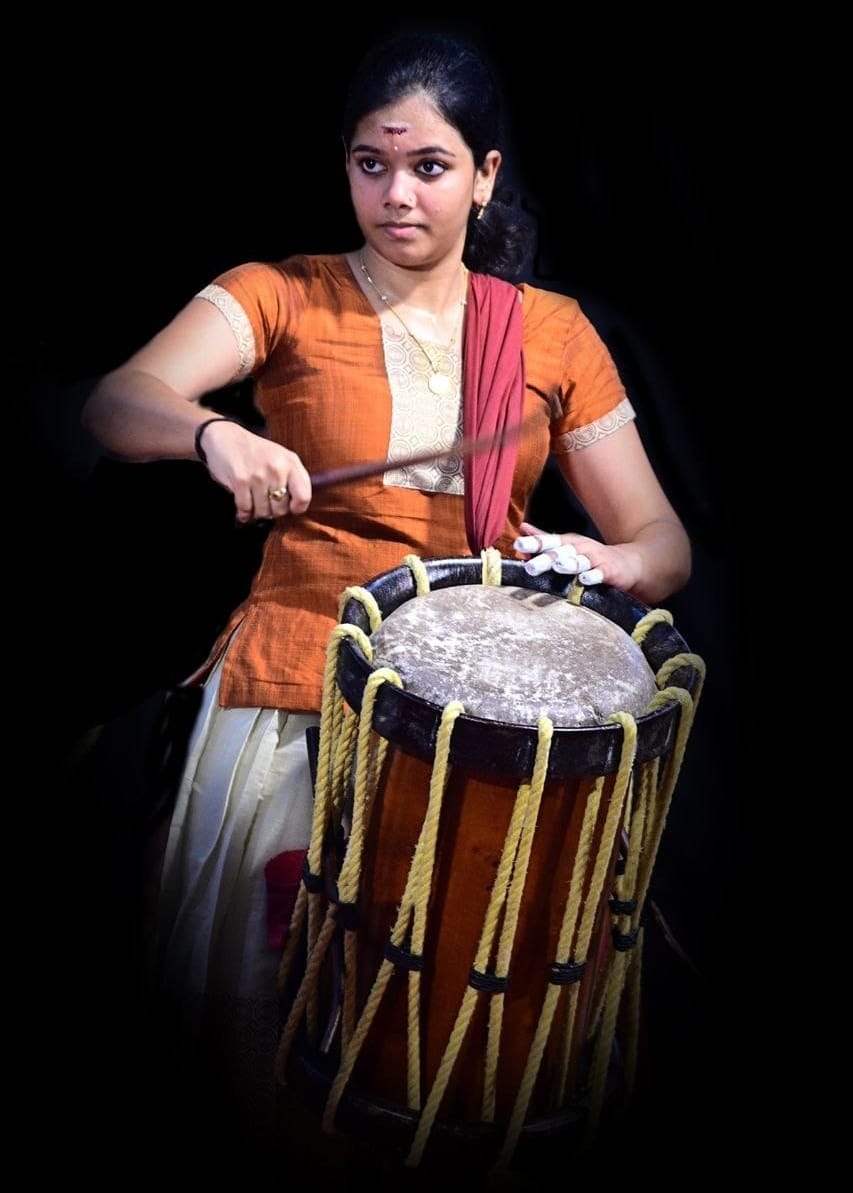
For generations, the powerful sound of the Chenda has echoed through Kerala's temple festivals, carried by rows of male drummers performing with precision, endurance, and pride. It is an art form deeply rooted in tradition, one that has long been considered a man's domain. Into this world stepped a little girl who simply wanted to learn the rhythm she heard every day at home.
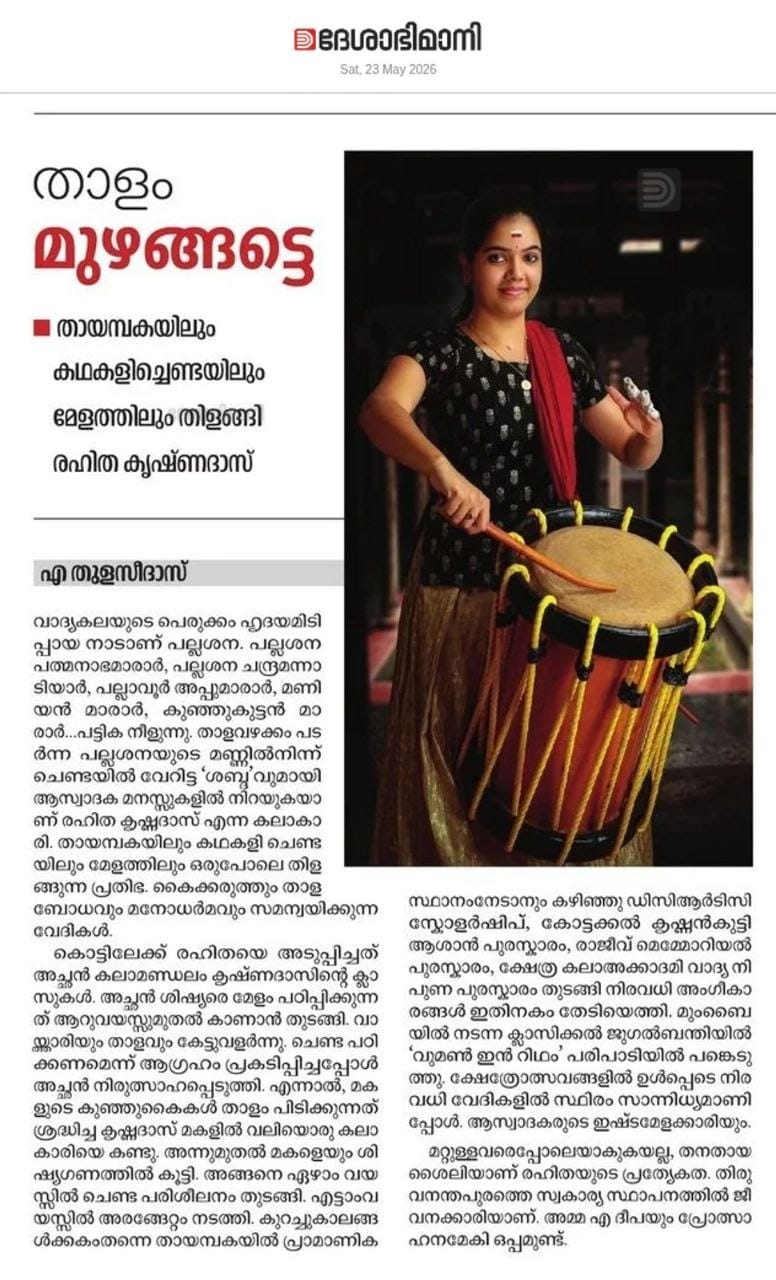
Rahitha Krishnadas is not only an accomplished Thayambaka artist but also a teacher, researcher in the making, and a strong advocate for preserving tradition while making space for women and younger generations. Her journey is one of persistence, determination, and the unwavering support of the people who believed in her when others did not.
A Childhood Filled with Rhythm
Rahitha was born into a family where Chenda was more than music: it was a legacy. Her father, like his father and uncle before him, was a respected Chenda artist and teacher. As a child of five or six, she often watched her father conduct classes at home. Drawn to the beats, she instinctively matched the rhythm whenever she walked past the lessons. One day, she asked her father if she could learn. His answer was simple: no.
Rahitha admits she never directly asked him why he refused, but she believes the reasons were obvious. Chenda was traditionally considered a men's art form. It demanded physical strength to carry the heavy instrument and stamina to perform standing for long hours. Like many others of his generation, her father likely believed these challenges made it unsuitable for a young girl.
But Rahitha was not ready to give up. She kept asking until her father finally agreed. Even then, his expectations were modest. He assumed she would lose interest after her arangettam, or debut performance. Instead, her first performance became the beginning of a lifelong journey.
The Woman Behind the Journey
While Rahitha's father eventually became her Guru, she credits another person for making her dream possible: her mother.
She says that if her mother had not insisted, her father might never have agreed to teach her. Throughout her childhood, her mother ensured she could attend performances while balancing school, encouraged her during difficult moments, and stood firmly behind her decision to continue learning.
Her elder sister, Shobhitha Krishnadas, also chose the same artistic path and performed Thayambaka, proving that talent in the family knows no gender.Rahitha often reflects that her own story demonstrates how important parental support is. She believes that when families encourage daughters instead of limiting them, barriers begin to disappear.
Breaking Into a Man's World
Learning Chenda was only the first challenge. Earning acceptance within the performance circuit proved far more difficult.
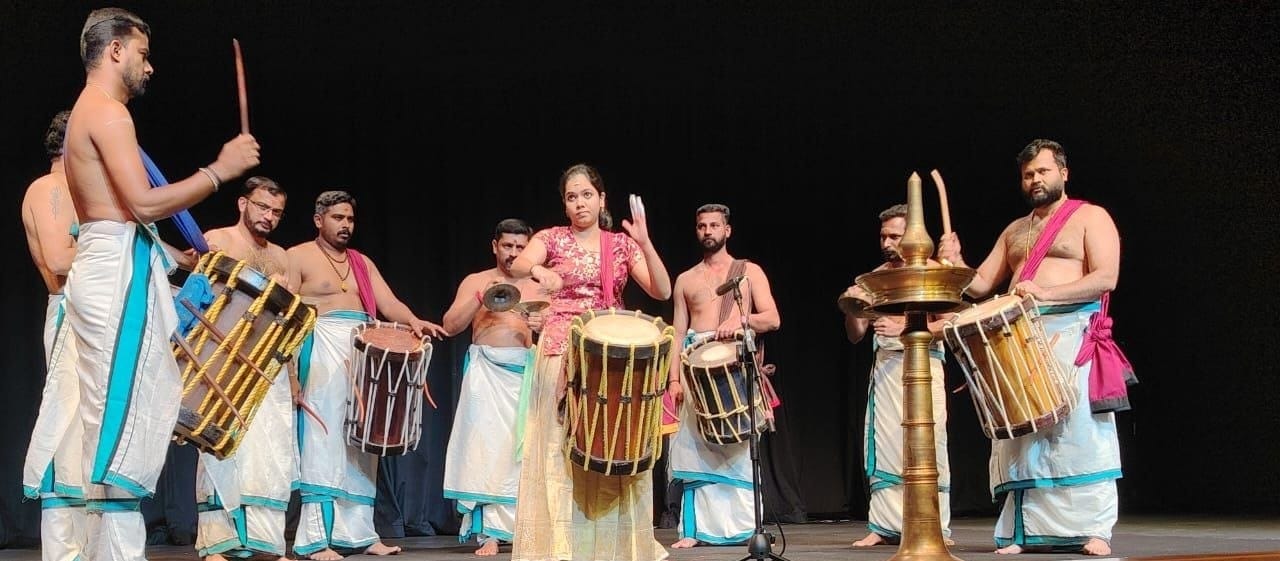
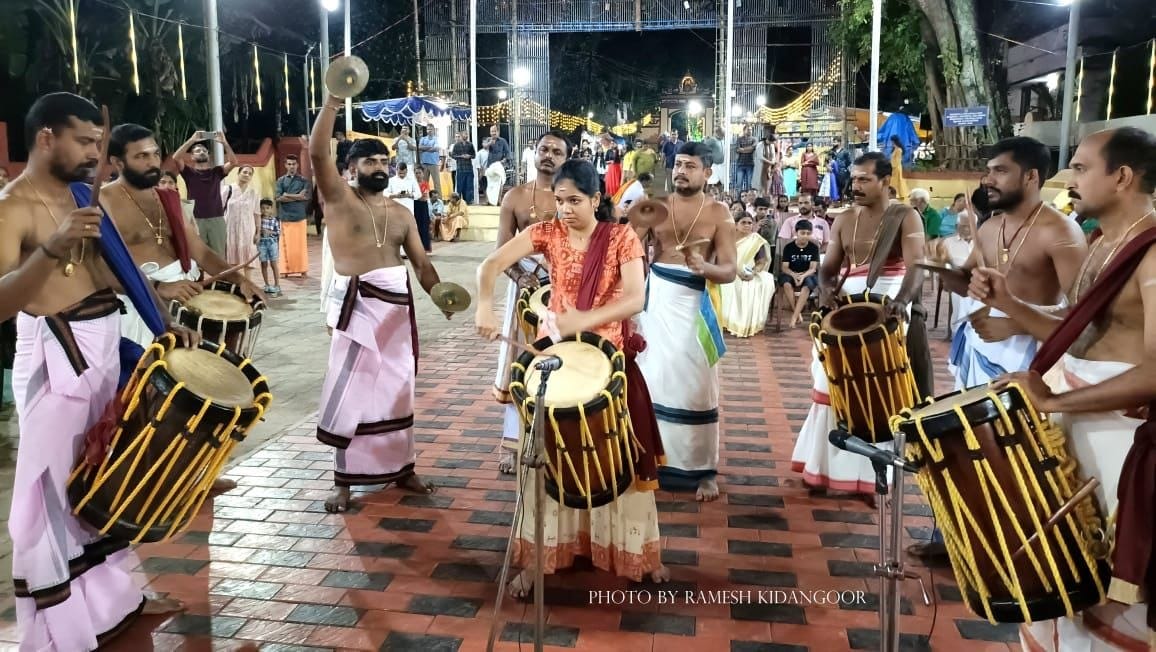
When Rahitha began performing publicly, she was often the only girl among groups of experienced male percussionists. Except for two senior musicians who had known her since childhood, most performers met her with doubt.
Some dismissed her as just a child. Others assumed that because she was a girl, she could not possibly match the intensity or skill required for a full Chenda performance. Their expectations were low before she even picked up the instrument.
Rahitha remembers those moments clearly. The real change came only after she performed.Once audiences applauded and fellow musicians witnessed her command over the instrument, their attitudes shifted. The same people who had underestimated her would later approach her with appreciation, admitting they had not expected such a performance from "such a small child" or from a girl. Over time, many of those initial skeptics became friends and respected colleagues.
Her journey highlights a reality many women face in male-dominated fields. They often have to prove their abilities repeatedly before receiving the respect that men are frequently given from the start.
Keeping Tradition Alive
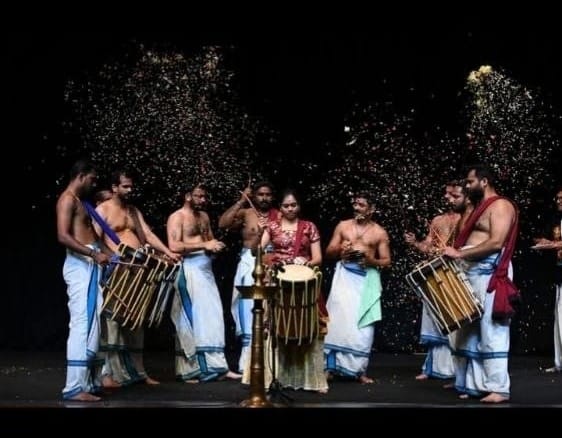
Rahitha has performed in temples, where Chenda has traditionally belonged, but she has also taken the instrument to cultural festivals and modern stages across cities such as Bengaluru and Mumbai.
One particularly memorable experience was performing at the Kochi Biennale, where she encountered audiences from across India and around the world. Unlike audiences in Kerala, who grew up hearing the Chenda, many visitors were experiencing the instrument for the first time. Watching their fascination reinforced her belief that traditional art deserves wider audiences.
Not everyone agrees. Some critics argue that Thayambaka should remain within temple spaces because of its sacred origins. Rahitha respects those traditions but believes preservation does not mean isolation.
For her, the future of traditional art lies in adaptation without compromising its dignity. She believes that heritage survives not by remaining unchanged, but by finding meaningful ways to connect with new generations and new spaces.
Teaching Women to Find Their Rhythm
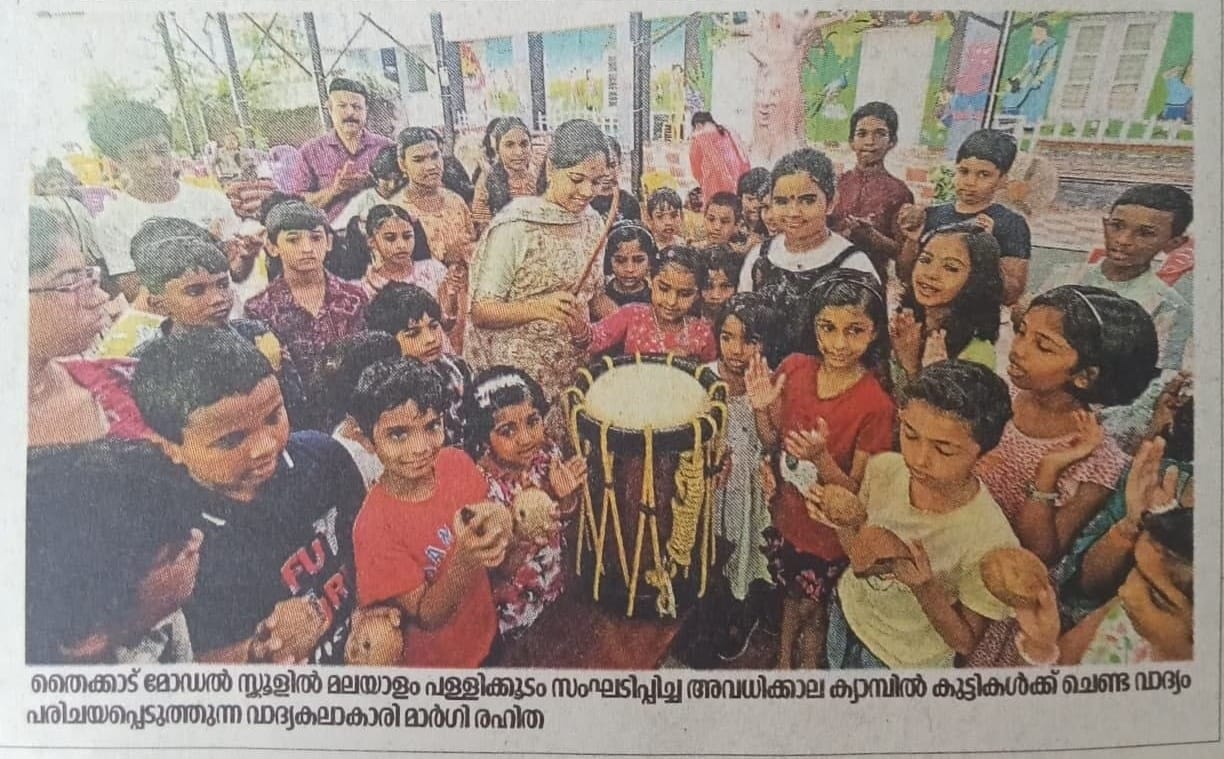
Rahitha's contribution extends far beyond her own performances. She now teaches Chenda from her home, where many of her students are women. Some are retired professionals discovering the instrument later in life, while others join her online classes from countries such as Australia.
Their backgrounds differ, but they share one common belief, that gender should never determine who gets to learn an art form. Rahitha rejects the argument that women are physically unsuited for Thayambaka. In her experience, strength, stamina, and flexibility develop through regular practice.
Interest, dedication, and discipline matter far more than gender. Every woman who learns under her guidance becomes another example that traditional boundaries can be challenged without diminishing the art itself.
Beyond breaking gender stereotypes, Rahitha is equally passionate about changing attitudes toward arts education. Having completed her Master of Commerce degree and worked in the corporate sector, she is now preparing for the National Eligibility Test (NET) with the goal of pursuing doctoral research on Thayambaka. She believes there is still considerable scope for academic research on the art form and hopes to contribute to that field.
Her concern, however, extends to the next generation. As a teacher, she has seen talented students abandon their artistic training once they reach the ninth or tenth standard because parents often insist that academics must become their sole priority. While she agrees that education is essential, she questions the idea that art should be treated as expendable.
For Rahitha, art is not merely an extracurricular activity or a possible career. It is a lifelong companion that nurtures emotional well-being, mental health, discipline, creativity, and personal growth.
She believes that every child should have the opportunity to continue learning an art form alongside academics, even if they never pursue it professionally. The years of effort invested by students and teachers should not simply disappear because examinations become more important. In her own life, balancing education and Chenda was possible because her family, especially her mother, believed both could coexist.
Rahitha Krishnadas' story is about much more than mastering a traditional percussion instrument. It is about challenging assumptions without rejecting tradition, proving talent through perseverance rather than confrontation, and creating opportunities for women who follow.
The little girl who once stood outside her father's classroom, quietly keeping rhythm with her steps, has become a respected performer, a mentor to women across generations and continents, and a voice advocating that art deserves a place in every person's life.
With every beat of the Chenda, Rahitha continues to send a powerful message: traditions become stronger—not weaker—when they make room for everyone. And in a world increasingly consumed by pressure and competition, art remains not just a cultural treasure, but a source of balance, healing, and hope.
What happens when you walk away from a secure career to follow your calling? Rahul Thomas' journey reveals how theatre became far more than an art form: it became a path to being fully human.
He first knew Chavittu Nadakam as the sound of home. What began with songs drifting through the evenings became a lifelong calling. Anson Kurumbathuruth's story is one of carrying a living tradition into the future.
What happens when theatre moves beyond auditoriums and into everyday life? The Sandbox Collective has spent over two decades proving that art can be a powerful space for belonging, dialogue, and change.
Filmmaker, theatre practitioner and cultural archivist Shilpa Mudbi has spent years listening to songs that rarely make it into history. Her journey reveals why preserving culture means protecting the communities that create it.