
Sentinaro Shiu | A Heart that Listens
Sometimes, the people who change lives are simply the ones who know how to listen.
Sometimes, the people who change lives are simply the ones who know how to listen.

What happens when you walk away from a secure career to follow your calling?
What happens when you walk away from a secure career to follow your calling?

There was a time when Rahul Thomas looked like he had done everything right. Armed with a business school education, he stepped into the corporate world and spent seven years building what many would consider a successful career. Yet, beneath the stability of office life, something felt deeply incomplete.
The absence of art, he says, began to reveal itself in unexpected ways: as restlessness, anxiety, lack of focus, and an inability to feel fully present. Theatre eventually became more than a creative outlet. It became an internal anchor to understand his own mind and body.
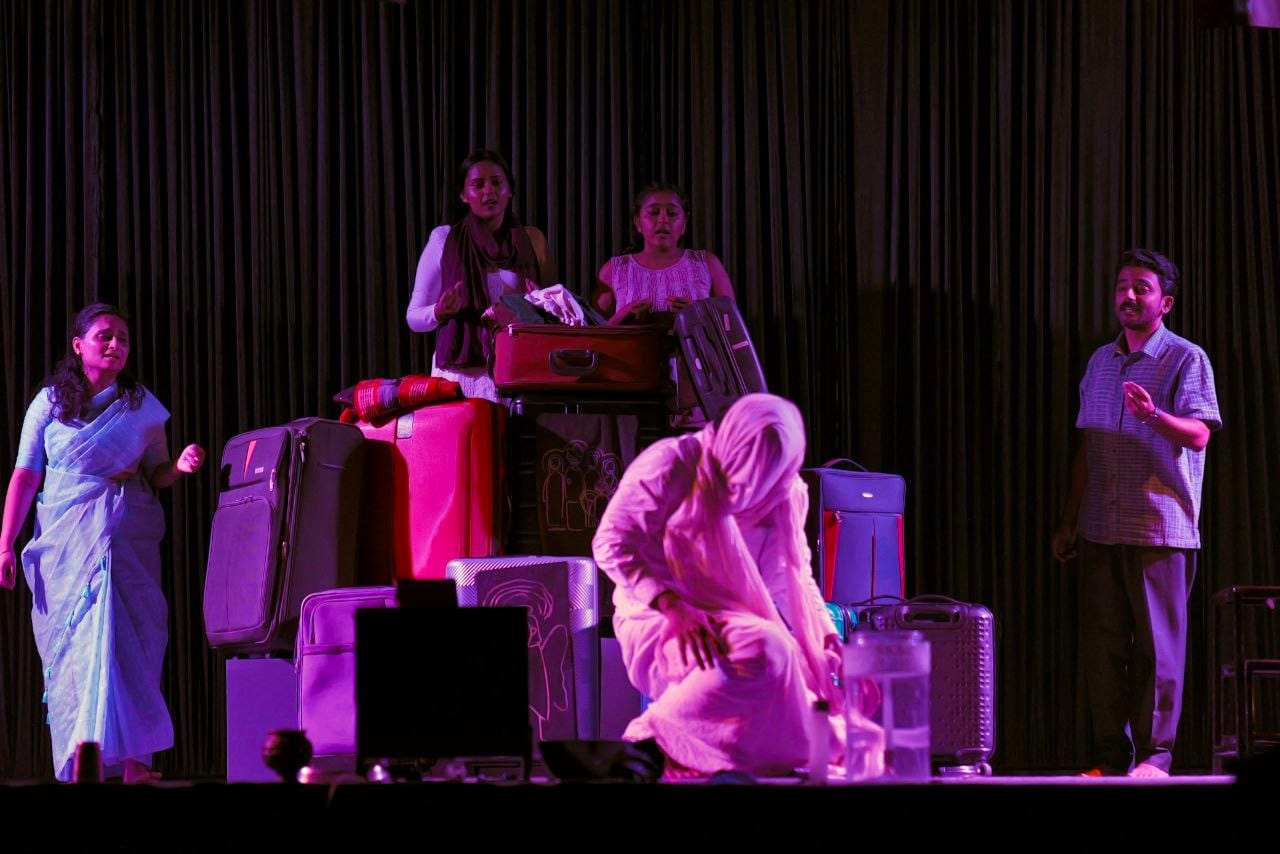
Leaving behind the predictability of a corporate career in 2017 was a leap into uncertainty. He travelled to Bengaluru for a year-long 'intensive acting training', immersing himself not only in acting but also in understanding dramaturgy, play analysis, creative writing, children’s theatre and direction.
"I don't regret leaving corporate," Rahul reflects. "I was dying little by little. Theatre saved me."
Today, Rahul is the founder and artistic director of Rasa Theatre Collective, a Kerala-based theatre initiative that has grown into much more than a performance group. It is a space where storytelling becomes a tool for self-discovery and human connection.
From Pretension to Presence
For Rahul, acting has never been about pretending to be someone else. Instead, he describes it as creating space within oneself for another human experience to exist.
This philosophy shapes everything Rasa Theatre Collective does. Theatre, in his view, asks performers to let go of rigid identities, habits, beliefs and conditioning. Every role becomes an opportunity to question one's own assumptions about life.
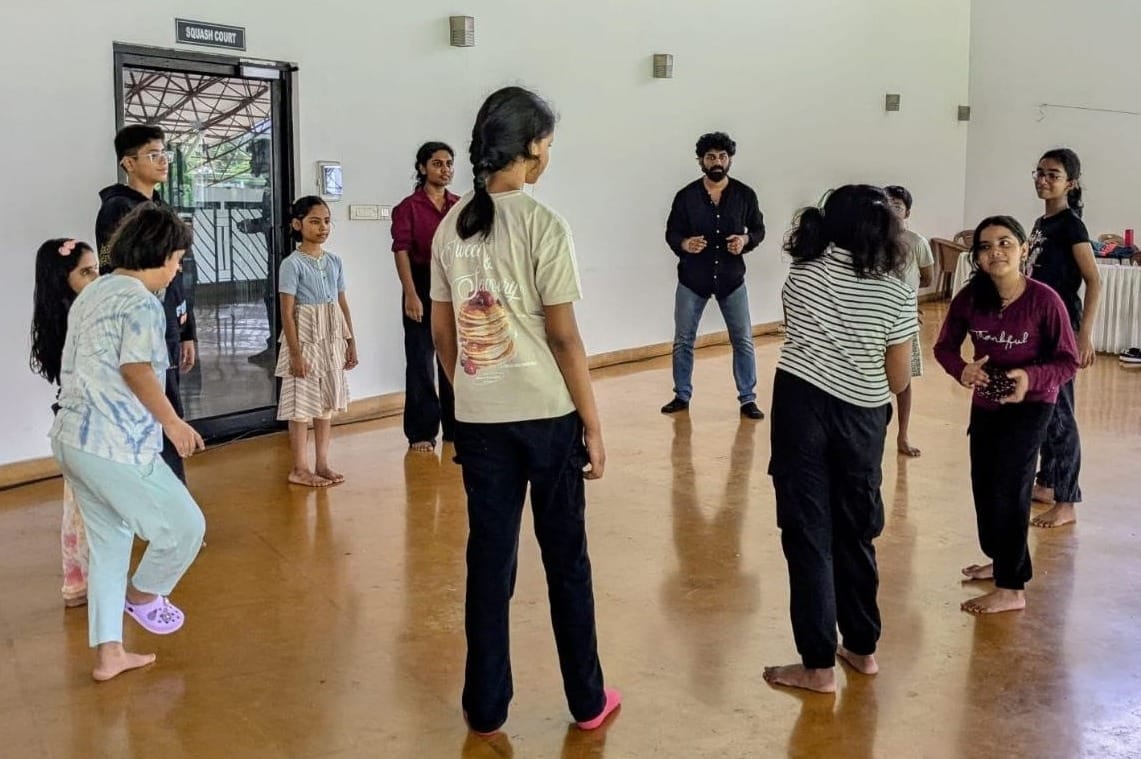
This approach also informs his teaching. Rather than training actors to imitate emotions, Rahul encourages them to become deeply aware of themselves first. Breath, movement, stillness and observation become the foundation before dialogue or performance.
His workshops begin with what he calls "emptying the cup": a ritual of temporarily setting aside labels such as gender, caste, class and profession. Participants are invited to meet one another simply as a human experience. The aim is not to erase identity but to discover what remains beneath the many masks people wear in everyday life.
Rahul often speaks about how slow theatre practices transformed his own life. Simple exercises—walking slowly while synchronising breath with movement, grounding oneself physically and becoming aware of one's senses—helped him find an internal anchor he had never experienced before. For someone who once struggled to sit still and concentrate, these practices became deeply therapeutic.
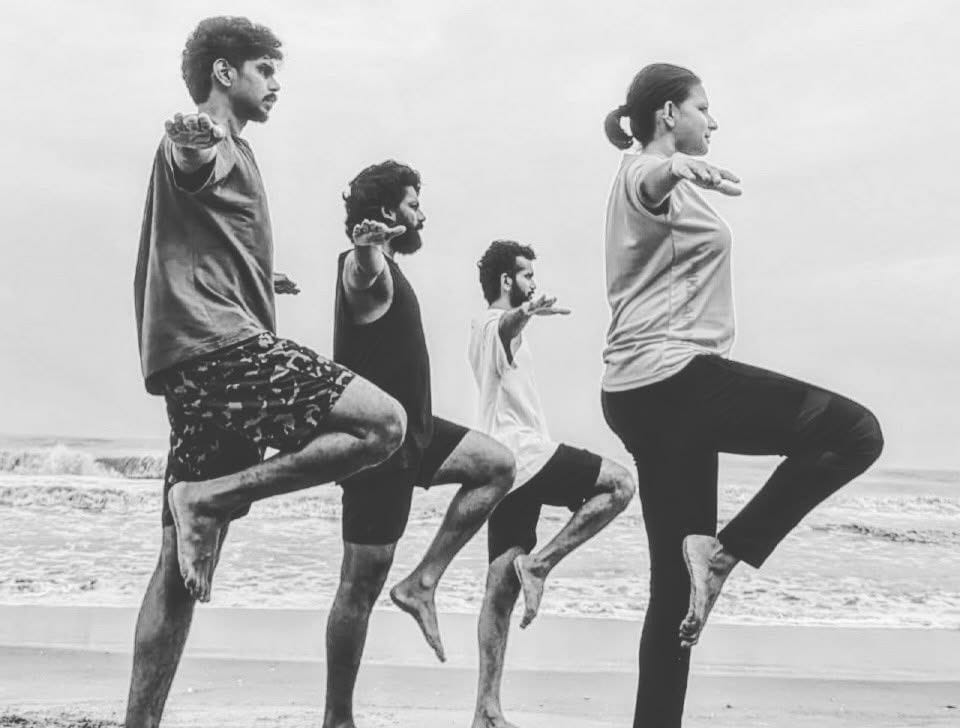
They later became central to his teaching. While working with children at an alternative school in Bengaluru, Rahul deliberately avoided beginning with language. Instead, he introduced movement, breathing exercises and sensorial awareness, often conducting classes outdoors under trees.Nature became the classroom. Presence became the lesson. Long before children learned to perform, they learned to observe.
The Birth of Rasa
After returning to Kerala during the pandemic, Rahul found himself reconnecting with theatre artists in Kochi. Online theatre sessions helped performers survive the isolation of lockdowns, while new collaborations slowly emerged.
Support from ThinkArts enabled the Collective's first major production, Gajam, a play exploring the growing conflict between humans and elephants in Kerala. The production reflected a philosophy that continues to define Rasa Theatre Collective.
The collective is not interested in theatre as mere entertainment. Every story must ask questions that matter today. Whether drawing from mythology, history or contemporary life, the work must mirror society.
Subsequent productions explored morality, women's bodily autonomy, politics, power and duty, proving that even historical narratives can speak directly to present realities. Niyamavarthanam was written and directed by Rahul and had the following cast : Abraham Vadakkan, Aparna Hari, Pooja Pankaj, Nirupama Thomas, Sachin Dev, Sreeram and Rahul Thomas. Set against the backdrop of an aristocratic Syrian Christian family, the play discusses women’s autonomy of her own body and religion.
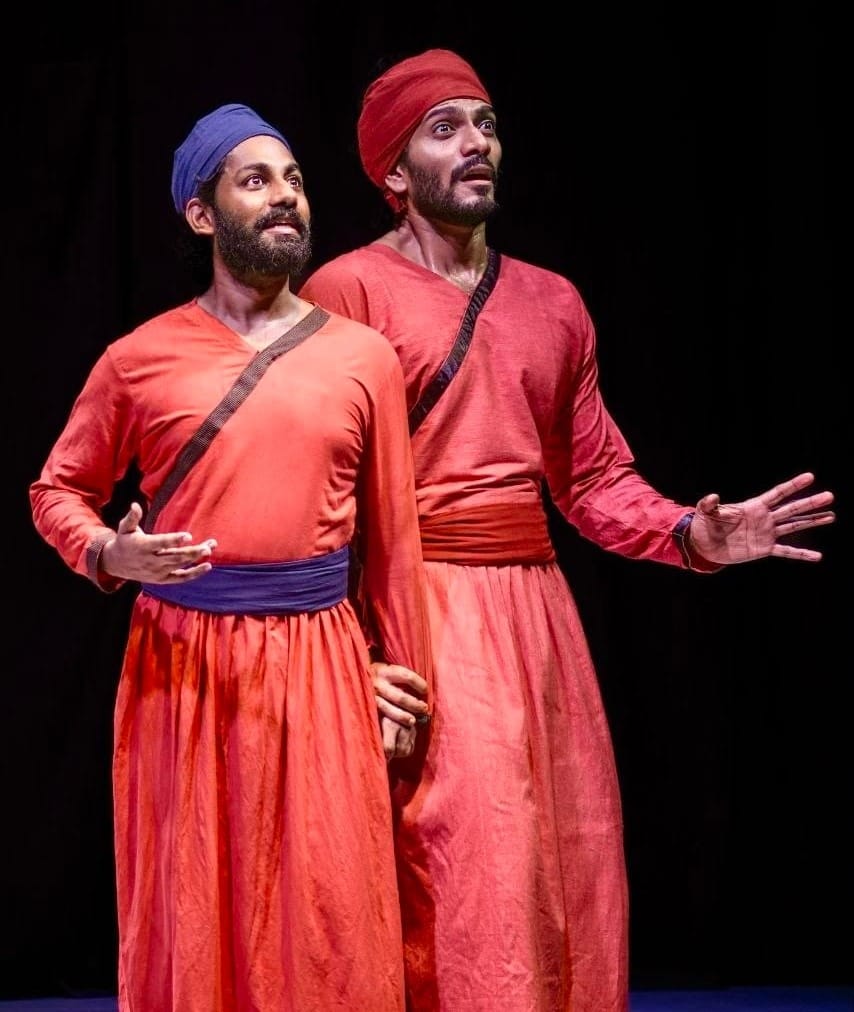
Guards at the Taj, written by Rajiv Joseph and directed by Rahul Thomas included Shersha Shereif & Rahul Thomas explored themes of loyalty, duty, power and politics. Rasa Theatre Collective’s upcoming production is written by Aparna Ashok, directed by Rahul Thomas and features Abraham Vadakkan and Rahul Thomas.
Aarambam & Ardhaviramam
Perhaps the most personal expression of Rahul's philosophy is Aarambam, a three-day intensive workshop on the fundamentals of performance. Unlike conventional acting classes, Aarambam attracts participants from every walk of life : doctors, students, sportspersons, mothers, professionals and aspiring actors.
The workshop focuses less on performance and more on presence. Participants explore imagination, impulses, reflection, breath, movement and authentic communication. More importantly, they are encouraged to remove the social masks that everyday life demands. Rahul believes modern life constantly pushes people to perform versions of themselves. The workshop offers permission to stop performing.
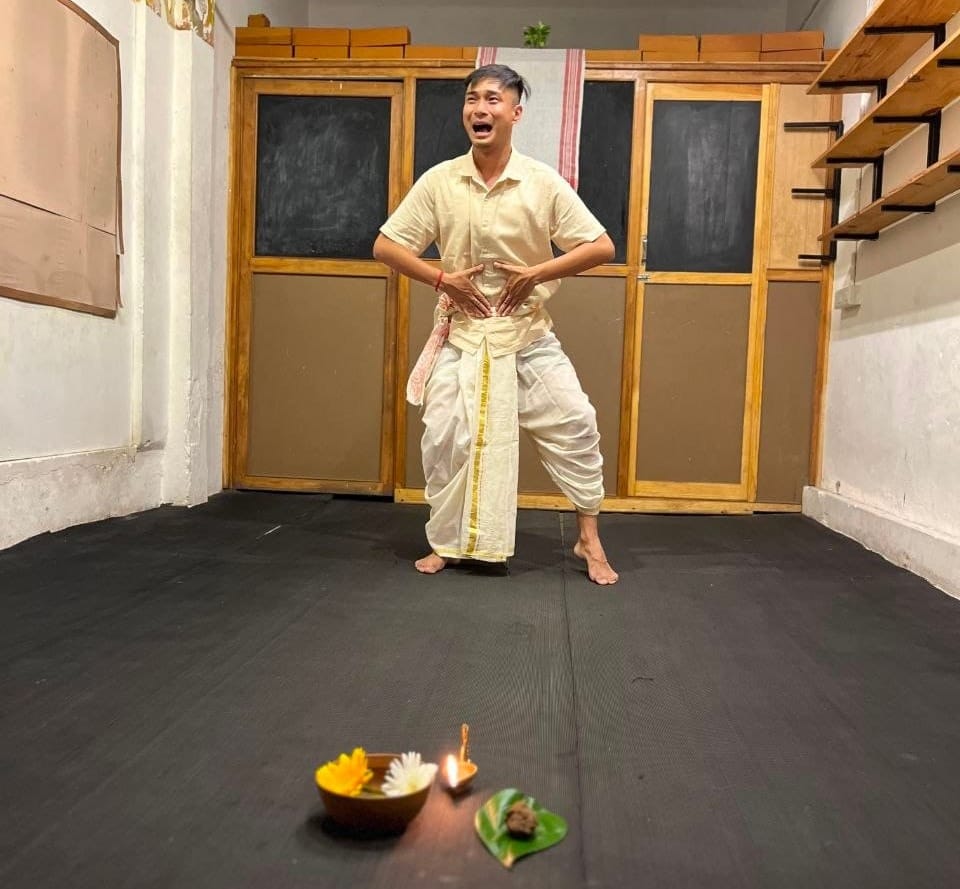
Rahul has also been offering another weekend theatre making training that has been running since February 2025, which aims to build a community of theatre-makers and enable actors and makers on a philosophical level to indulge in their art.
He describes his own attempt as highly ambitious: “at a time when actor training has been reduced to preparing an actor for an audition or landing a role in a movie/ad/play etc., I was delusional enough to take a plunge”.
Rahul admits that an actor does need performing opportunities; however, he believes that an actor’s journey is incomplete without opportunities to redefine their craft even when there is no acting opportunity offered. Rahul expresses his gratitude towards the bunch of people who have joined Ardhaviramam for the past 18 months for their trust and commitment. The workshop focuses on performance craft, play reading and analysis, play writing, dramaturgy, dramatised play reading, theatre maker presentations, and understanding acting pedagogy.
Stories from participants reveal the varied impact of these workshops. Even when the craft of acting is the primary objective of these workshops, there are also other aftereffects that participants find immensely healing. One mother described the experience as more transformative for parents than children. Another shared that it helped her emerge from the emotional fog of postpartum depression.
Others discovered something as simple—and as profound—as the ability to physically occupy space. Rahul recalls a participant who admitted that as a woman, she had spent much of her life shrinking herself physically and expanding only internally. Through theatre, she learned to stand fully in her own body. For Rahul, such moments matter just as much as any successful stage production.
The Energy Between Performer and Audience
In an era dominated by digital content, Rahul remains convinced that theatre offers something no screen can replace. Every performance is tied to a specific place, a specific time and a specific gathering of people. The audience cannot pause it. They cannot scroll away. They must be present.
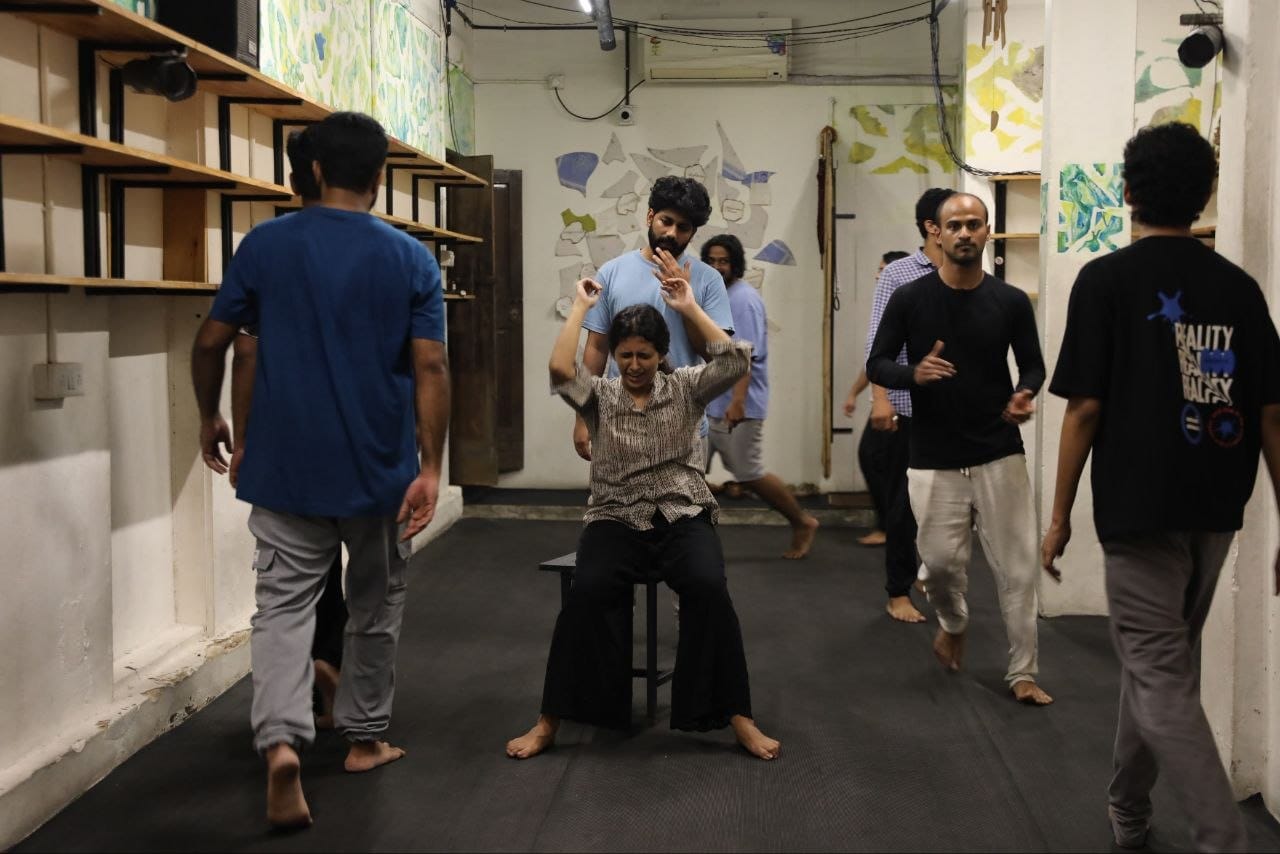
Rasa Theatre Collective deliberately embraces this ritualistic quality. Productions often include sensory experiences such as smell, creating an atmosphere that immerses audiences beyond sight and sound. Rahul believes theatre exists in the invisible exchange of energy between performers and audiences.
Each audience changes the performance. The actors feel it. The audience feels it. No two performances are ever identical. Such a shared presence, he argues, is what makes theatre deeply human.
Art as a Mirror
Rasa Theatre Collective's work consistently asks audiences to confront difficult questions. Human-animal conflict. Women's autonomy. Power. Morality. Politics. Identity.
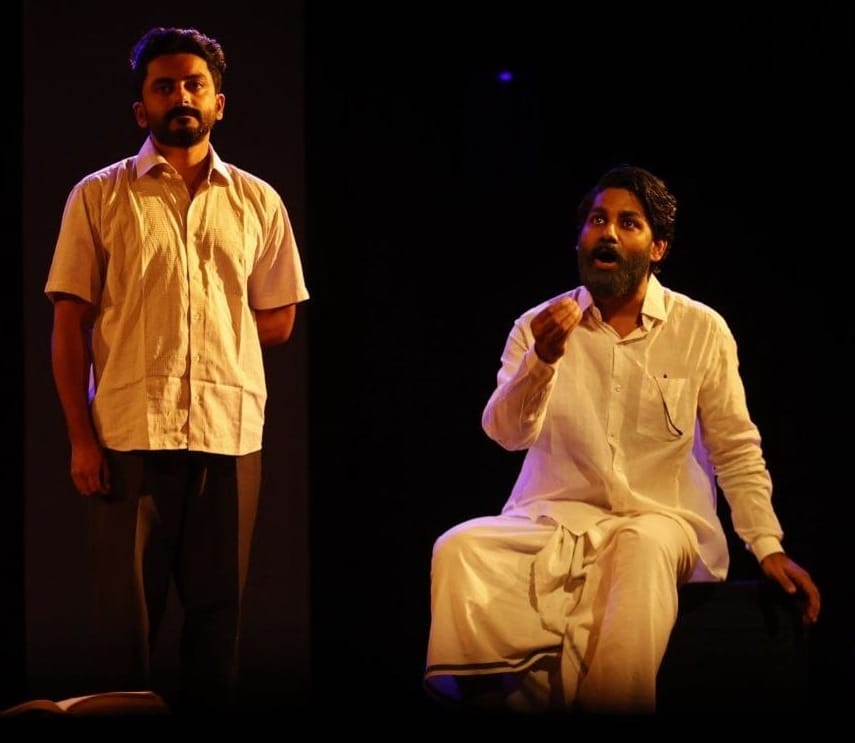
Rather than offering answers, the productions invite reflection. Rahul believes theatre should function as society's mirror, helping communities recognise themselves more honestly.
Minimalism is central to this vision.Inspired by the Indian aesthetic concept of rasa, the Collective avoids unnecessary spectacle, believing that powerful emotions emerge not from elaborate sets but from truthful performance.Their objective is simple: evoke genuine feeling. Nothing more is needed.
Anything Can Happen
One principle governs every Rasa Theatre Collective performance : "Anything can happen." For Rahul, it is both a rule of theatre and a philosophy of life.
It reminds actors to stay open, adaptable and fully present instead of trying to control every outcome. Such an openness also requires responsibility. Rahul is vocal about what he sees as unhealthy practices within theatre, where actors become emotionally trapped inside characters. He believes performers must always return to themselves after every role. The work, he insists, should gently peel people open and not break them apart.
Keeping Theatre Alive
Despite years of dedication, Rahul admits that earning a sustainable living solely through acting remains difficult. Much of his income comes from teaching. Yet his dream extends beyond personal success.
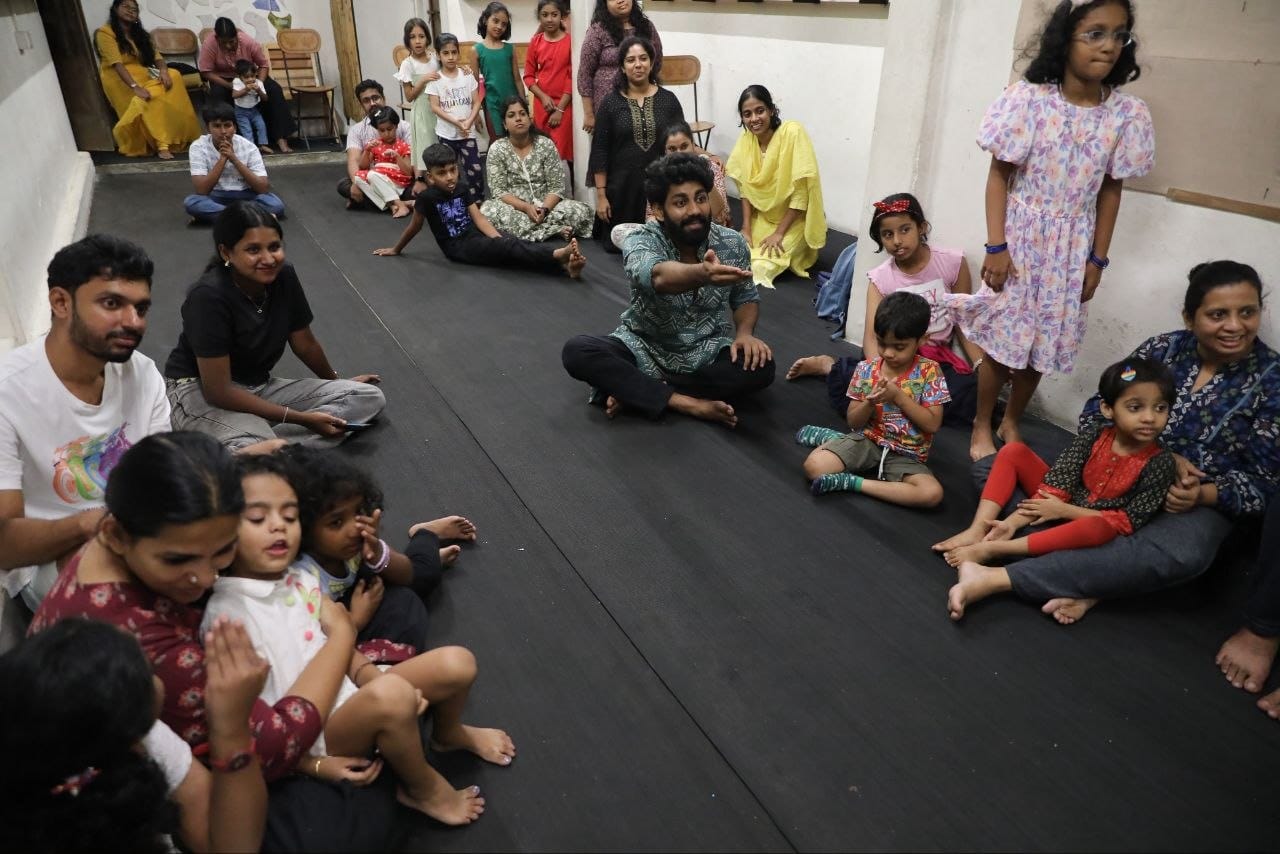
He wants to build an ecosystem where playwrights, actors, musicians, technicians and theatre-makers can all make dignified livelihoods through their craft. He rejects the romantic idea of the "starving artist." Art, he believes, deserves both respect and economic value.
In an increasingly digital world where attention spans continue to shrink, Rahul sees theatre becoming even more necessary. It demands the complete involvement of body, mind and emotion. It teaches people to truly see another person and, equally importantly, to allow themselves to be seen.
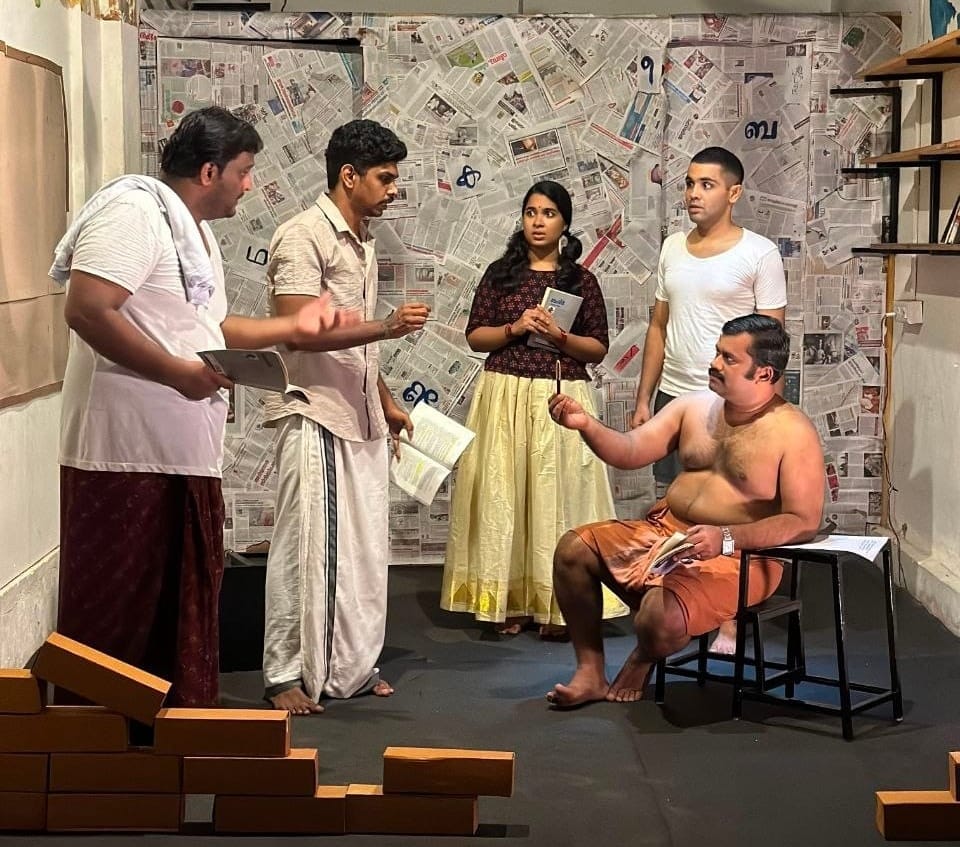
This, perhaps, is Rasa Theatre Collective's greatest contribution. It is not merely producing plays. It is creating spaces where people remember what it feels like to be fully human. And for Rahul Thomas, this journey—one that began with leaving a corporate desk behind—continues to prove that theatre is not simply an art form. It is a way of living.

Sometimes, the people who change lives are simply the ones who know how to listen.


He first knew Chavittu Nadakam as the sound of home. What began with songs drifting through the evenings became a lifelong calling.

What happens when theatre moves beyond auditoriums and into everyday life?
aikyam fellows inspire actions on important & urgent needs of the planet and underserved communities.