Sometimes, the people who change lives are simply the ones who know how to listen. The same quiet compassion has become the heart of Sentinaro's work, guiding young people through some of life's most uncertain moments.
What happens when you walk away from a secure career to follow your calling? Rahul Thomas' journey reveals how theatre became far more than an art form: it became a path to being fully human.
She was told the Chenda wasn't for girls. From challenging tradition to inspiring women across generations, her journey proves that talent knows no gender.
He first knew Chavittu Nadakam as the sound of home. What began with songs drifting through the evenings became a lifelong calling. Anson Kurumbathuruth's story is one of carrying a living tradition into the future.
For Anson Kurumbathuruth, Chavittu Nadakam was never simply an art form: it was the soundtrack of everyday life. Long before he stepped onto a stage in elaborate costume, he was a village child listening to powerful songs drift through the evening air in Kurumbathuruth, a small island community in Kerala where the centuries-old Latin Christian theatre tradition has long been cherished.
"As children," he recalls, "the songs we heard in the evenings were Chavittu Nadakam songs."
Those melodies became familiar long before he understood the discipline and dedication behind them. Like many youngsters in Kurumbathuruth, he watched rehearsals from the sidelines, fascinated by the booming voices, rhythmic footwork, and colourful costumes. At that point, however, he had no idea that Chavittu Nadakam would eventually become the defining passion of his life.
Today, more than twenty-five years later, Anson serves not only as a performer but also as an organiser, trainer, and teacher. His journey reflects both the resilience of an individual and the remarkable ability of a traditional art form to reinvent itself without losing its soul.
A Different Point of Entry
Unlike earlier generations, Anson did not apprentice under an Ashan from childhood. Traditionally, Chavittu Nadakam was taught in the courtyards of village homes. There were no permanent stages or formal institutions. Families gathered as communities while respected masters passed their knowledge from one generation to another.Such a system was already changing when Anson came of age.
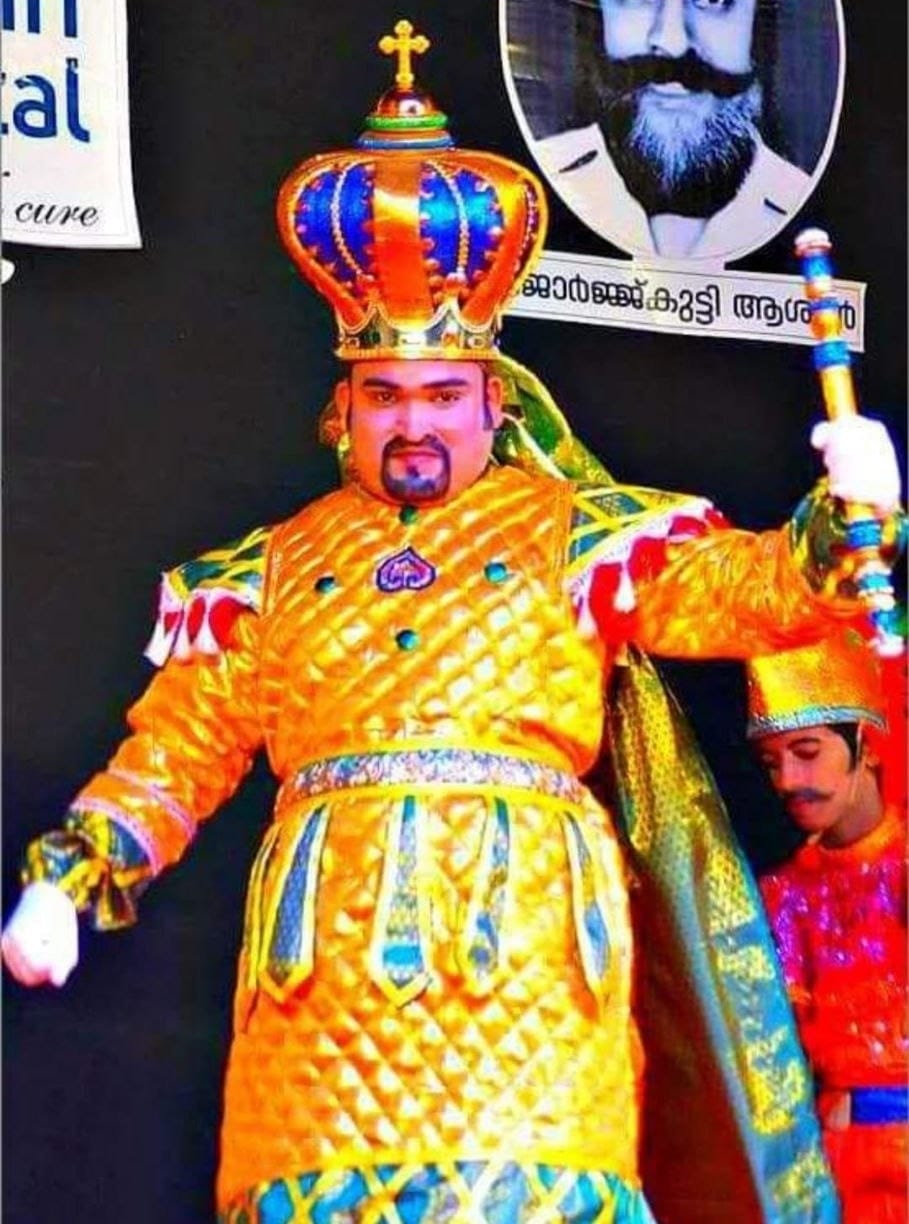
His turning point came through a month-long government-sponsored training programme jointly organised by the State Youth Welfare Board and the Nehru Yuva Kendra. The workshop was led by Roy Georgekutty, son of the renowned Georgekutty Ashan, along with Jaison Jacob.
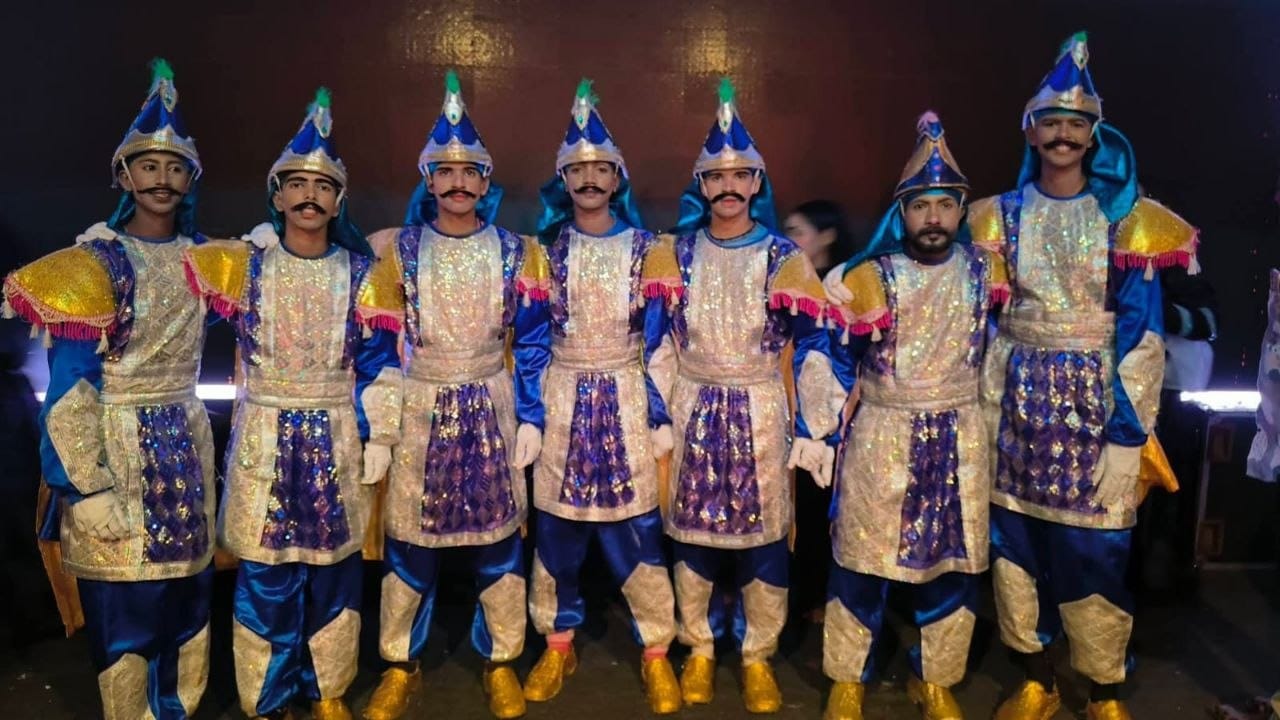
For the first time, Anson was not merely watching rehearsals; he was performing.Around thirty participants completed the course, received certificates, and staged a production of Carolsman. That training eventually evolved into the troupe Kurumbathuruth Yuvakerala Chavittu Nadaka Kala Samithi, which has since performed on nearly 300 stages.
"It was through that training that I truly entered this art," he says.
What began as curiosity gradually evolved into commitment. As the troupe expanded, so did Anson's responsibilities.
He eventually became Secretary and later President of the organisation while continuing to perform and sing. The group travelled far , presenting Chavittu Nadakam across Kerala and elsewhere in India, including performances connected with the Sangeet Natak Akademi in Delhi. Television appearances on Flowers TV's Comedy Utsavam, collaborations with Kerala Tourism, and demonstrations for Cochin International Airport staff introduced entirely new audiences to the art.
Some performances lasted two hours. Others lasted just seven minutes. For Anson, neither was less authentic.
"The art has to reach people," he believes. "If seven minutes is all the time available, then we tell the story in seven minutes."
Three Styles, Three Traditions
One of the most interesting aspects of Chavittu Nadakam, Anson explains, is that there is no single "correct" way of performing it.
Communities in Kochi often regard their style as the most authentic. Performers from Alappuzha make the same claim about theirs. Anson disagrees with the very idea of a hierarchy.
"There are many styles," he says. "One cannot simply say one is right and another is wrong."
The Alappuzha tradition, for instance, retains older conventions where performers sing while acting, as exemplified by artists like Molly Kannamaly. While admired for preserving older performance practices, this style receives comparatively fewer performance opportunities today.
Similarly, Kochi troupes continue to favour more traditional presentations rooted in older dramatic conventions. Then there is the Gothuruth style, which the troupe follows. Rather than treating change as a threat, these artists see adaptation as essential for survival.
The Kurumbathuruth Way
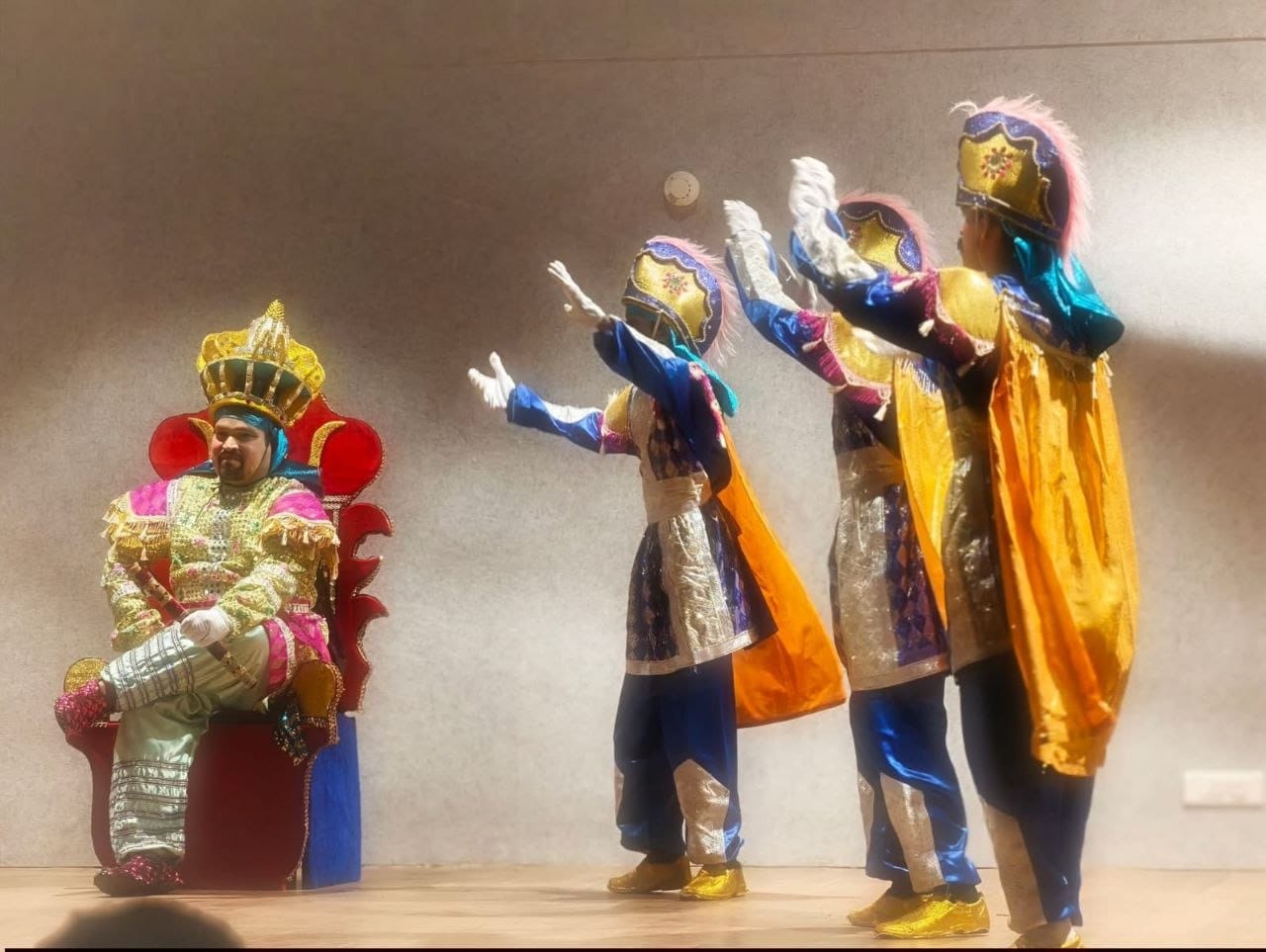
The defining feature of the Kurumbathuruth style is its willingness to evolve. The troupe has condensed productions that once stretched over three days into performances lasting around two hours without abandoning the dramatic essence of the stories.
They maintain recordings of their productions, making performances easier to reproduce and preserve. They have incorporated LED backdrop screens to create immersive visual environments. Their production of Macbeth used digital scenic backgrounds that complemented Shakespeare's themes while retaining the distinctive performance vocabulary of Chavittu Nadakam.
Most importantly, they have expanded the repertoire itself. Instead of relying exclusively on traditional religious narratives, these performers explore new subjects including Shakespeare's Macbeth and stories centred on St. Michael.
For Anson, innovation is not about replacing tradition. It is about ensuring that tradition remains meaningful. "We cannot carry it on exactly as it was before," he explains. "Like every art form, it changes with time."
Their openness has also translated into more performance invitations than many other troupes receive. Adaptation, in Kurumbathuruth, has become a strategy for cultural survival.
Keeping an Art Alive
Despite growing recognition, Chavittu Nadakam remains far from financially secure. Every performer in the troupe has another occupation. No one depends solely on art for a livelihood.
"There were times when we simply hoped that ₹1,000 would remain altogether after all the expenses," Anson remembers.
Only recently has the situation begun to improve. Today, after some performances, the troupe can pay each participating youngster around ₹1,000. "When we were young, we never received anything like that," he says with satisfaction.
The recognition is modest but meaningful. It signals that society is finally beginning to value the labour behind the spectacle.
Another transformation has taken place within the troupe itself. Historically, Chavittu Nadakam was performed exclusively by men, who also portrayed female characters. Today, wives of troupe members perform women's roles themselves. Children have also joined. Families now travel together, making participation safer and more sustainable.
This gradual shift has made Chavittu Nadakam less of an exclusively male tradition and more of a community endeavour. To ensure continuity, the troupe carefully selects twenty to twenty-five children from the village every year. Following tradition, each child offers dakshina to the Ashan before beginning formal training.
For Anson, teaching has become as important as performing.If children do not learn today, he believes, tomorrow's stages will fall silent.
Rising Again After Loss
The devastating Kerala floods dealt a severe blow to the troupe. Their costumes were destroyed. Their rehearsal space was lost. Years of accumulated resources disappeared almost overnight.
Yet help arrived from unexpected quarters. Support from cultural figures, including Keli Ramachandran of the Kochi-Muziris Biennale network, theatre practitioner Sajitha Madathil, and several non-governmental organisations enabled the troupe to rebuild.
New costumes were purchased. Performances resumed. The rhythm of Chavittu Nadakam continued.
Today, Yuvakerala functions as much more than a performance troupe. It trains children. It performs across India and abroad for Malayali associations. It serves as a cultural organisation within the community. It preserves a living heritage while constantly experimenting with new ways to present it.
For Anson Kurumbathuruth this balancing act defines both his own journey and the future of Chavittu Nadakam. He has watched the art move from village courtyards to professional stages, from three-day epics to seven-minute demonstrations, from all-male casts to family ensembles, and from painted backdrops to LED screens.
Through every change, one principle has remained constant. Tradition survives not because it refuses to change, but because people are willing to carry it forward. And in Kurumbathuruth, every emphatic stamp of the foot is both an echo of the past and a confident step into the future.
Sometimes, the people who change lives are simply the ones who know how to listen. The same quiet compassion has become the heart of Sentinaro's work, guiding young people through some of life's most uncertain moments.
What happens when you walk away from a secure career to follow your calling? Rahul Thomas' journey reveals how theatre became far more than an art form: it became a path to being fully human.
She was told the Chenda wasn't for girls. From challenging tradition to inspiring women across generations, her journey proves that talent knows no gender.
What happens when theatre moves beyond auditoriums and into everyday life? The Sandbox Collective has spent over two decades proving that art can be a powerful space for belonging, dialogue, and change.