
Sentinaro Shiu | A Heart that Listens
Sometimes, the people who change lives are simply the ones who know how to listen.
Sometimes, the people who change lives are simply the ones who know how to listen.

What happens when you walk away from a secure career to follow your calling?
Don’t stand like that. Why can’t you dance like her? You’re not good enough for the front row. For years, dance had been less about expression and more about survival.

The stage lights were blinding, but Sreeshma could still feel the eyes on her. As the music began, her body stiffened. Every movement felt heavy with fear: fear of missing a step, fear of being compared, fear of hearing whispers afterward about how someone else danced better. While the audience watched the performance, Sreeshma’s mind was elsewhere, racing through corrections she had heard all her life.
Don’t stand like that. Why can’t you dance like her? You’re not good enough for the front row. For years, dance had been less about expression and more about survival.
Today, however, when Sreeshma performs, something has changed. She smiles more freely on stage. Her movements feel less burdened by judgment. She no longer hides behind other dancers or tries desperately to imitate someone else’s style. Instead, she is slowly discovering what it means to dance as herself. This transformation began when she discovered Thudippu.
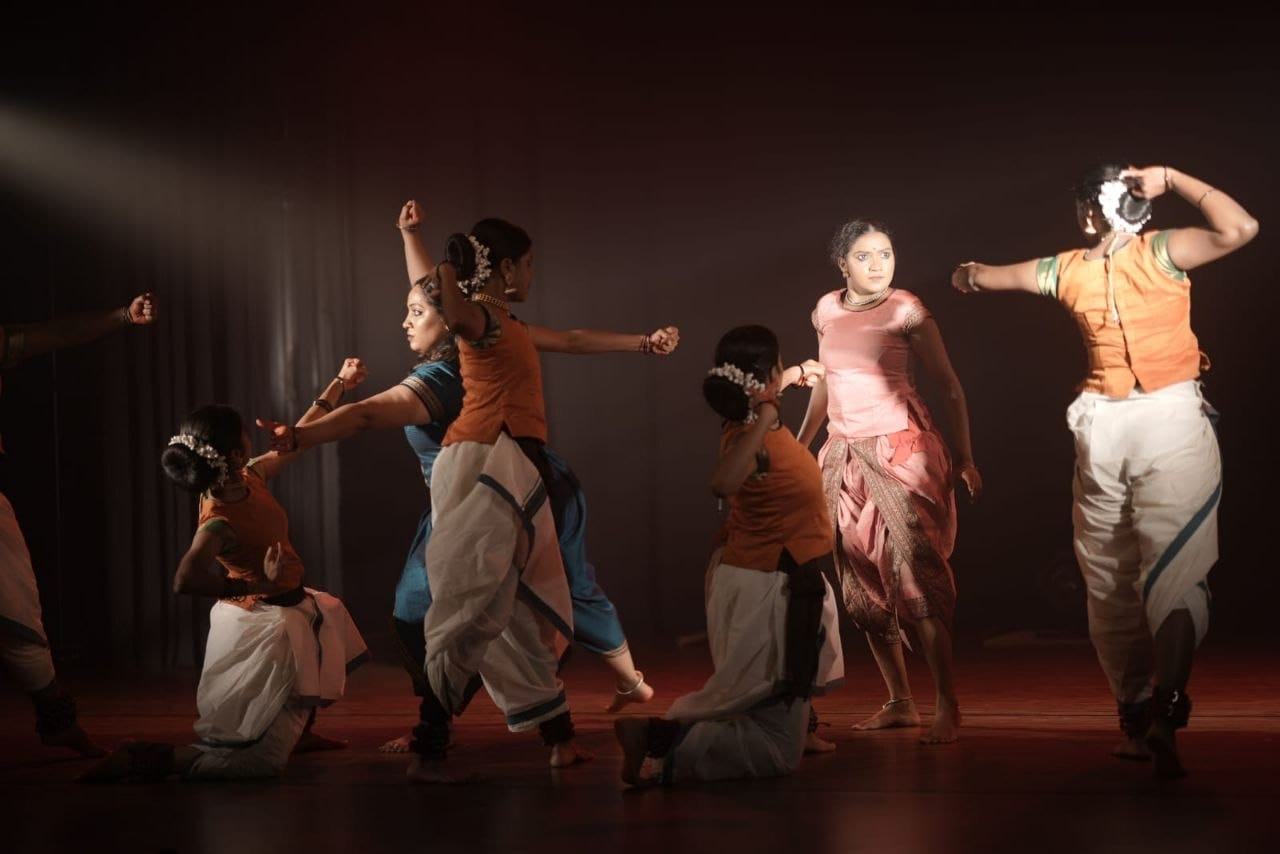
Born and raised in Changaramkulam in North Kerala, Sreeshma’s relationship with dance began with hesitation rather than confidence. Though she had always been interested in classical dance, she only started formally learning Bharatanatyam at the age of 13 or 14, much later than most students around her.
In the world of classical dance, where children often begin training before they even start school, starting late came with immense insecurity.
“When I joined class, there were children my age who had already been dancing for years,” she recalls. “I constantly felt behind.”
Learning was difficult not only physically but also emotionally. While she had a supportive local dance teacher who taught Bharatanatyam and some Kuchipudi, the comparisons around her slowly chipped away at her confidence. Her first stage performance came after Class 10. Even then, she only participated in group dances because the thought of performing alone terrified her. “I didn’t trust myself enough to stand individually on stage,” she says.
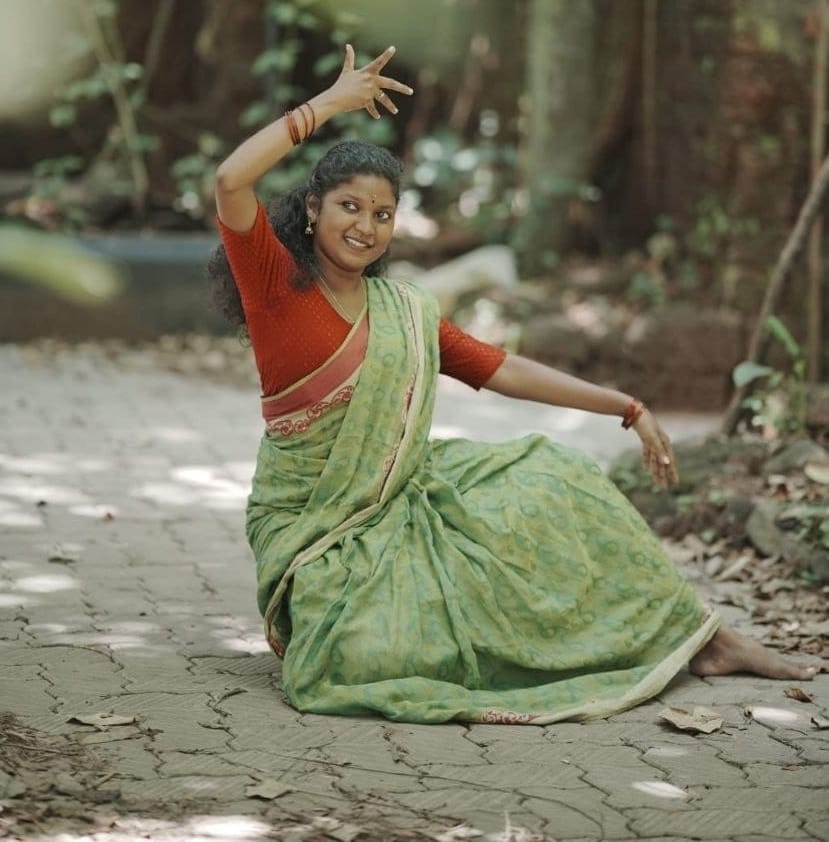
At the time, dance was not something she imagined pursuing professionally. She attended a Technical High School before completing a diploma in Computer Engineering at Thrissur Polytechnic. Like many young people, she seemed headed toward a stable technical career rather than the uncertain world of the arts.
After her diploma, she began working in software while continuing dance training whenever possible. She spent a year in Ernakulam studying dance, where one teacher suggested she focus seriously on dance. But the pandemic interrupted those plans.
Meanwhile, pressure from home regarding marriage and the future began to intensify. Seeking both distance and direction, Sreeshma applied to R.L.V College of Music & Fine Arts, Tripunithura, to pursue a Bachelor’s degree in dance. Though she had hoped to study Bharatanatyam, she was admitted into the Mohiniyattam programme in 2021. The transition was far from easy.
At R.L.V, Sreeshma once again found herself surrounded by students who had trained since childhood.
She struggled with flexibility, technique, and, most importantly, self-worth. “I started believing dance was not meant for people like me,” she says.
Much of that feeling stemmed from years of emotional wounds. Throughout childhood, mistakes were rarely corrected gently. Instead, teachers and relatives compared her to others. “They wouldn’t tell me what I was doing wrong,” she says. “They would just ask me to dance like someone else or insult me in public.”
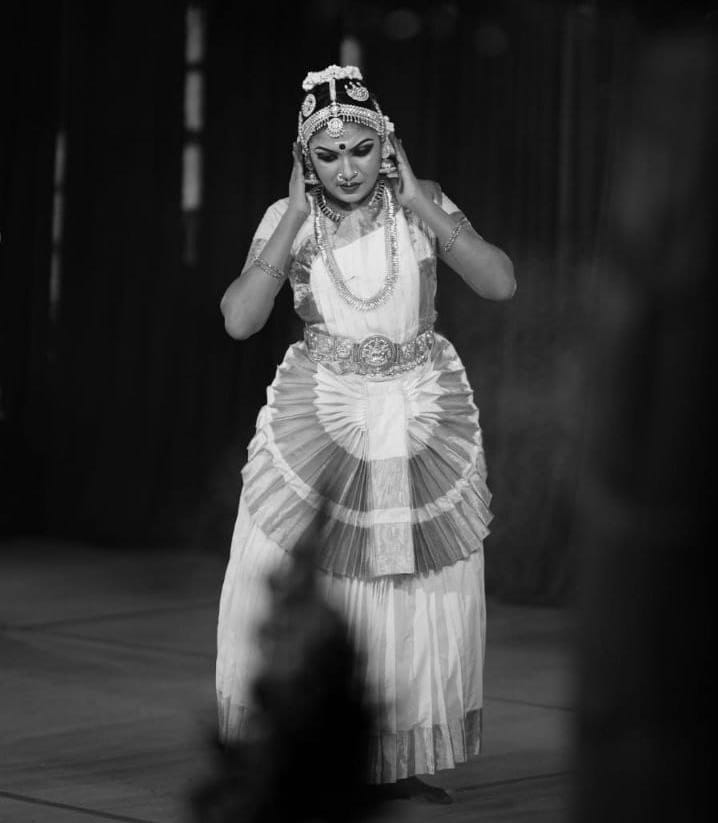
The comparisons became internalised. Whenever she performed, she focused not on expression but on avoiding criticism. If she were moved to the front row during rehearsals, panic would set in. Mistakes made under pressure would then become further proof, in the eyes of others, that she was inadequate.
The culture around classical dance often deepened these insecurities. Sreeshma describes rigid hierarchies within institutions, where some dancers were treated as “main performers” while others remained permanently in the background. Certain teachers, she says, openly favoured students and used humiliation as a teaching tool.
“There’s this idea of guru-bhakti where students are expected to silently accept everything,” she explains. “Sometimes teachers mock students in front of everyone instead of helping them improve.”
She also became increasingly aware of caste-based prejudice and rigid beauty standards within the classical dance world. Traditional ideas about what a dancer should look like left little room for individuality.
In earlier performances, heavy makeup was used to make all dancers appear fair-skinned and identical on stage. For Sreeshma, whose darker skin tone was covered beneath layers of unsuitable makeup, the experience was deeply alienating. “I would look at myself and not even recognise my own face,” she says.
The college syllabus itself reinforced these ideas. Students were required to study concepts such as “Narthaki Lakshanam,” which defines the supposedly ideal dancer according to height, weight, complexion, and physical features. “It felt wrong to memorise these standards when most students, including me, don’t fit them,” she says.
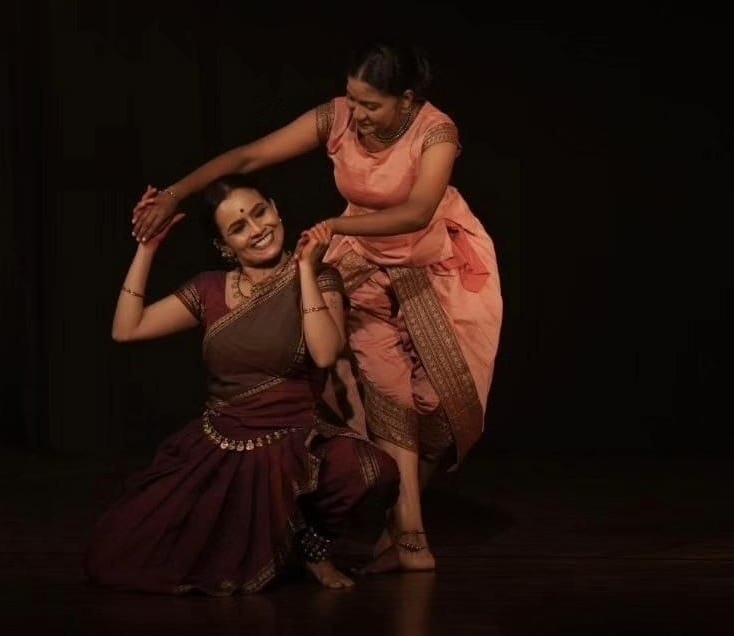
By then, dance had become emotionally exhausting. She often questioned why she was continuing at all. Everything began to change during her second year at R.L.V., when she met Ponnu from Thudippu.
Their connection happened almost accidentally. Since Sreeshma was not staying in the college hostel, her Head of Department suggested a paying guest accommodation run by Ponnu. What began as a housing arrangement gradually became a turning point in her life.
Ponnu, who came from a psychology background, offered something Sreeshma had rarely experienced before: emotional safety. “She encouraged us to think independently and live freely,” Sreeshma says. “Even simple things like going out at night or making our own decisions helped me change my mindset.”
Soon, Ponnu invited her to join Thudippu, a collective that approached performance and movement very differently from the rigid structures Sreeshma had grown used to. For the first time, there was no distinction between “main dancers” and background performers. Everyone was treated equally. Instead of competition, there was collaboration. Instead of humiliation, there was encouragement.
“Thudippu became a sanctuary for me,” she says.
The group’s production Otta proved especially transformative. Although she was not the lead character initially, Sreeshma says every performer was respected equally. The experience helped her reconnect with dance not as a test of perfection, but as a form of self-expression. Slowly, she began feeling more comfortable in her own body.
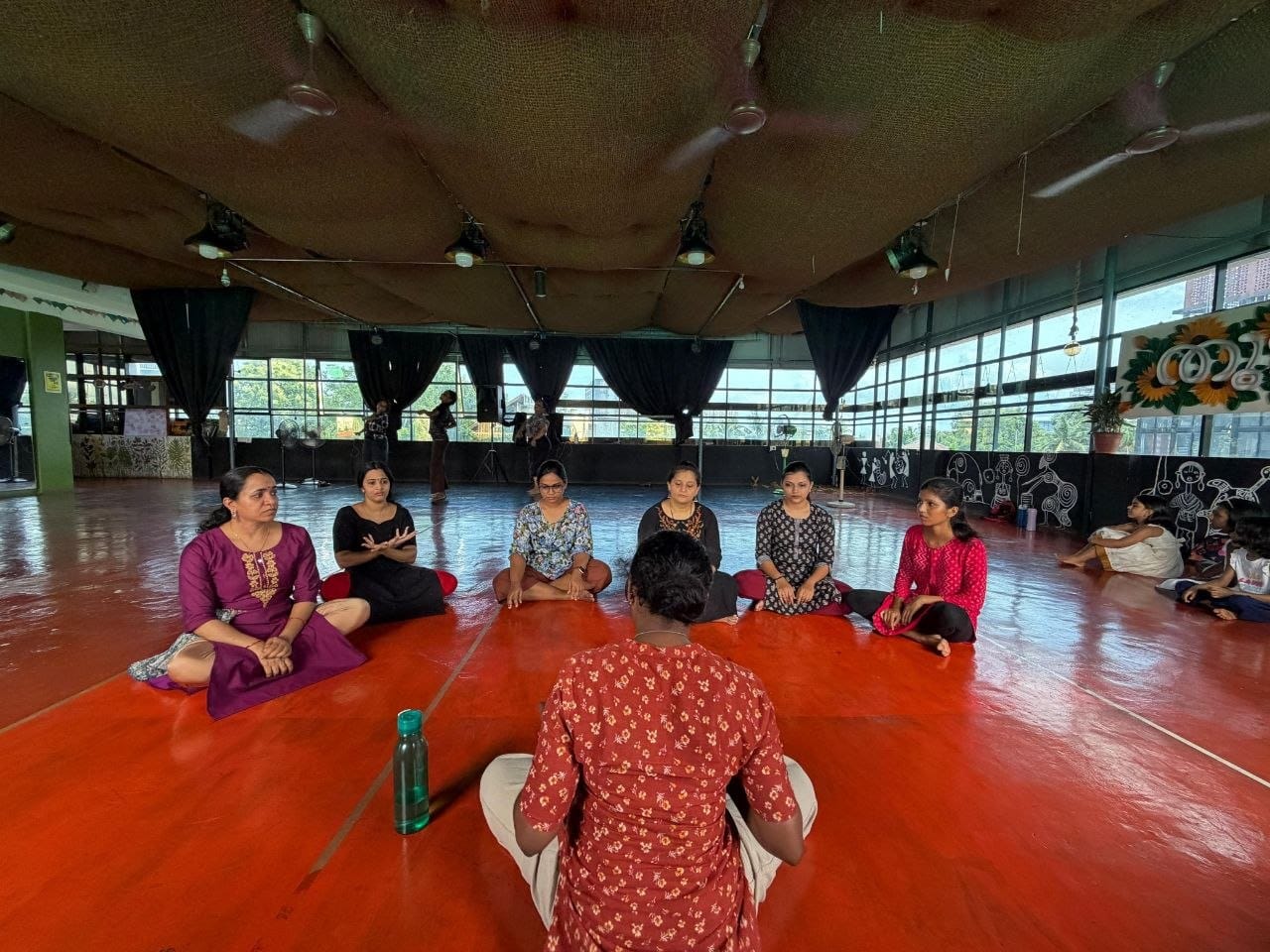
She also started teaching, something she had initially feared. Encouraged by Ponnu, she discovered that students responded warmly to her empathetic approach. Now, Sreeshma sees teaching as deeply personal.
She wants to become the kind of mentor she herself needed growing up. “I never want students to carry trauma from class,” she says.
Rather than comparing children, she focuses on correcting mistakes gently and understanding individual learning styles. She believes art should help students express themselves rather than forcing them into rigid molds.
Though the scars of her earlier experiences remain, Sreeshma says she is finally learning to dance without constantly seeking approval. Recently, she performed during Shivratri celebrations in her hometown, this time with a different sense of confidence. She even spoke openly with her mother about how painful comparisons had been throughout her childhood. Her mother, she says, has since become more mindful.
Today, Sreeshma hopes to continue building a career in dance. She dreams of pursuing a PhD someday and eventually performing a solo production of her own. More importantly, she wants to create spaces where young dancers feel safe, valued, and seen, regardless of when they started learning, how they look, or whether they fit traditional expectations.
For years, Sreeshma believed she had to become someone else to belong on stage. Now, after finding community, acceptance, and confidence through Thudippu, she is finally learning something radical: that her own way of moving is enough.

Sometimes, the people who change lives are simply the ones who know how to listen.

What happens when you walk away from a secure career to follow your calling?


He first knew Chavittu Nadakam as the sound of home. What began with songs drifting through the evenings became a lifelong calling.
aikyam fellows inspire actions on important & urgent needs of the planet and underserved communities.