
Rohit SharmaJustice Reimagined
What if justice didn’t begin in courtrooms, but in classrooms, small cities, towns and everyday lives?
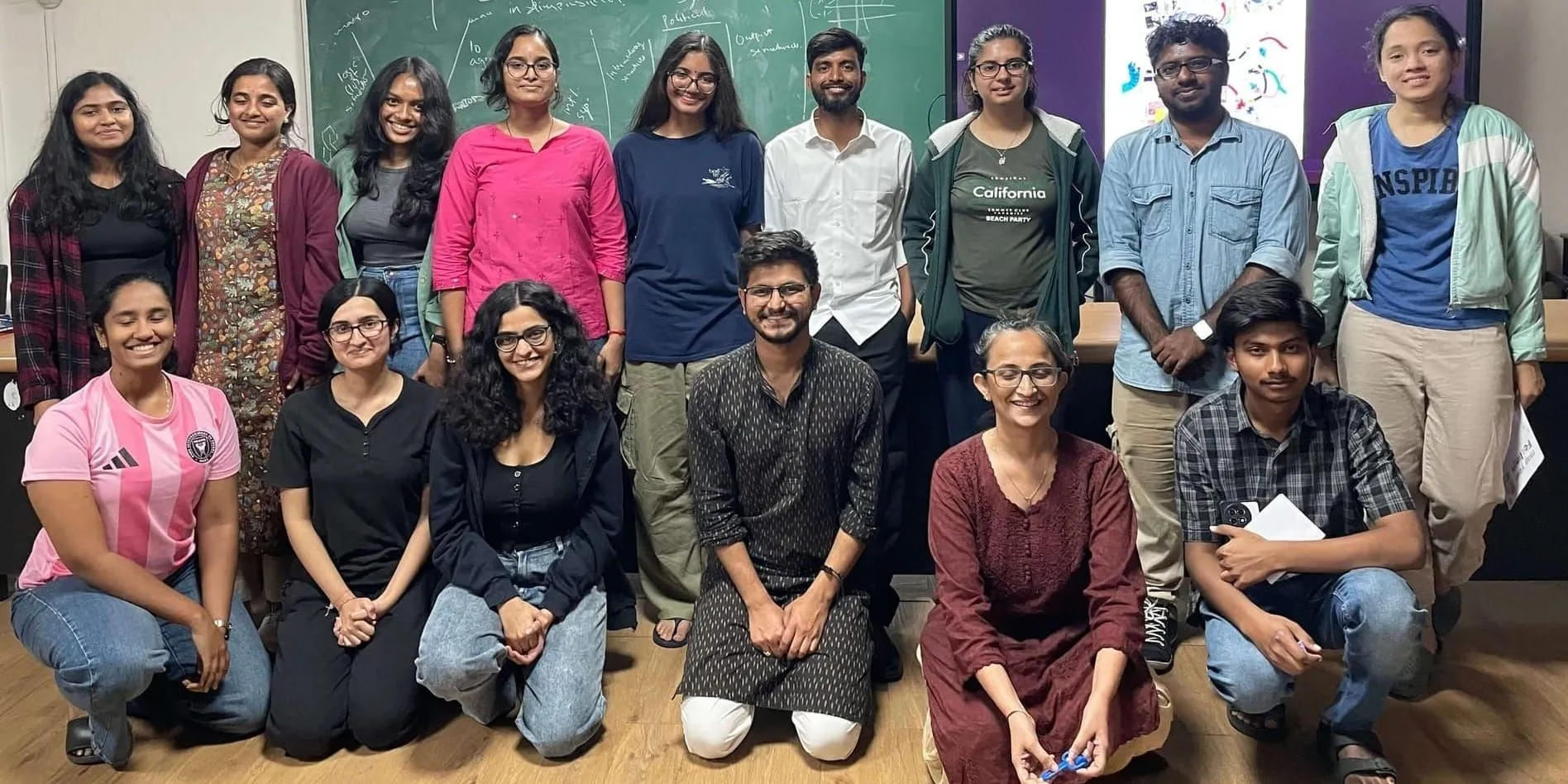
In a country that produces more than five lakh law graduates every year, the dream usually looks the same. A corporate law firm in a metro city. A chamber under a senior advocate. A stable salary, if one is lucky enough to find it. But for Rohit Sharma, the real question was never how many lawyers India produces. It was this: how many young people feel empowered enough to change the communities they come from?
This question eventually became the foundation of Awaaz Leadership Labs, a space which aims to strengthen the capacities of law students and youth through creative learning experiences to solve socio-justice problems. This justice incubator that was launched in December 2022 started with an unusual mission: make justice feel alive, creative and deeply personal for young Indians, especially those studying in regional law colleges that rarely receive the attention or opportunities enjoyed by elite institutions.
Making Justice “Cool” for Gen Z
For Rohit, who is a law graduate himself, the problem was never a lack of talent. It was a lack of imagination.
“Students in smaller cities and towns often care deeply about issues like social security, gender violence, climate change or child rights,” he explains. “But nobody tells them these concerns can become careers, movements or institutions.”
In most law schools, justice is taught through heavy textbooks, dense legal language and courtroom procedure. The system rewards memorisation and hierarchy. For many students, especially marginalised learners, the experience can feel distant from the realities of their own lives. Awaaz tries to change that completely.
Rohit believes young people do not disengage because they are apathetic. They disengage because the language of justice often excludes them. Legal education, he says, has become too formal, too inaccessible and too disconnected from how Gen Z thinks and communicates.
So, Awaaz deliberately speaks differently. Their main approach includes these: Feeling, Imagining, Doing and Sharing. The organisation uses design thinking and play-based learning, which involves creative methods such as theatre, poetry and clay making to help students understand complex social problems in human terms. Instead of discussing justice inequality as an abstract concept, they encourage students to identify injustices in their own streets, schools and neighbourhoods.
Inside Justice Innovation 101
One of Awaaz’s central programmes is called “Justice Innovation 101,” an immersive 12-to-50-hour workshop, where students learn problem solving through hands-on methodology. They identify a local problem, break it down using design-thinking tools and build practical interventions around it.The issues are often hyper-local: reviving a dying river, accessible content in regional languages, lack of access to social security schemes, unsafe public spaces for women, environmental degradation, gaps in child protection systems or discrimination in schools.
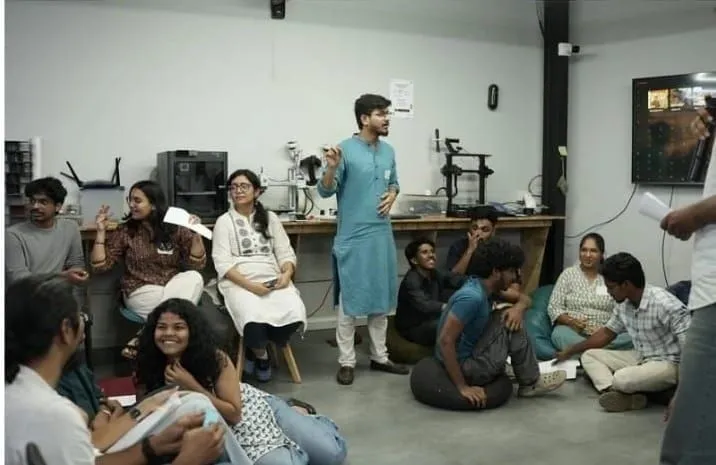
The idea is simple but radical; justice should not only exist in courts. It should exist wherever people are trying to improve everyday life. And for Rohit, this shift in thinking is deeply personal. Over the years, he noticed that understanding justice and getting the opportunities in India’s legal ecosystem are not provided. Out of more than 1,800 law colleges across the country, only a handful consistently expose students to social impact careers, public policy spaces or grassroots justice work. And even in elite universities, most students don’t get quality exposure to justice related problems.
Meanwhile, students in regional colleges often struggle to even imagine themselves in those roles. Many graduate into low-paying litigation jobs where survival itself becomes difficult. Others abandon social concerns entirely because they are repeatedly told that activism and financial stability cannot coexist.
Rohit wanted to challenge that narrative. He wanted students from all parts of country but specially from small cities of Madhya Pradesh, Odisha, Northeast India, Bihar, Kerala or small-town Maharashtra to believe they could build meaningful careers while solving problems in their own communities. This belief sits at the heart of Awaaz’s philosophy of “justice innovation.”
The organisation structures its programmes at different levels. Every participant begins as a “Justice Learner.” Through workshops and volunteering, they can progress into becoming a “Justice Explorer,” someone who builds a project around a local issue. Eventually, some reach the level of “Justice Innovator” individuals who create large-scale interventions or even start their own organisations.
For Rohit, the term “Justice Innovator” matters because it expands the idea of who gets to create change. A justice innovator may be a child rights lawyer helping survivors of abuse navigate the legal system. Another may work on climate justice in a flood-prone district. Someone else might train citizens on constitutional rights or improve access to welfare schemes.
Not all of them work in courtrooms. What connects them is agency, the belief that ordinary people can solve extraordinary social problems when given the right support. This support is something Awaaz is now trying to institutionalise.
The organisation is building partnerships with law schools to create incubation spaces where students can experiment with ideas and receive seed funding for community-focused projects. Rohit hopes colleges themselves will begin funding young innovators who want to test solutions for local challenges in the long run or that they can find legal community members to support them. It is a model inspired less by traditional legal education and more by startup culture.
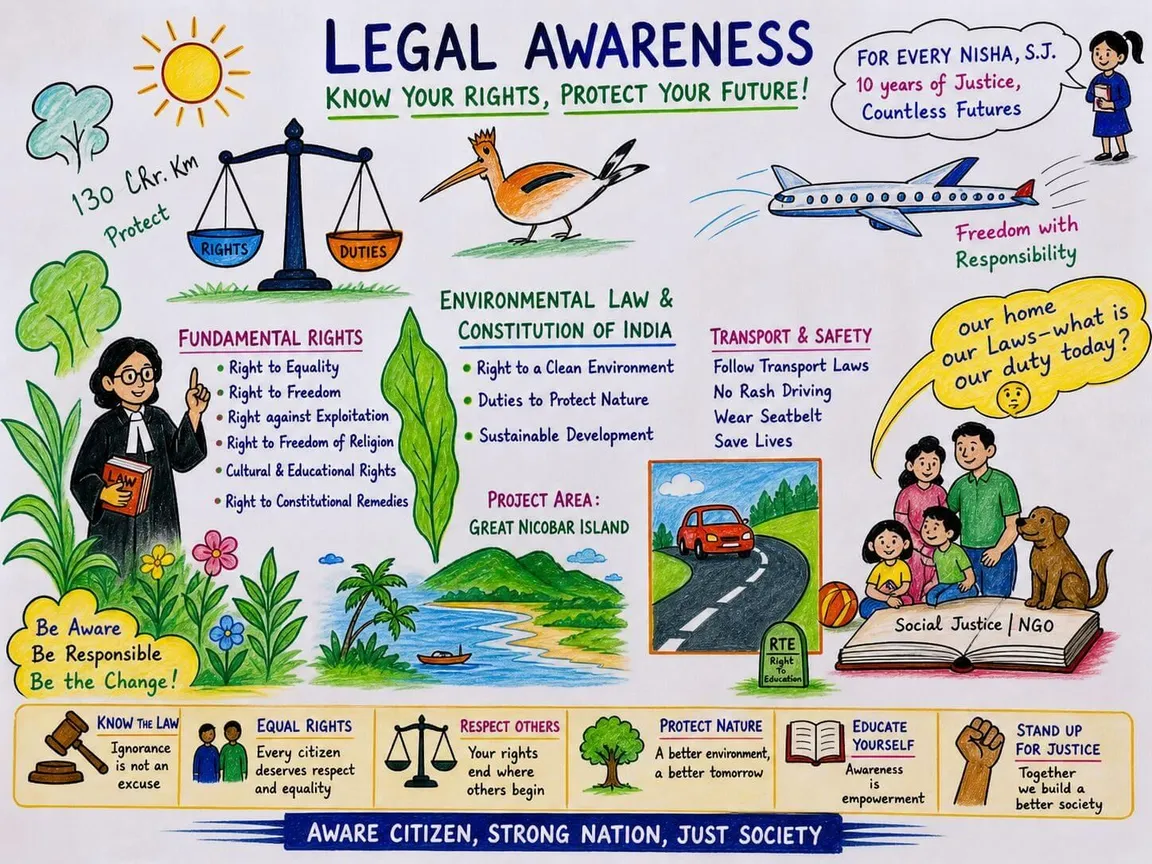
Last year, Awaaz supported ten justice innovators. Some of them are already running organisations in different cities. For Rohit, those stories are proof that talent exists far beyond elite campuses. He recalls conversations with students who entered workshops quietly, unsure of their own abilities, and gradually began imagining entirely different futures for themselves.
“A lot of students just need someone to tell them their ideas matter,” Rohit says. Such a recognition is especially important for students from regional colleges, many of whom come from families where professional stability is non-negotiable. Choosing social justice work can seem risky, even irresponsible. Awaaz therefore spends significant time reframing impact work not as sacrifice, but as possibility.
Rohit often points to India’s growing crisis around pending cases, increasing prison population and lack of legal aid, child rights and POCSO specialists. There is enormous demand for professionals who can work sensitively with vulnerable communities, yet too few students consider these paths viable. Awaaz wants to change that by showing young people that community-centred legal work can also be sustainable, respected and intellectually fulfilling.
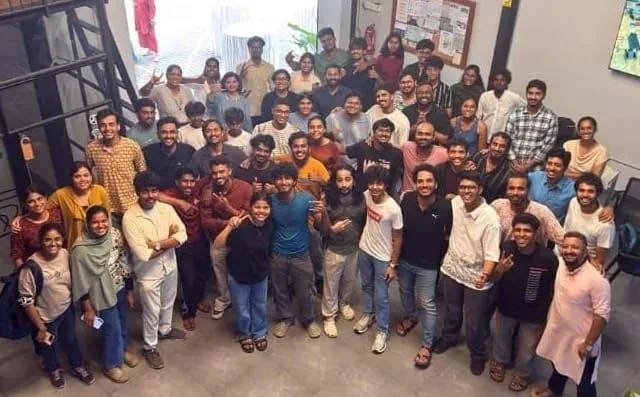
“If we want young people to engage with justice,” he believes, “we have to meet them where they are.” This philosophy has resonated across campuses. In the past year, Awaaz partnered with 18 institutions and trained more than 2500 people through immersive programmes.
Creating Changemakers
But Rohit’s ambitions go much further. He wants at least one faculty member and student society in every college to understand and teach these creative methodologies. He wants justice education integrated into mainstream curriculums rather than remaining an extracurricular activity. Most importantly, he wants social innovation to become decentralised.
The idea of returning home comes up repeatedly in Rohit’s conversations. For decades, success in India has often meant leaving — leaving villages, leaving small towns, leaving regional identities behind in pursuit of opportunity elsewhere. Awaaz imagines a different trajectory.
What if a law graduate from a small town did not have to leave in order to matter? What if the most meaningful work they could do was right where they started? It is an ambitious vision, especially in a country where social problems can feel overwhelming in scale. But Rohit insists change becomes manageable when people focus on what is directly around them. Hyper-local action, he says, creates real accountability.
And perhaps that is what makes Awaaz’s work feel quietly revolutionary. It does not romanticise saviours or heroes. Instead, it asks ordinary young people to see themselves as active citizens capable of shaping the future of their own communities.
In a legal ecosystem often dominated by prestige and hierarchy, Awaaz is betting on something softer but ultimately more transformative: the power of young people who finally believe they belong in the conversation about justice. And for Rohit Sharma, this belief may be the most important innovation of all.
How can you help?
You can use the contact form below to reach out to the fellows directly. They would love to hear from you. A few words can go a long way. In fact, it's the only thing that holds us all together.

Proudly Not For Profit
Asking for donations is always difficult, especially if you are in India where asking for help is always seen as a sign of weakness. But, we believe that access to all the services aikyam provides should be forever free to amazing individuals like Rohit. We are registered as a Not for Profit Company and do not charge any fee to anyone.
If you are somebody who feels that aikyam's work is important, please consider joining our Giving Circle and supporting our work with a monthly subscription. You can stop it anytime from your donation dashboard, no questions asked.
A large number of people like you giving small amounts of money over a long period of time is the way thousands of non profits like ours can continue working on difficult problems. In fact, it's the only way.
Thank you.


One more story like this one
You just read Rohit Sharma’s story. Every fellow’s reaches your inbox the same way.
More fellows in Community & Rights
- Shabana K H
Helping Others Makes Me Happy
A journey of second chances, self-belief, and finding purpose through service to others.
- Greeshma T
When a Career Becomes a Calling
What began as a practical career choice gradually became a journey of self-discovery, empathy, and purpose.