Sometimes, the people who change lives are simply the ones who know how to listen. The same quiet compassion has become the heart of Sentinaro's work, guiding young people through some of life's most uncertain moments.
What happens when you walk away from a secure career to follow your calling? Rahul Thomas' journey reveals how theatre became far more than an art form: it became a path to being fully human.
She was told the Chenda wasn't for girls. From challenging tradition to inspiring women across generations, her journey proves that talent knows no gender.
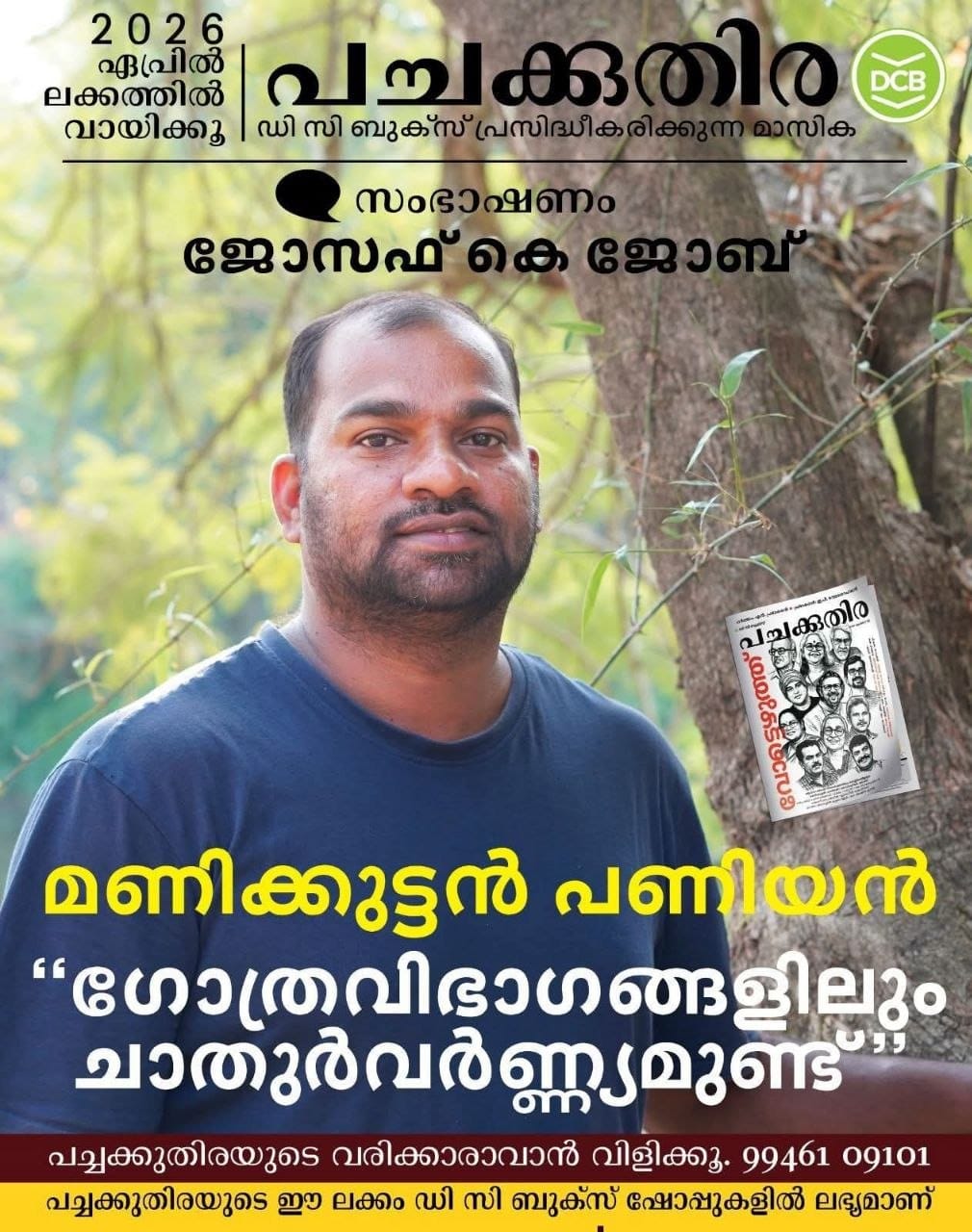
Born into one of Kerala’s most marginalised tribal communities, Manikandan turned hardship into hope. As the first Paniya MBA, he is now working to ensure that education and opportunity reach every corner of his community.
In the tribal heartland of Wayanad, where indigenous communities have lived for generations amid forests and hills, the story of Manikandan stands out as a powerful example of resilience, education, and social commitment. Born into the Paniya community, the largest tribal group in Wayanad and one of the most marginalised indigenous communities in Kerala, Manikandan transformed his personal struggles into a mission to uplift his people.
Today, he is not only recognised as the first person from the Paniya community to earn an MBA but also as a grassroots activist working to secure dignity, representation, and opportunities for some of the most disadvantaged tribal families in the state.
A Community at the Margins
The Paniya community carries a painful historical legacy. For centuries, Paniyas were bonded agricultural labourers who worked under landlords and were often bought and sold along with the land they cultivated. Although slavery was formally abolished, its social and economic consequences continue to shape the lives of many Paniya families. Landlessness, poverty, low educational attainment, and dependence on agricultural wage labour remain common realities.
Manikandan grew up within these circumstances. His childhood was marked by hardship, instability, and struggle. His father’s alcoholism created a difficult home environment, while frequent domestic conflicts added to the challenges faced by the family. Much of his upbringing was overseen by his second sister, who was fourteen years older than he and played a crucial role in supporting his education and development.
His educational journey was far from straightforward. During his school years, he suffered an illness that forced him to drop out for six months while studying in the fifth standard. Returning to school was difficult, but a small educational grant of ₹1,500 that he received upon rejoining classes became a memorable milestone. With the money, he bought his first wristwatch, Manikandan recalls fondly.
Like many tribal children, Manikandan struggled with feelings of inferiority. He recalls how students from tribal backgrounds often felt excluded because of their appearance, clothing, and economic conditions. While other children arrived in neat uniforms, many tribal students carried visible signs of poverty. These experiences reinforced a sense of social distance and self-doubt.
However, a turning point came when he was elected class leader in the eighth standard. The position gave him confidence and self-respect, encouraging him to move from the back benches to the front of the classroom, both literally and symbolically.
Education became his path to transformation. To escape the noise and disruptions caused by his father's drinking, he developed a rigorous routine of waking up at three in the morning to study. This discipline carried him through higher education despite numerous setbacks. One particularly painful obstacle arose when his admission to a government college was delayed because his father accidentally used some of his educational certificates to wrap firecrackers during the Vishu festival. Yet Manikandan persisted, eventually earning a degree in Economics from Newman's College and later completing an MBA at Vedavyasa Institute in Kozhikode.
Breaking New Ground
His achievement was historic. As the first person from the Paniya community to obtain an MBA, he became a symbol of possibility for tribal youth across Wayanad. The accomplishment attracted public attention and recognition from the state's Scheduled Tribes Minister at the time.
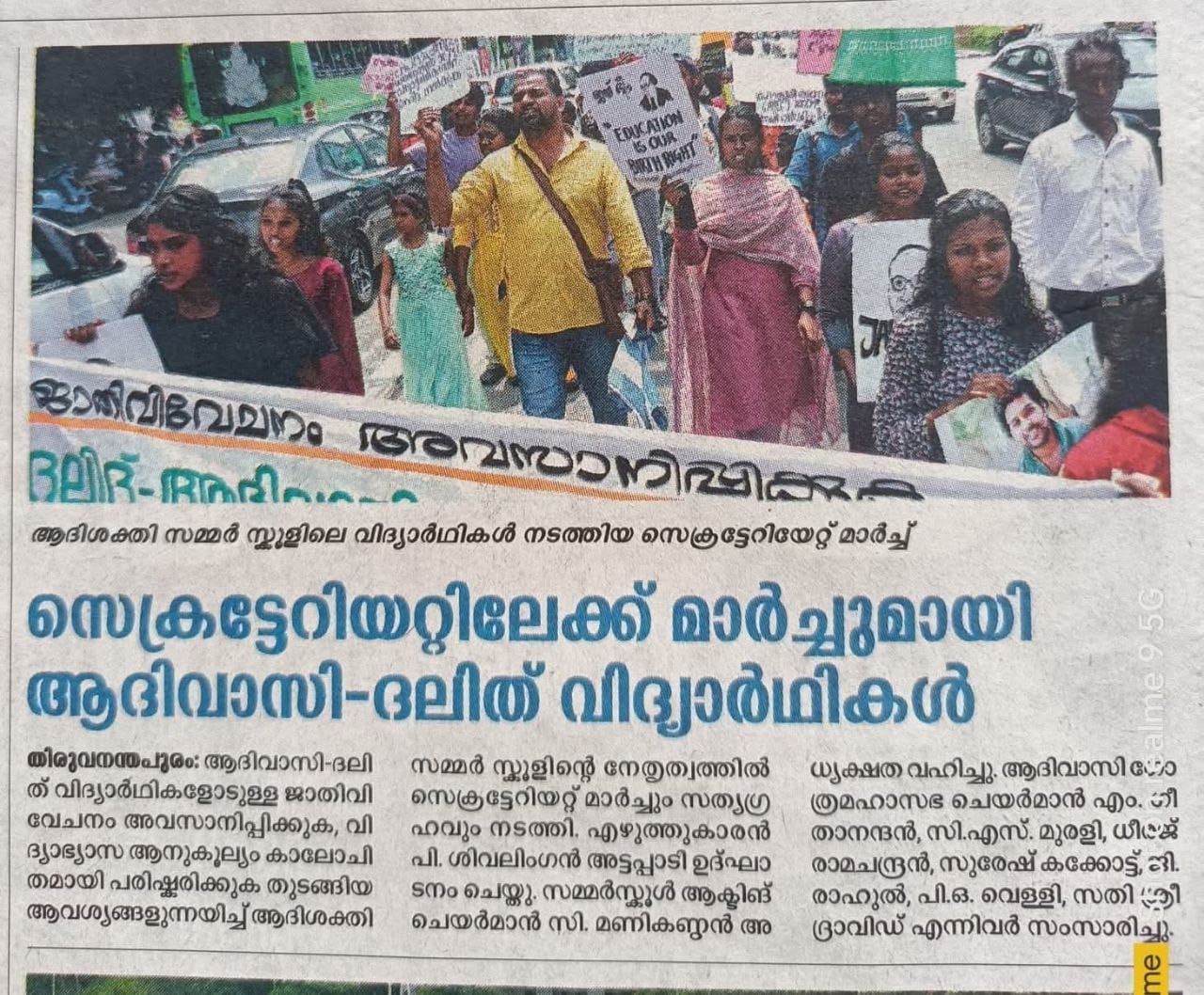
Yet for Manikandan, personal success was never the final goal. Instead, education gave him a broader perspective on the structural inequalities affecting his community and inspired him to become an advocate for change.
One of his most significant contributions has been challenging the stigma associated with Paniya identity. In a society where caste and community names often carry social meaning, Manikandan deliberately adopted the name “Manikkuttan Paniyan” on social media. His decision was both personal and political. He argues that the name “Paniyan” should command the same dignity and respect accorded to surnames associated with socially dominant communities. By publicly embracing his identity, he seeks to inspire younger members of the community to take pride in their heritage rather than conceal it.
At the centre of Manikandan’s activism is the demand for greater equity within tribal welfare policies. Kerala officially recognises thirty-six Scheduled Tribe communities, yet he argues that these groups do not share the same social and economic conditions. According to him, communities such as the Kurichiyas and Kurumas, who often possess land, financial stability, and stronger social networks, are able to access a disproportionate share of educational and employment opportunities. Meanwhile, the Paniyas, despite constituting nearly half of Wayanad’s tribal population, continue to remain among the most disadvantaged.
For this reason, Manikandan has emerged as a strong advocate for sub-reservation within the Scheduled Tribe category. He believes that treating all tribal groups as a single homogeneous category ignores profound differences in historical disadvantage and present-day opportunity. Recent constitutional developments permitting states to consider sub-classification within reserved categories have strengthened his argument that affirmative action must be targeted toward those communities that remain at the bottom of the social hierarchy.
Political representation forms another pillar of his vision. Although he does not describe himself as naturally inclined toward politics, he believes meaningful change requires political power. He argues that the most backward tribal communities are often absent from decision-making spaces and that political parties frequently overlook them when selecting candidates and leaders. Without dedicated representation, he fears that longstanding inequalities will persist and that the voices of communities like the Paniyas will continue to be ignored.
Building a Better Future
Alongside these larger policy concerns, Manikandan remains deeply involved in practical grassroots work. One of his most important initiatives is the ABCD literacy campaign, which focuses on tribal youth and adults between the ages of eighteen and thirty-six. The campaign aims to help community members obtain essential identity documents such as Aadhaar cards, voter identification cards, and health identification numbers. While these documents may seem routine, many tribal families lack them due to bureaucratic hurdles, home births without official records, remote living conditions, and the high costs associated with documentation procedures.
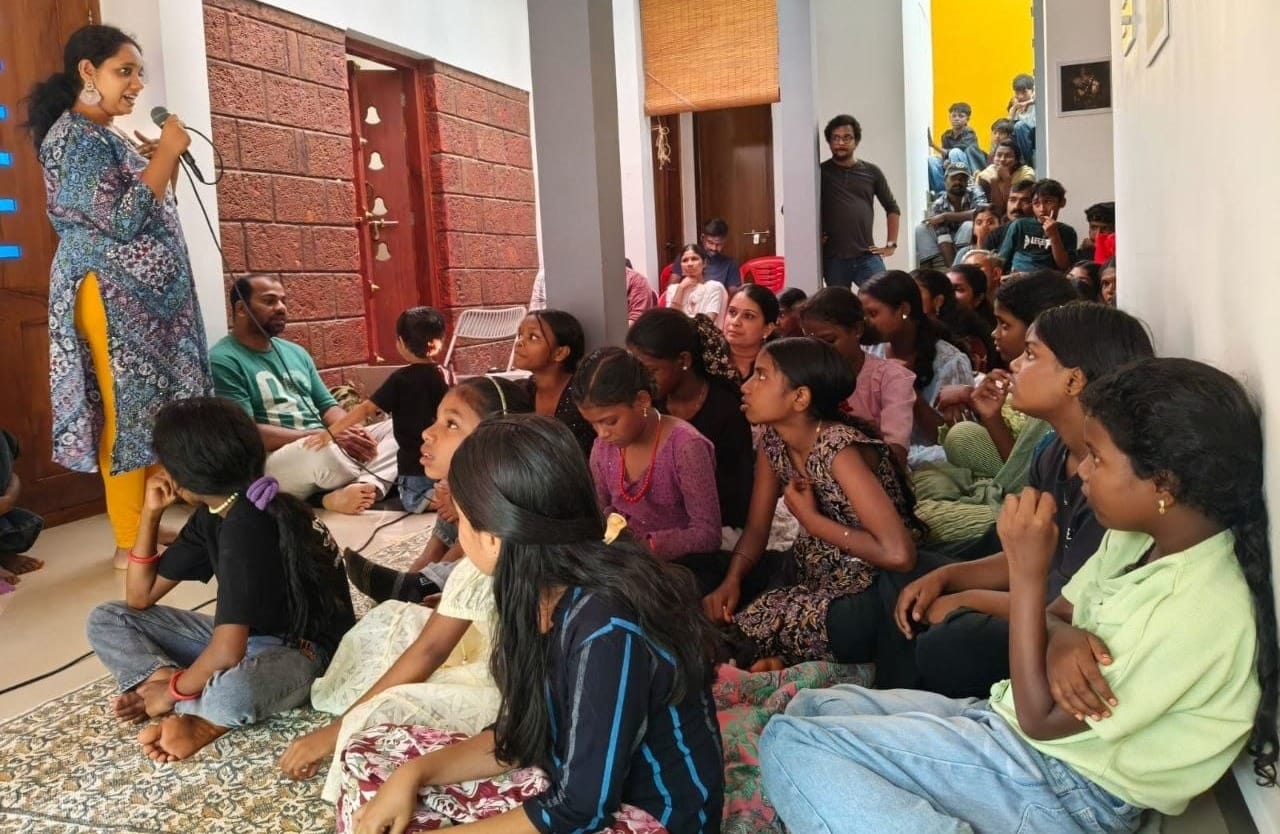
Through the campaign, Manikandan and his team assist individuals in navigating complex government systems that often exclude the most vulnerable. They help people secure birth certificates, update ration cards, access welfare schemes, and participate in elections. In doing so, they work to ensure that tribal citizens become visible to the state and gain access to services that many others take for granted.
His efforts extend into education and healthcare as well. He organises camps to assist students appearing for Save A Year (SAY) examinations and works to encourage tribal children to remain in school. He also supports initiatives that place volunteers in hospitals to help tribal patients understand medical prescriptions, diagnostic tests, and treatment procedures. These interventions address practical barriers that frequently prevent community members from accessing quality healthcare.
As schools reopen each year, Manikandan also focuses on fundraising efforts to provide school kits and educational materials to children who have lost parents or face severe economic hardship. These initiatives reflect his belief that social transformation begins with small but meaningful acts of support.
For Manikandan, education is not merely a personal achievement but a collective responsibility. “ I realised that my education can be said to be truly complete not when I myself receive an MBA, but only when I also help others in my community to get to higher studies”, says Manikandan.
His life demonstrates how determination, education, and community engagement can challenge generations of exclusion. Through advocacy, mentorship, and grassroots action, he continues to work toward a future in which the Paniya community is not defined by historical disadvantage but empowered by opportunity, representation, and dignity.
Sometimes, the people who change lives are simply the ones who know how to listen. The same quiet compassion has become the heart of Sentinaro's work, guiding young people through some of life's most uncertain moments.
She was told the Chenda wasn't for girls. From challenging tradition to inspiring women across generations, her journey proves that talent knows no gender.
What if the stories hidden in old streets could shape the future of a city? For Adheena Ashfaque, a childhood surrounded by the living heritage of Mattancherry has grown into a mission to make Kochi’s history accessible, inclusive, and meaningful for everyone.
For over 12 years, Noufal Mahboob carried a simple but powerful idea: meaningful change begins locally. Today, through Local Sustainable Living, he has created a space where sustainability, livelihoods, creativity, and community come together under one roof.