
Sentinaro Shiu | A Heart that Listens
Sometimes, the people who change lives are simply the ones who know how to listen.
Sometimes, the people who change lives are simply the ones who know how to listen.

What happens when you walk away from a secure career to follow your calling?
From telling stories through film to building a community movement

In a quiet residential neighbourhood, people of all ages gather to play traditional games, attend workshops, listen to music, share stories, and discover products made with care. There are no salespeople urging customers to buy. There are no flashy advertisements. In fact, there are no staff members at all.
This is Local Sustainable Living, a community-driven initiative founded by filmmaker Mujeeb and his partner and cousin Noufal. More than a marketplace, it is a space where people connect, create, and support one another. At its heart lies a simple belief: local communities thrive when people are given the opportunity to grow together.
For Mujeeb, however, the story of Local began long before the first festival, workshop, or self-running store.
From Philosophy to Filmmaking
Mujeeb's educational journey took an unusual path. He graduated in Philosophy from Maharajas College, but filmmaking was always where his heart belonged. After completing Plus Two, he received a scholarship from the Kerala Government to attend a film workshop at the Film and Television Institute of India (FTII) in Pune. Over the years, he worked as an assistant to many professionals in the industry and gradually built his own experience as a filmmaker.
Even while studying philosophy, he knew his future was in visual storytelling. "I always knew filmmaking was my path," he says.
Commercial ambitions did not drive his early films. Instead, they focused on social themes and ideas that could inspire change. This interest in people, communities, and meaningful stories would later shape the vision behind Local. The roots of Local can be traced back to Broadway Communication, a business started by Mujeeb's uncle more than forty years ago.
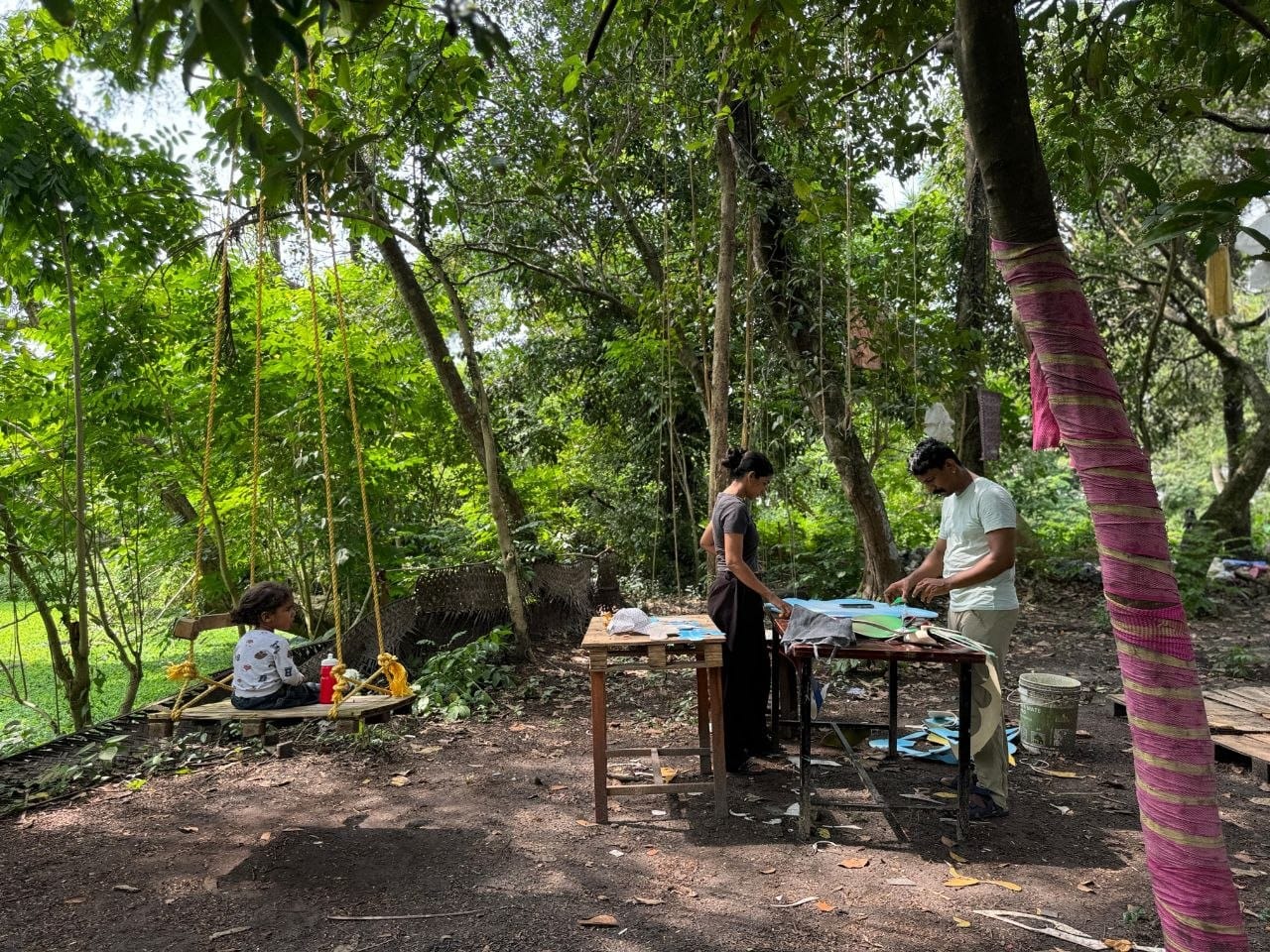
For Mujeeb and Noufal, Broadway was more than a workplace. It was a gathering place where friends met, exchanged ideas, experimented, and dreamed about new possibilities.
Hailing from a large joint family, Mujeeb grew up surrounded by collaboration. One of their early experiments was a neighbourhood initiative called "O, The Homemade Circle." The women in the family sold homemade food items such as Kappa, Chammanthi, Cakes, and Snacks through online networks.
As Mujeeb travelled for filmmaking projects, he met artists, makers, and craftspeople creating remarkable work that often went unnoticed. Many lacked the resources to reach wider audiences despite the quality of their products.
A question began to emerge: How could these talented people be brought together and supported? The answer eventually became Local.
Building a Physical Space in a Digital World
At a time when most platforms were moving online, Mujeeb and Noufal chose a different direction. "We didn't want a virtual space," he explains. "There are already plenty of those." What they felt was missing were physical spaces where people could meet face-to-face.
Local was designed as an open and welcoming environment where community members could gather without barriers. Visitors could browse handmade products, participate in workshops, enjoy performances, or simply spend time together.
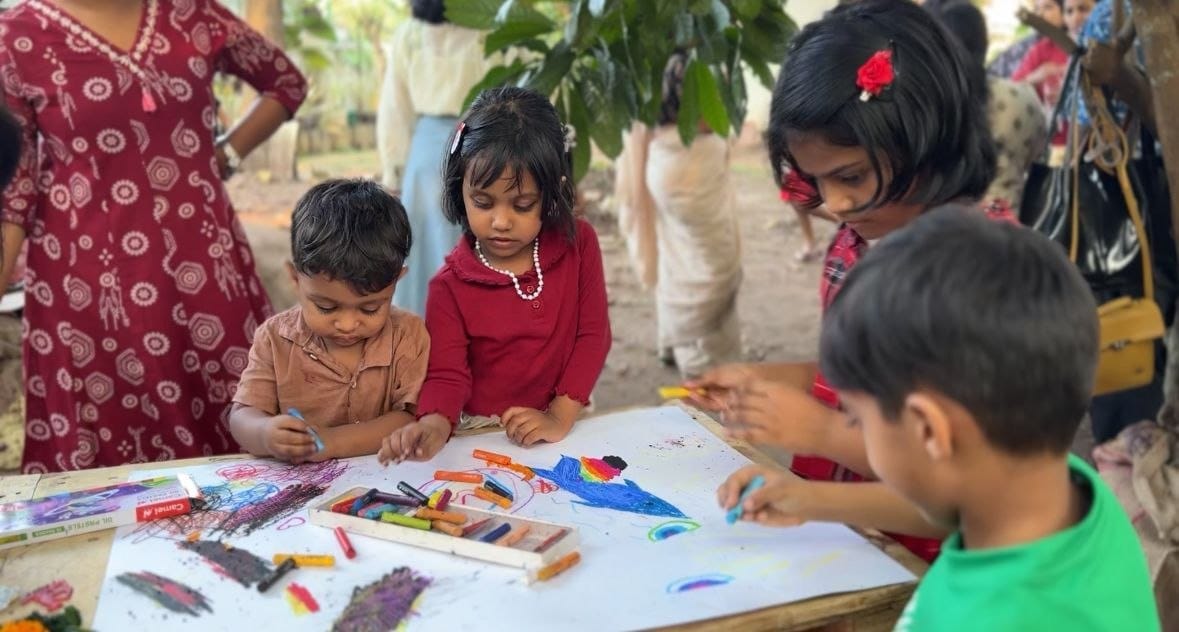
Children and adults could play traditional games such as pamparam (top) and katchu. Artists could showcase their work. Entrepreneurs could test ideas without taking major financial risks. The goal was never just to sell products. It was to create a space where relationships could grow.
One of the most unusual aspects of Local is its operating model. The store functions without staff. Customers simply scan a QR code and make payments themselves. For many businesses, such a system might seem risky. For Mujeeb, it reflects the values the initiative hopes to promote.
Trust, responsibility, and mutual respect are not treated as idealistic concepts. They are part of everyday practice. The same philosophy extends to vendors. Sellers set their own prices and retain full control over their products. Local takes only a minimal margin from sales.
There are no minimum quantity requirements and no exclusivity agreements. Vendors are free to sell elsewhere while using Local as a platform to gain visibility. By removing expenses such as high rent and staffing costs, the model creates opportunities for people who might otherwise struggle to enter the market.
Supporting Makers
Local follows one important rule: products must be original. The platform prioritises self-made goods, community initiatives, and locally produced items. Reselling products purchased elsewhere is not allowed. This policy ensures that creators receive direct recognition and income for their work.
For food and cosmetic products, an FSSAI licence is mandatory. For crafts, clothing, and other handmade goods, Mujeeb and his team personally verify the production process. Their commitment is not just to sustainability but to authenticity.
By supporting creators directly, Local strengthens a circular economy in which the benefits remain within the community. When vendors succeed, the entire ecosystem grows stronger.
Inclusivity is one of Local's defining values. The initiative actively supports women, home-based entrepreneurs, and people with disabilities. Those who cannot afford a stall are often given one free of charge. Around 10 to 15 per cent of stall spaces are regularly reserved for people who need financial support.
Mujeeb and Noufal believe that a lack of money should never stop someone from pursuing an idea. The same approach applies to workshops. Those who want to try out taking workshops for the first time are welcome to host them at the space.
The emphasis is on participation rather than profit. This spirit of accessibility has helped create a community where people feel welcome regardless of their background or financial circumstances.
When a Festival Became a Movement
The first Local event was originally planned as a simple Onam market. However, despite heavy rain on the opening morning, crowds began arriving by the afternoon. The organisers had expected around 500 visitors. Instead, nearly 700 people attended.
The event generated an energy that exceeded expectations. Visitors wanted another edition. Vendors wanted to return. Artists wanted to contribute. Soon, a second festival followed.
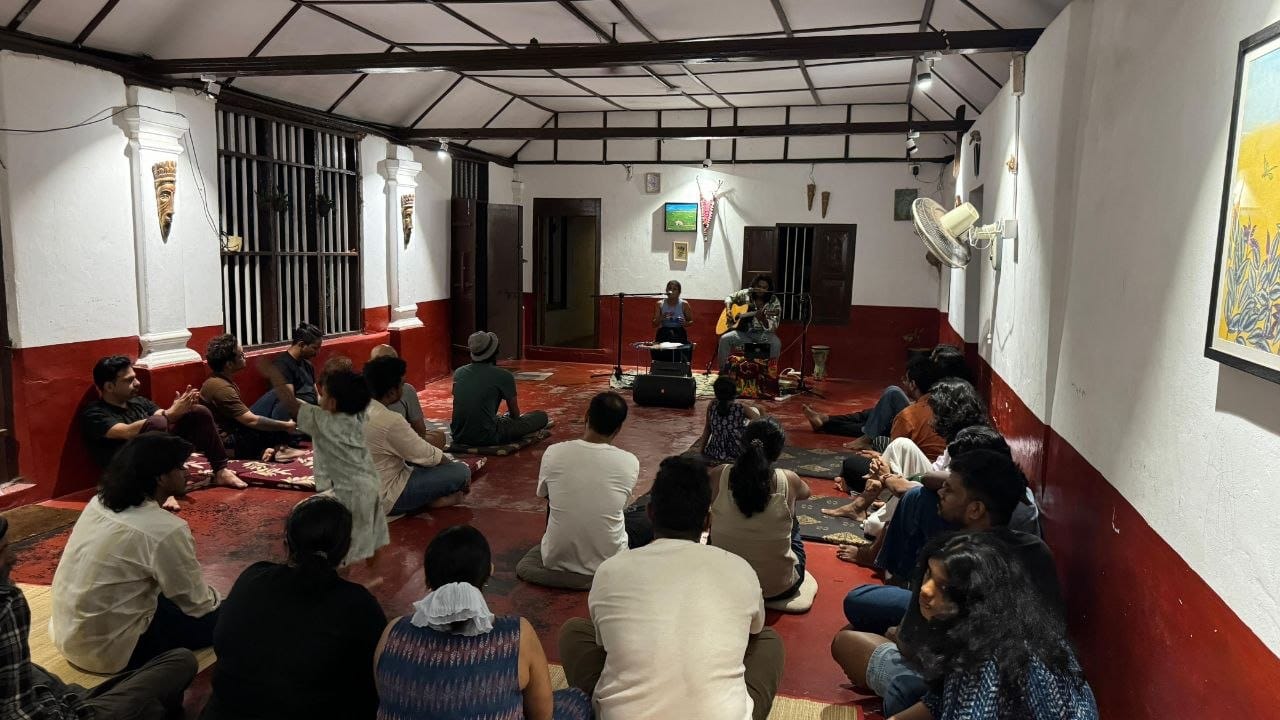
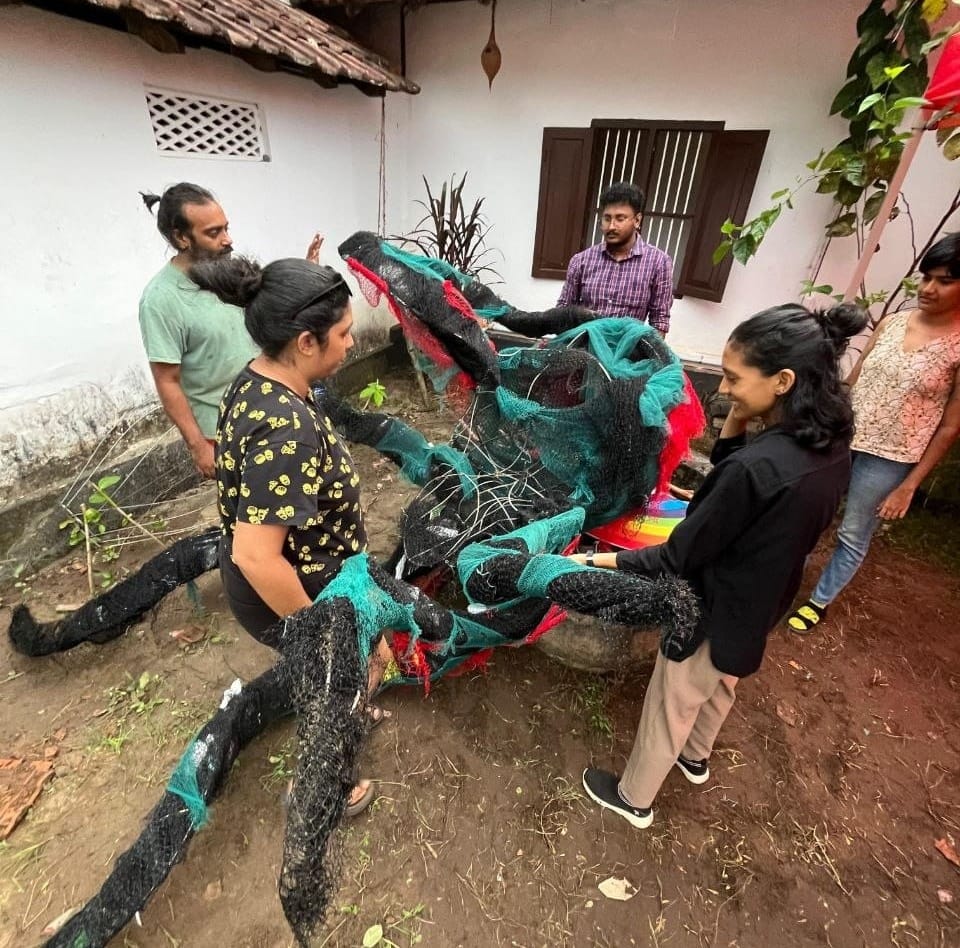
Musicians, performers, and volunteers joined the movement. A UK-based band that was touring the city offered to perform. Artists such as Oorali became part of the celebrations. Traditional art forms like Ottanthullal and Ghazals were performed. One memorable installation featured a giant octopus sculpture created from discarded fishing nets collected from Thoppumpady harbour, a powerful symbol of creativity, sustainability, and community action. What began as a small gathering was evolving into something much larger.
Although Local welcomes everyone, maintaining a healthy community requires boundaries. The venue is located within a residential neighbourhood, making respect and discipline essential. Mujeeb and Noufal quietly oversee activities, ensuring that the environment remains safe and welcoming for all.
Most visitors naturally embrace the spirit of the space. If someone forgets community norms, gentle guidance is usually enough. However, when behaviour becomes disruptive or repeatedly disrespectful, the founders take a firm stance. Their responsibility extends beyond the participants to the surrounding neighbourhood, which makes the initiative possible. For them, community is not only about openness. It is also about accountability.
A Living Example of Sustainable Community
Today, Broadway Communication continues to provide financial stability for Mujeeb and his family, while Local remains a labour of love driven by purpose rather than profit.
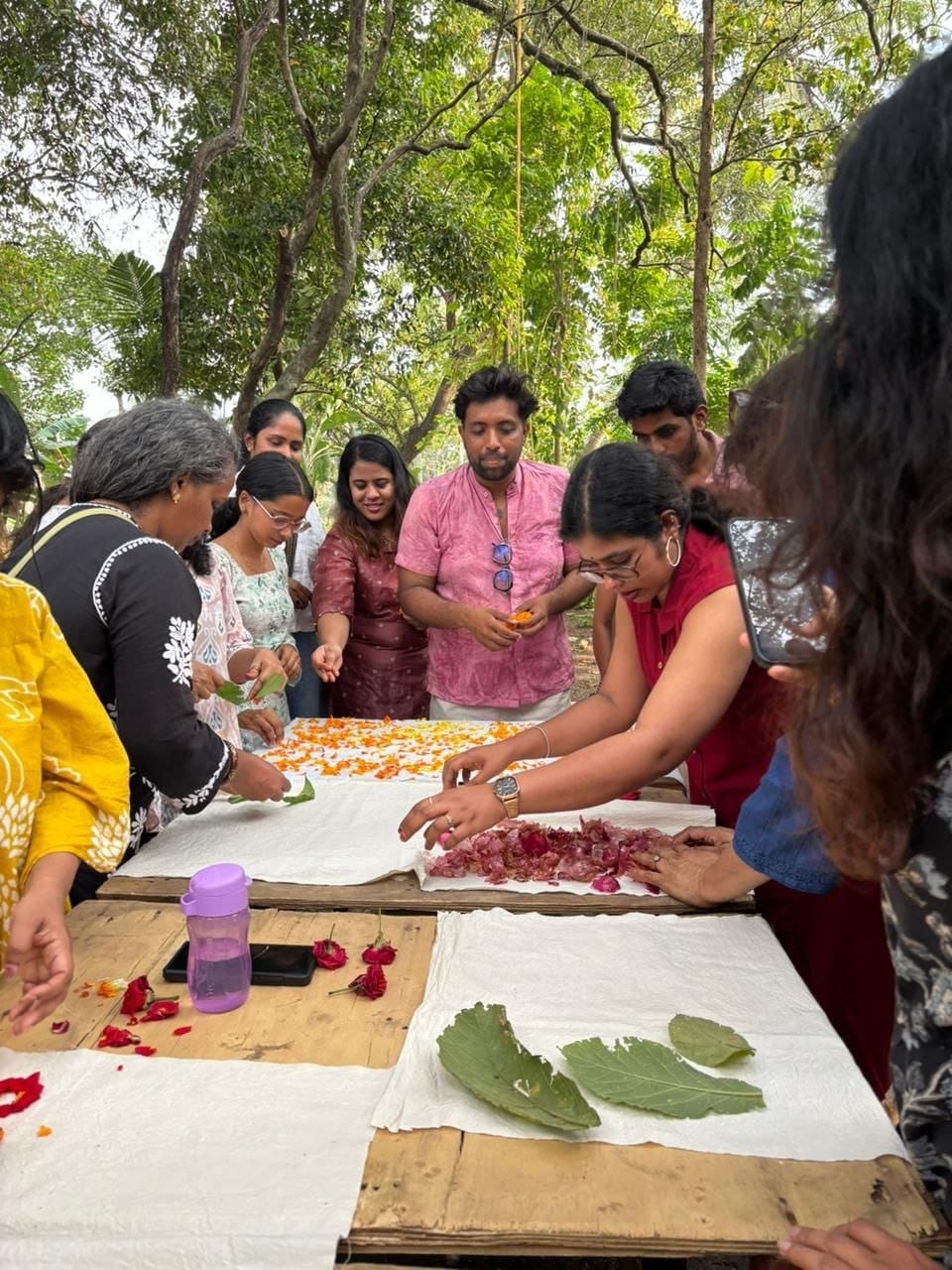
What makes Local remarkable is not simply its marketplace, festivals, or workshops. It is the way these elements come together to create something increasingly rare: a space where people trust one another, support one another, and grow together.
From a filmmaker's passion for meaningful stories to a community movement built on cooperation, Mujeeb's journey demonstrates that sustainability is about much more than environmental responsibility. It is about sustaining people, relationships, creativity, and hope. And in a world that often feels disconnected, Local is proving that sometimes the most powerful ideas begin right next door.

Sometimes, the people who change lives are simply the ones who know how to listen.

What happens when you walk away from a secure career to follow your calling?


He first knew Chavittu Nadakam as the sound of home. What began with songs drifting through the evenings became a lifelong calling.
aikyam fellows inspire actions on important & urgent needs of the planet and underserved communities.