
Sentinaro Shiu | A Heart that Listens
Sometimes, the people who change lives are simply the ones who know how to listen.
Sometimes, the people who change lives are simply the ones who know how to listen.

What happens when you walk away from a secure career to follow your calling?
A simple but powerful idea: meaningful change begins locally.

Long before there was a space called Local Sustainable Living, before the festivals, workshops, and community gatherings, there was simply an idea. For over a decade and a half, Noufal and his cousin Mujeeb carried it with them.
It wasn't written down in business plans or investor decks. It existed as a mental blueprint shaped by years of observation, travel, experimentation, and conversations with ordinary people. Noufal didn't know exactly what form it would take, but he knew one thing: he wanted to create something rooted in the social. "I was always curious about the different lifestyles adopted by people," he says.
Growing up in Kochi, Noufal was not what most would describe as an academic achiever. After studying Travel & Tourism (VHSE) at Darul Uloom School, Ernakulam, he pursued a degree in tourism, largely because he loved exploring places and meeting people. Yet some of his most important lessons happened outside of classrooms.
His father had founded an advertising agency, Broadway Communications, more than 40 years ago. As a teenager, Noufal spent his afternoons at the office after school, gradually absorbing the rhythms of business, design, communication and entrepreneurship.
By the time he completed higher secondary education, he had developed a fascination not only with art and business but also with culture, lifestyles and human stories. It is this curiosity that would eventually become the foundation of Local Sustainable Living.
Sustainable Solutions
Noufal remembers noticing people sleeping on shop verandahs and wondering about the circumstances that brought them there. He and his friends distributed clothes and tried various forms of direct assistance.
But something about the model troubled him. A meal could solve hunger for a day. A donated shirt could meet an immediate need. Yet neither addressed the larger question of sustainability.
"I realised that one-time help wasn't a long-term solution," he says. The experience shifted his thinking. Instead of asking how to help people temporarily, he began asking how people could support themselves sustainably.
This question became the seed of Local Sustainable Living. The idea was simple yet ambitious: create a platform where people could pursue what they love, generate income from it, and become self-reliant without money acting as the primary barrier.
Finding the Right Home
For nearly a year and a half, Noufal and friends searched for a physical space that matched their vision. They wandered through neighbourhoods, spoke to strangers, explored forgotten properties and followed recommendations from people they met along the way.
And then they found it! The location was a 200-year-old traditional house, surrounded by a pond, trees, and an eco-system around it. It wasn't polished or commercial. Parts of the property were overgrown. The rear area resembled a small forest.
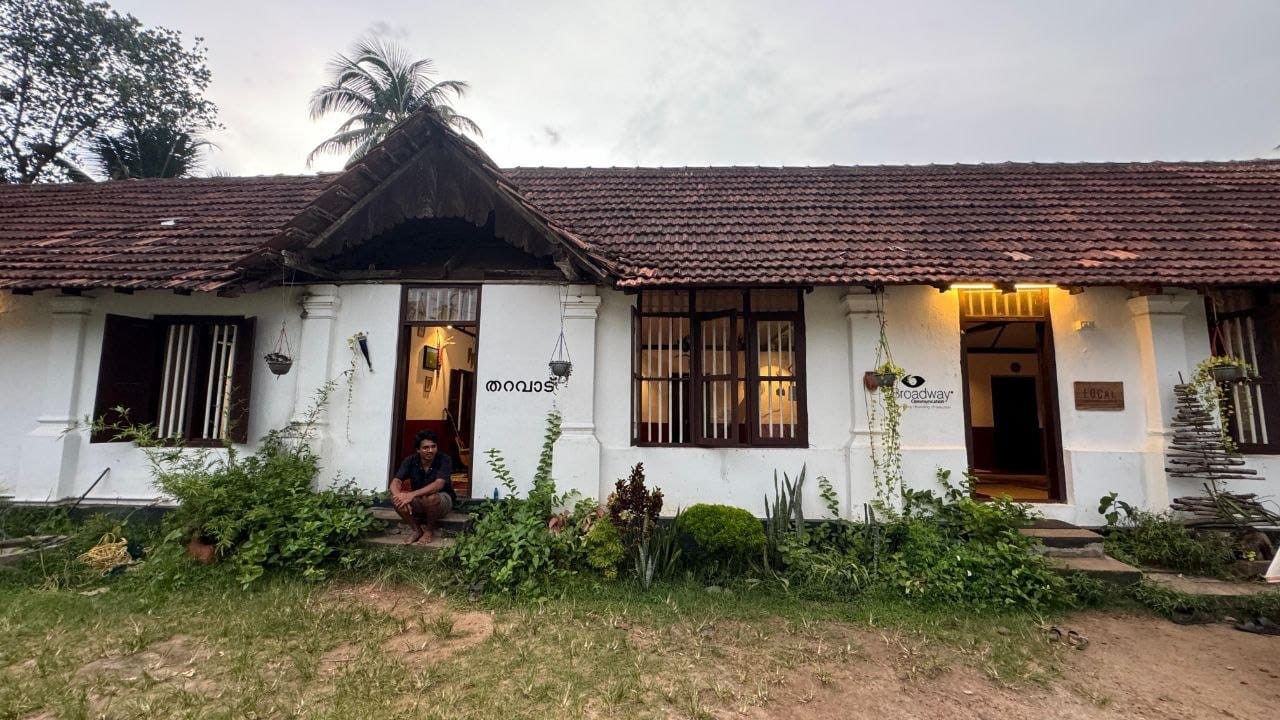
There were snakes. There were monitor lizards. For Noufal and Mujeeb, this wasn't a problem. Coexistence was part of their philosophy. Talking to Noufal, I was reminded of the legendary writer Vaikom Muhammad Basheer’s short story titled “Bhoomiyude Avakaashikal”, which translates to “The Rightful Inheritors of the Earth”.
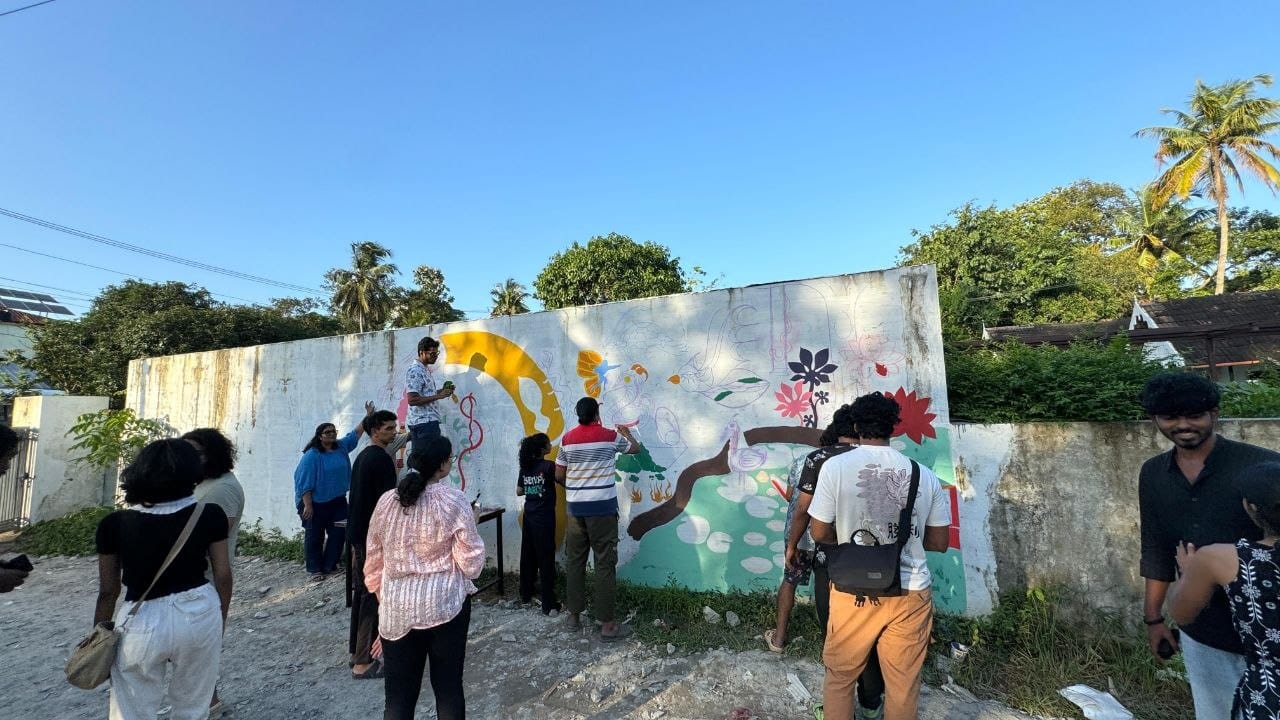
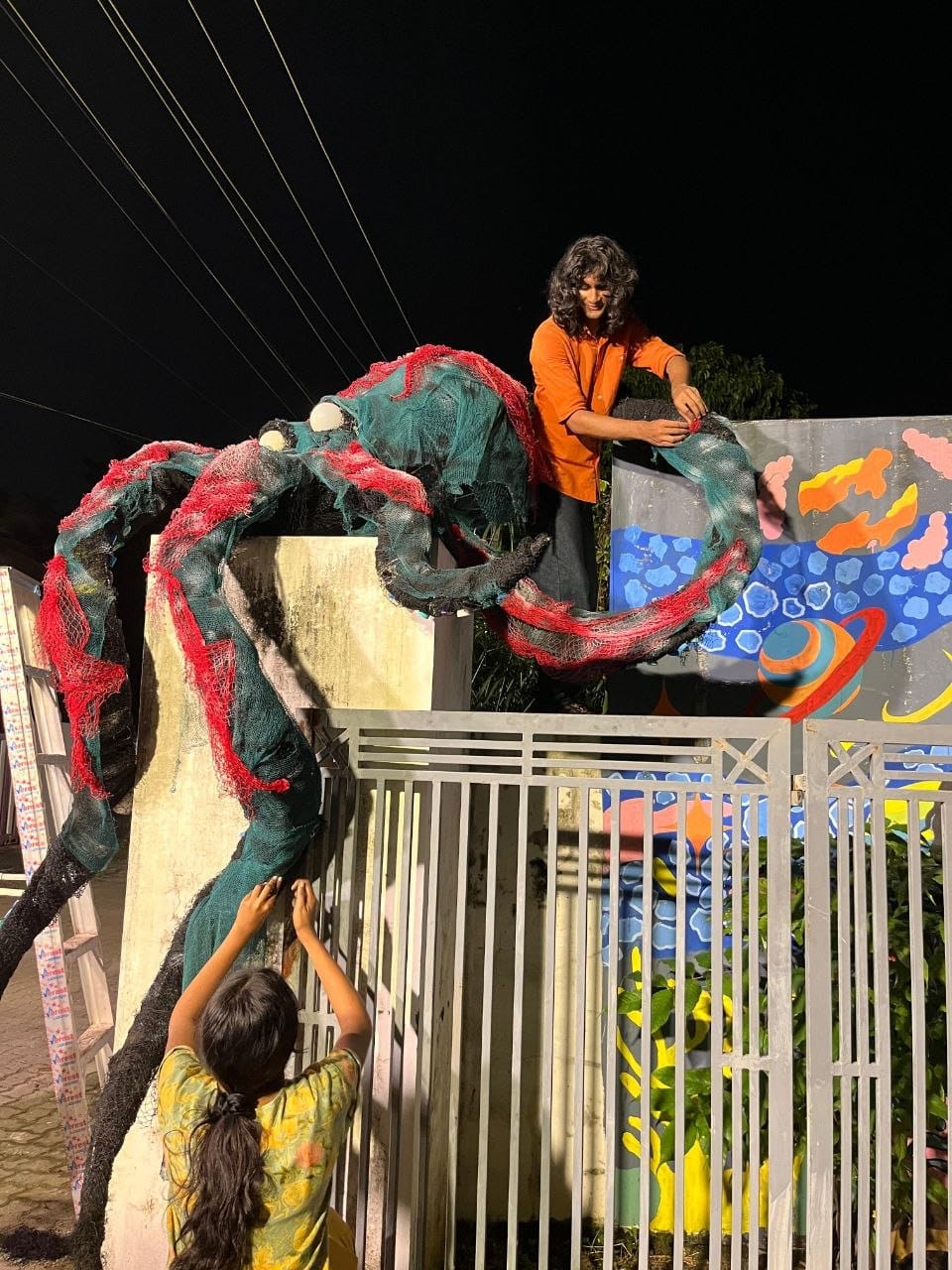
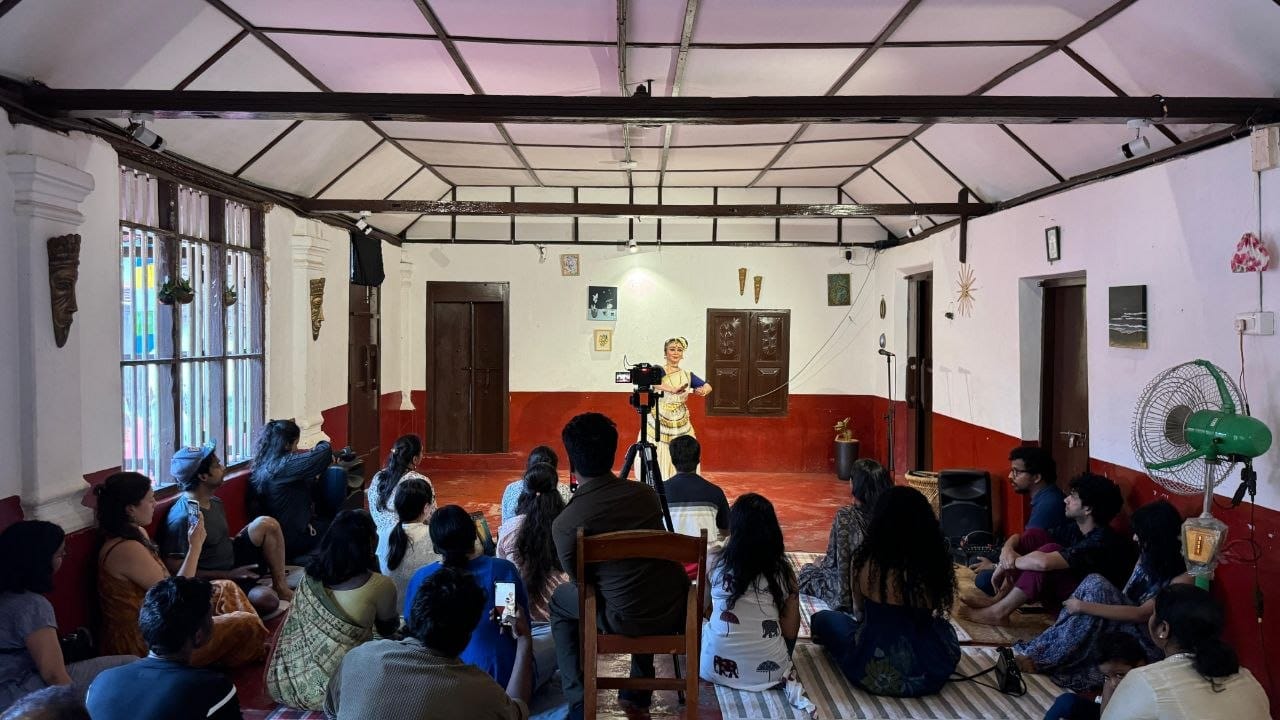
Today, the space serves as both a community hub and a living experiment. The old house hosts workshops, performances, exhibitions, discussions and gatherings. Children run freely through the property. Artists test new ideas. Researchers visit to understand the model.
The atmosphere is intentionally informal. If it rains, visitors get wet.If the ground turns muddy, they walk through mud. The environment, Noufal believes, is part of the experience.
A Novel Business Model
One of the most interesting aspects of Local Sustainable Living is that it is not a charity, NGO or trust. It is a business. Or more accurately, a social enterprise. The distinction matters.
Noufal wanted to demonstrate that community-centered initiatives could sustain themselves financially without depending entirely on grants or donations. His advertising agency continues to operate from the same premises, helping support the broader ecosystem.
The model is guided by a principle he calls "fair value for all." This philosophy extends to everything from product pricing to venue contributions. Unlike conventional event spaces that charge fixed rates, Local Sustainable Living often asks organisers to contribute based on their capacity and budget. Occasionally, initiatives are supported even when they have no budget for contribution, as it is the intention that matters more.
The approach relies heavily on trust. "It's based on ethics and integrity," Noufal explains. The goal is not to maximise revenue but to create opportunities.
Sustainable and Reasonable
Walk into the permanent store at Local Sustainable Living and you'll find products sourced from makers across India. Priority is given to small initiatives, and those who are unable to enter the mainstream market.
But Noufal is careful about how sustainability is presented. Too often, he says, sustainable products are marketed as premium lifestyle choices available to affluent consumers. He wants to challenge that perception.
The initiative's guiding phrase is "Local, Sustainable and Reasonable." The idea is that sustainability should not be exclusive. Products should be fairly priced, accessible and capable of generating consistent income for the people who make them.
Rather than relying on high margins and low volume, the model focuses on affordability and wider participation. In doing so, it attempts to make sustainability part of everyday life rather than a niche trend.
The Local Fest
Perhaps the clearest expression of Noufal's and Mujeeb's vision is the Local Sustainable Fest. What began as a modest Onam market evolved into Kerala's first sustainable fest, following a model of social, economic and environmental sustainability, attracting makers, artists, entrepreneurs and community groups from diverse backgrounds.
The event itself reflects the values of the space. Visitors purchase an entry ticket but receive much of that value back through shopping coupons and reusable tote bags. The system encourages spending within the festival, ensuring money circulates directly among vendors.
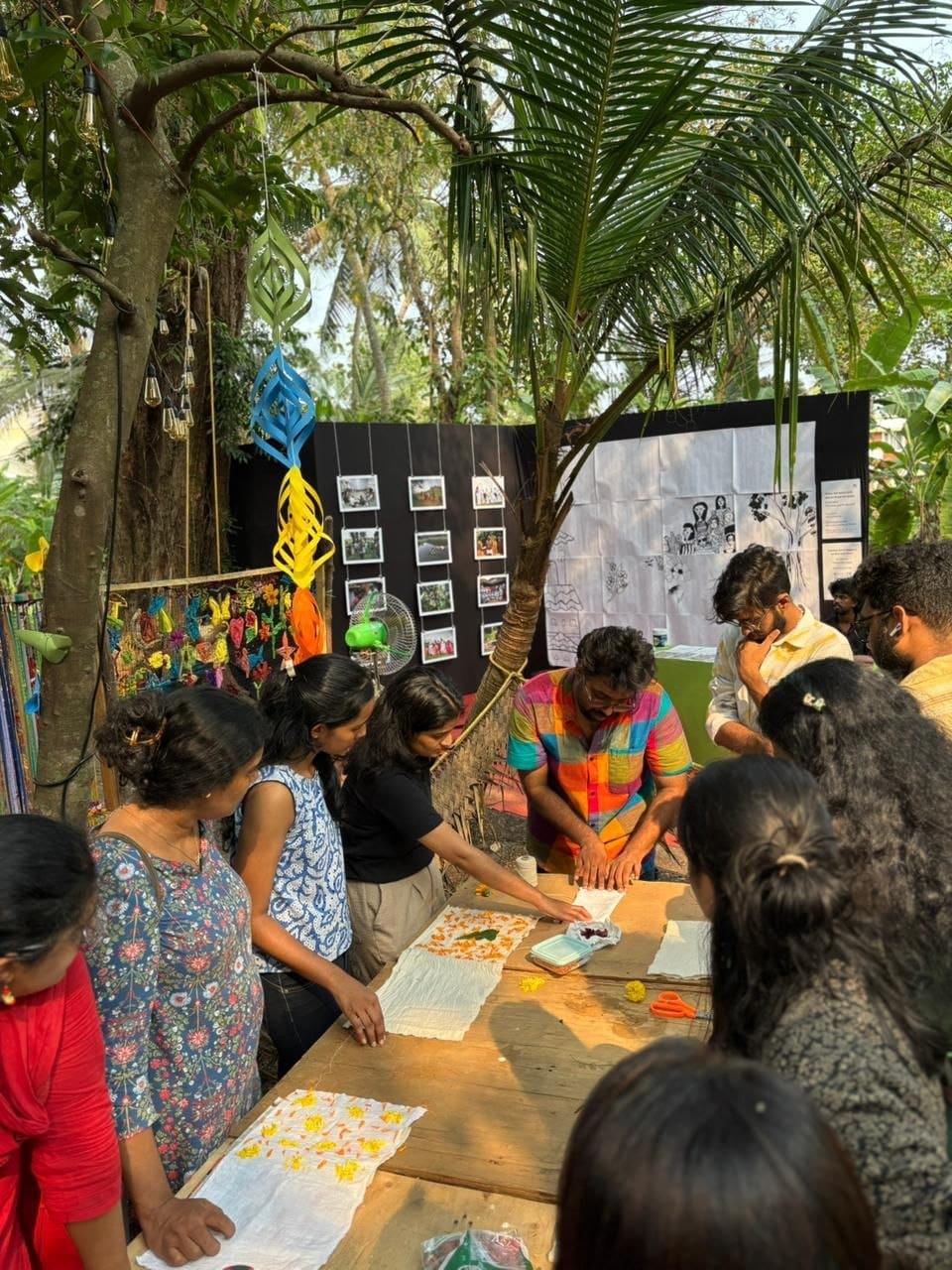
It is a practical example of circular economy principles in action. The goal is simple: everyone should benefit. Visitors leave with products. Vendors make sales. Connections are formed. The community grows stronger.
Local Sustainable Living also collaborated with Kochi Metro as its travel partner to encourage the use of public transport, rewarding visitors who arrived by metro with additional coupons. Small interventions like these demonstrate how sustainability can be integrated into everyday decisions.
Building Quietly
In an era obsessed with visibility, Local Sustainable Living has taken a different path. There are no aggressive marketing campaigns. No constant pursuit of viral attention. Growth happens largely through conversations and word of mouth. Noufal describes their practice as "doing first and telling the story later."
Even the organisation's digital presence remains secondary. While social media updates exist, the initiative was deliberately built offline before moving online, a reversal of how many modern ventures operate. “We started from reality and moved to the virtual”, as Noufal puts it.
Ask Noufal what success looks like, and his answer is surprisingly modest. He doesn't dream of franchises or massive expansion. Instead, he hopes more spaces like this emerge elsewhere. Spaces where people can experiment. Spaces where collaboration matters more than competition. Spaces where sustainability includes livelihoods, relationships, creativity and community, not just the environment.
At its heart, Local Sustainable Living is less about a business model than a belief. A belief that meaningful change begins locally. A belief that people flourish when given trust and opportunity. And a belief that sometimes, the most powerful ideas are not built with large investments or grand announcements.

Sometimes, the people who change lives are simply the ones who know how to listen.

What happens when you walk away from a secure career to follow your calling?


He first knew Chavittu Nadakam as the sound of home. What began with songs drifting through the evenings became a lifelong calling.
aikyam fellows inspire actions on important & urgent needs of the planet and underserved communities.