
George P JThe Man Who Sings Hope
You can only truly spread what you have lived through.
The queue outside the ticket counter was long, hot, and impatient. People shifted from one foot to another, muttering under their breath as the line crawled forward. Some stared at their phones. Others argued quietly about whose turn it was. Then, somewhere in the middle of the crowd, a voice rose unexpectedly into song.
It was an old Malayalam melody; a warm and playful conversation between two lovers: “Ethra neramaay njan….Kaathu kaathu nilppu…..”, which roughly translates to “how long has it been that I’m waiting…” A few people turned around. Someone laughed. Another person joined in with the next line. Within minutes, strangers who had been irritated and tense were smiling at each other, humming together, even talking like old friends. By the time the line moved again, the mood had completely changed.
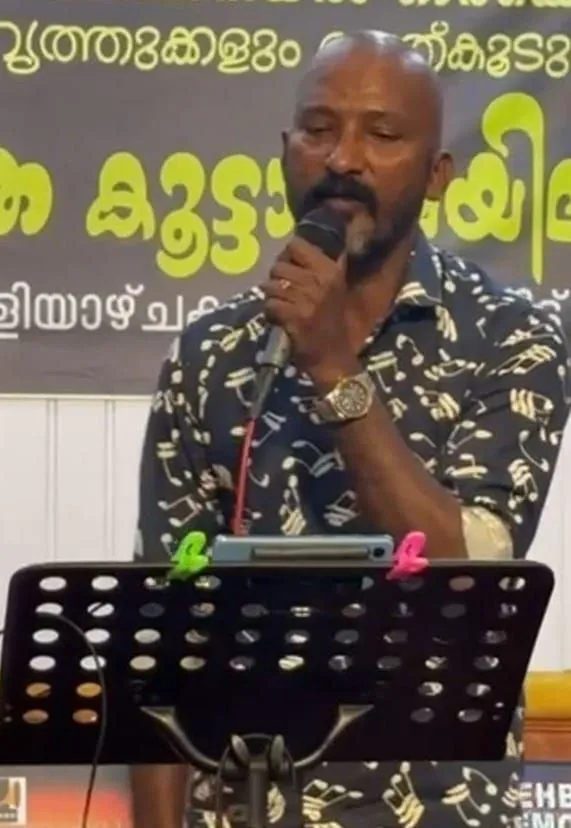
The voice belonged to George P J, who prefers to be called Jutten, a taxi driver, singer, social worker, and co-founder of the NGO Olimalar. For George, music has always been more than entertainment. It is a way to reach people. To comfort them. To make them feel seen. In many ways, this very instinct to notice pain and respond with kindness has shaped every chapter of his life.
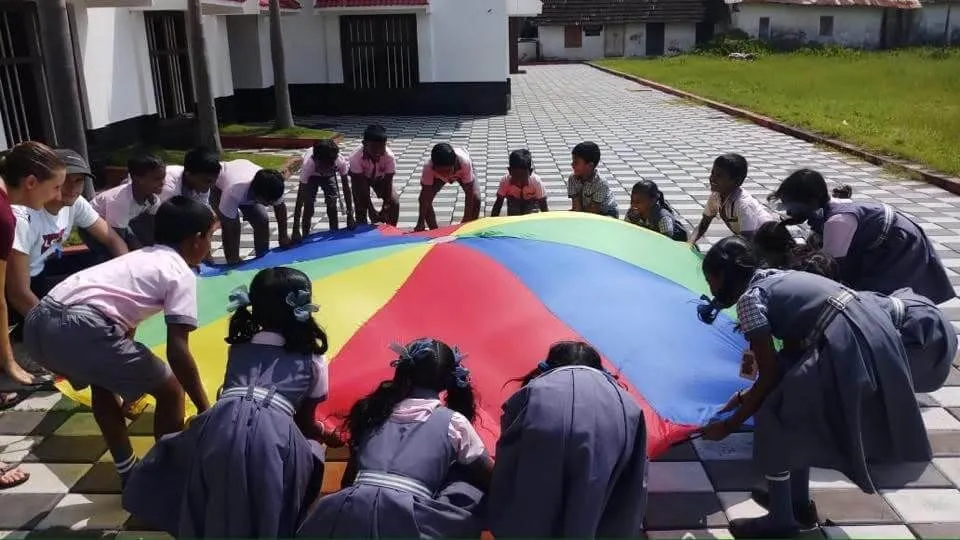
Today, George spends most of his time working with children in government schools, teaching emotional awareness, life skills, and mental wellbeing through Olimalar. But his journey into social work did not begin in classrooms or NGOs. It began in a childhood marked by loneliness, silence, and hurt.
He still remembers being beaten for things he did not do. Being bullied for no rhyme or reason. These memories remain vivid even today. But instead of making him bitter, those experiences made him deeply empathetic. As a child and teenager, whenever he saw another child being bullied, scolded, or humiliated, he could not ignore it. He instinctively stepped in. If older boys teased younger children, George would defend the younger ones. If he saw elderly people struggling, he would walk beside them or offer to hold their hand.
“I knew how pain felt,” he says. “So I never wanted others to feel that way.”
It is this sensitivity that would eventually become the foundation of his social work years later. Long before social work entered his life, George had another dream : driving. He loved vehicles from childhood. Whenever he traveled with his uncle, he would insist on sitting beside the driver, fascinated by every gear shift and steering movement. Drivers, to him, were heroes.
After finishing his schooling, he began working as a driver in the mid-1990s. He drove tourist vehicles and later became well-known for handling school trips. He enjoyed the freedom of the road and the constant interaction with people. Yet even while working long hours behind the wheel, George carried another side within him , one filled with music and curiosity.
A Voice That Arrived Late
George grew up loving songs. His father sang beautifully in social gatherings, and music was always around him. But for many years, George himself was too shy to sing publicly. Until the age of fourteen, his voice remained unusually high-pitched, resembling a parrot, and he was constantly mocked for it. The teasing made him withdraw further into silence. At home, he says, he rarely felt allowed to speak freely anyway.
As he entered his teenage years, his voice changed. Slowly, friends began encouraging him to sing. One friend in particular, Nelson, kept insisting that George had a good voice. During gatherings where friends got together and relaxed on terraces late into the night, George would join and sing old songs with them.
He fell deeply in love with singers like Kishore Kumar, Yesudas, and Mohammad Rafi. He listened endlessly to Hindi music, carefully learning pronunciation and meanings from the television channel DD National and cassette albums.Music became a lifelong companion.
Even today, George slips naturally into song while talking, joking, or teaching. In crowded places, he uses humour and music to connect strangers. In classrooms, singing helps children relax and participate.
For him, art is not separate from social work. It is one of the tools that make healing possible. “Music helps you touch people,” he says simply.
From Driver to Community Leader
For years, George continued driving professionally. Then, in 2010, a single phone call changed the direction of his life.A friend rang up and asked George to meet him at a nearby spot. There, he met a woman connected to an international volunteering organisation called Global Vision International (GVI), headquartered in Cape Town, South Africa.
She asked George a simple question: Did he know English? He said yes. The organisation needed someone who could communicate with foreign volunteers and coordinate community projects in Kochi. George had no clear idea what the work involved, but his reputation as a dependable and people-friendly driver worked in his favour.
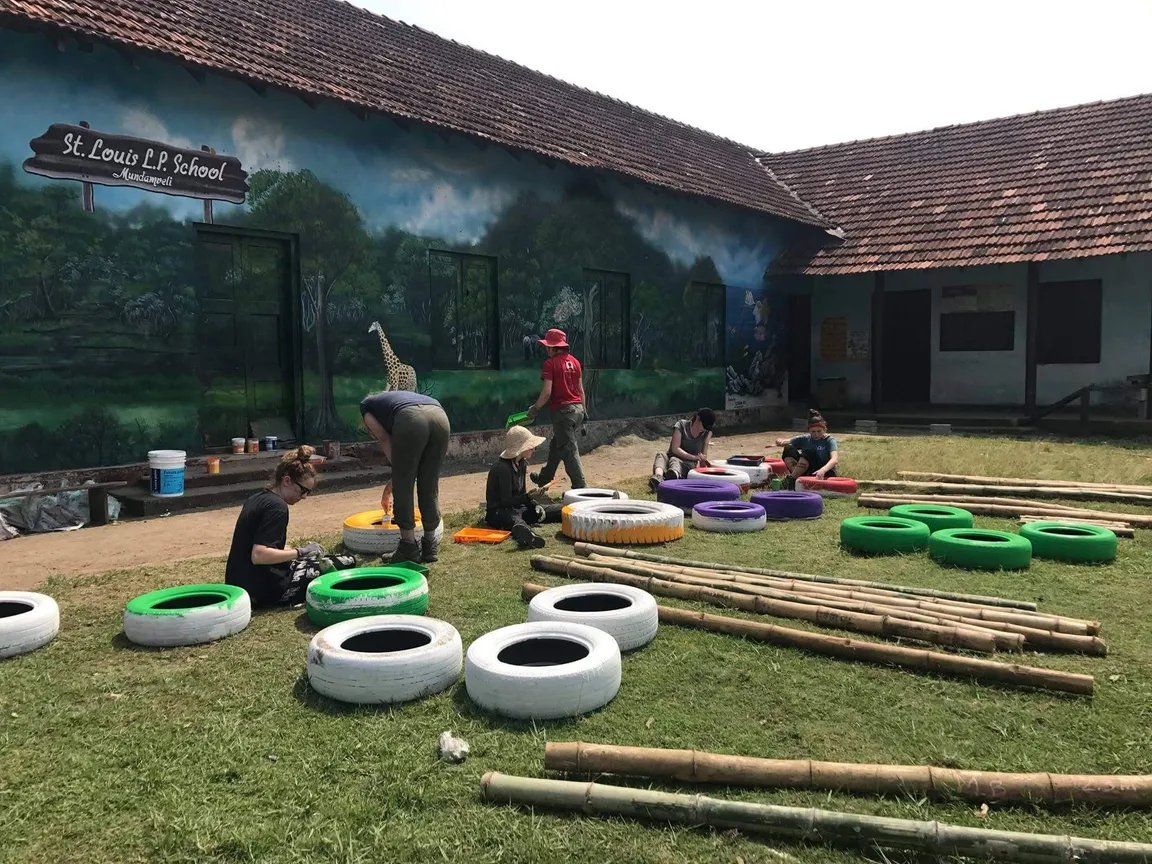
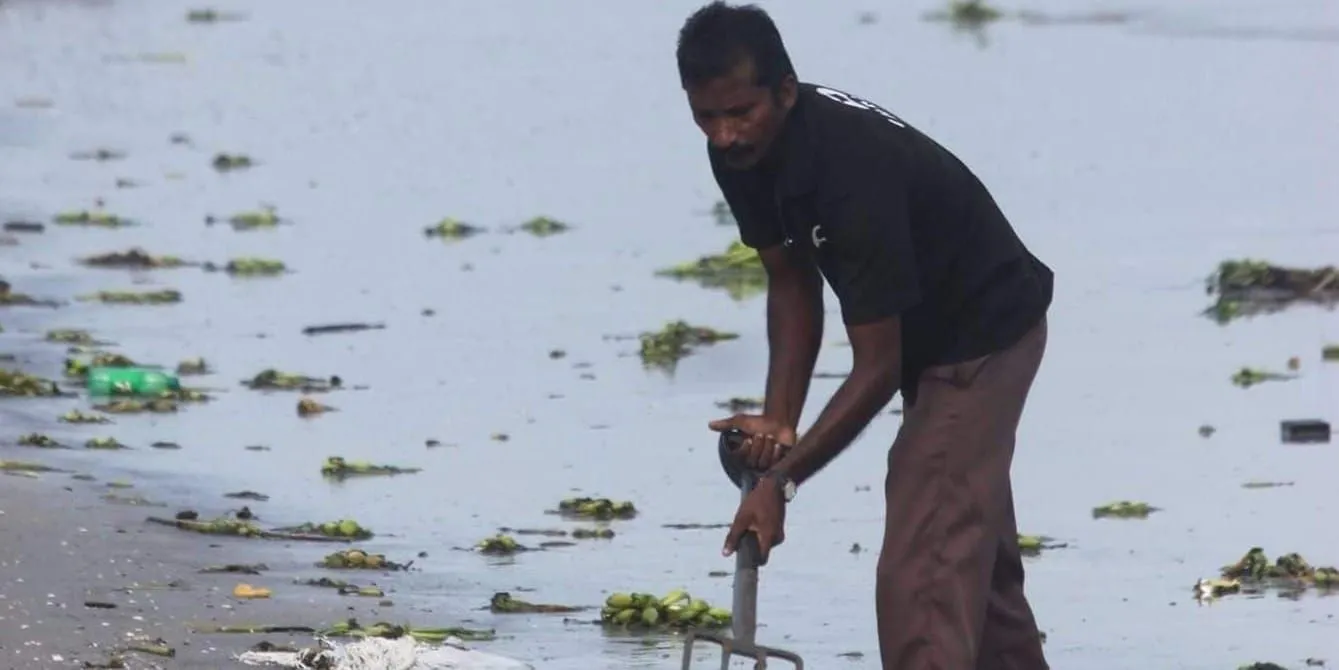
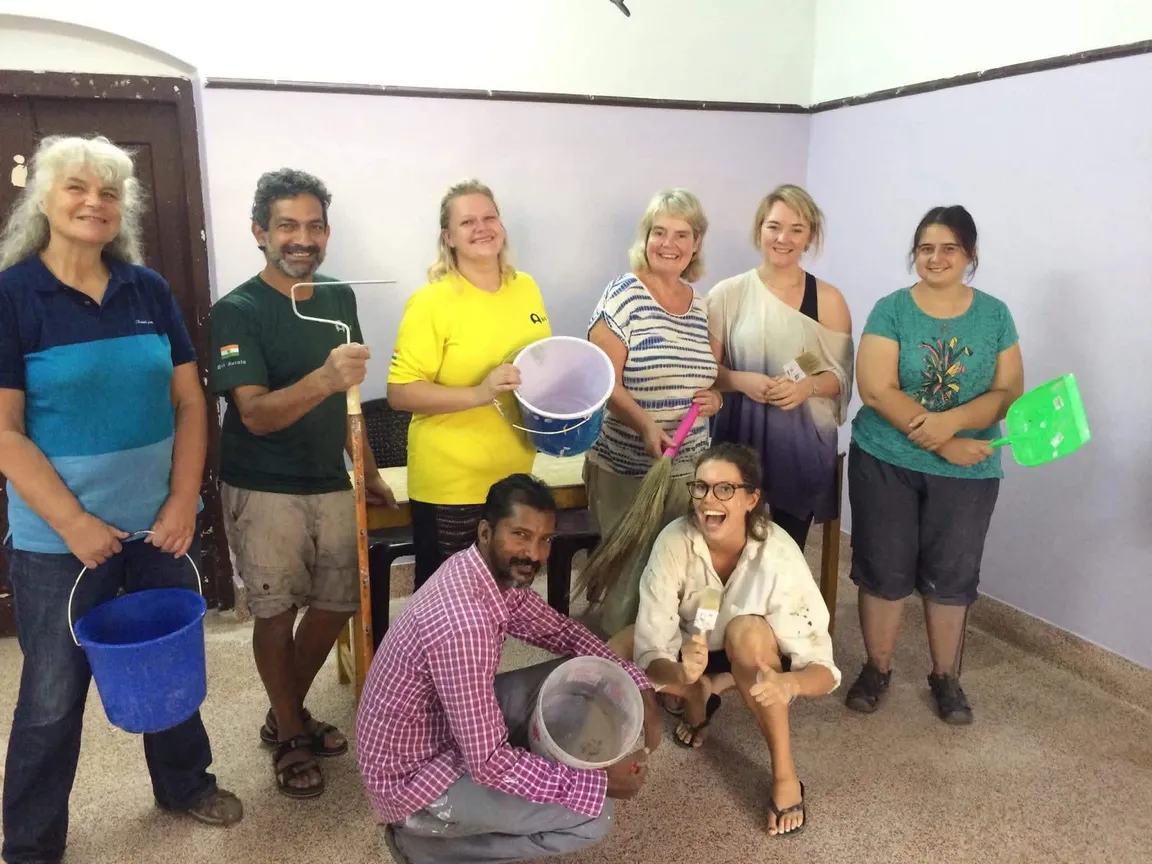
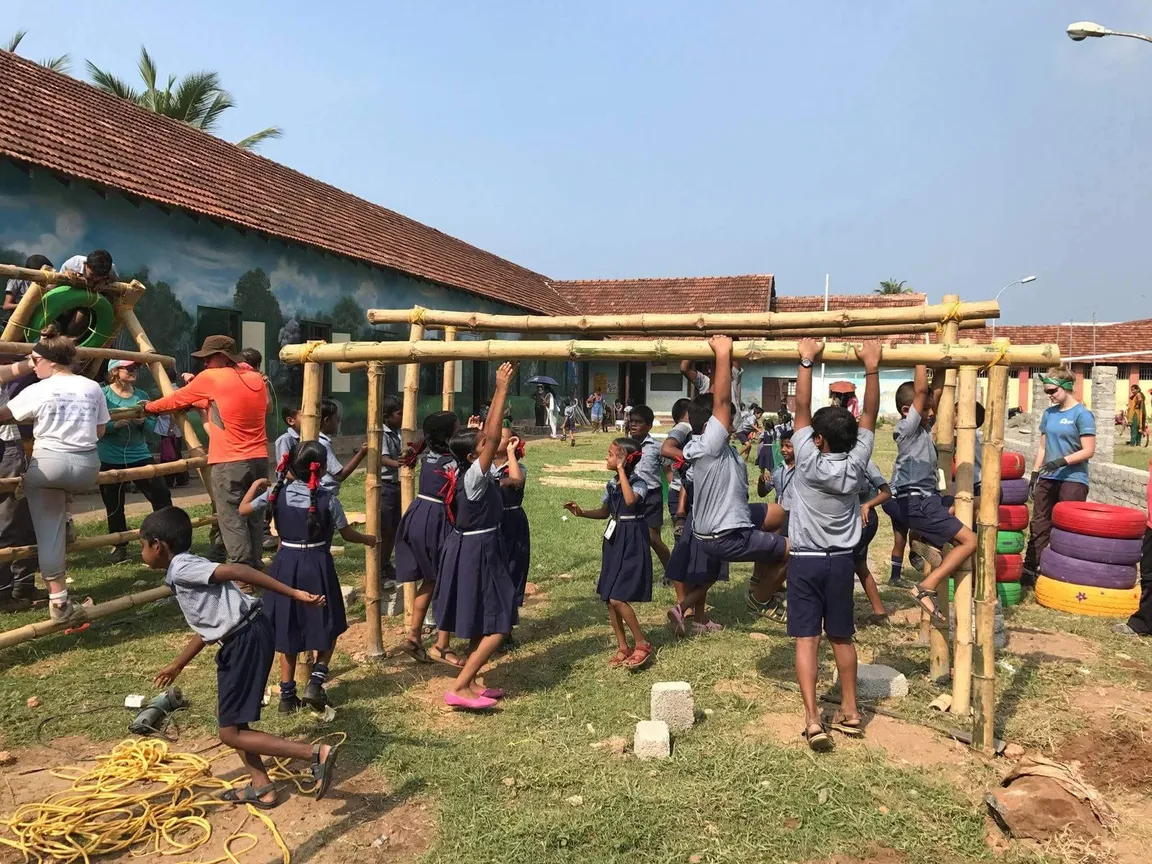
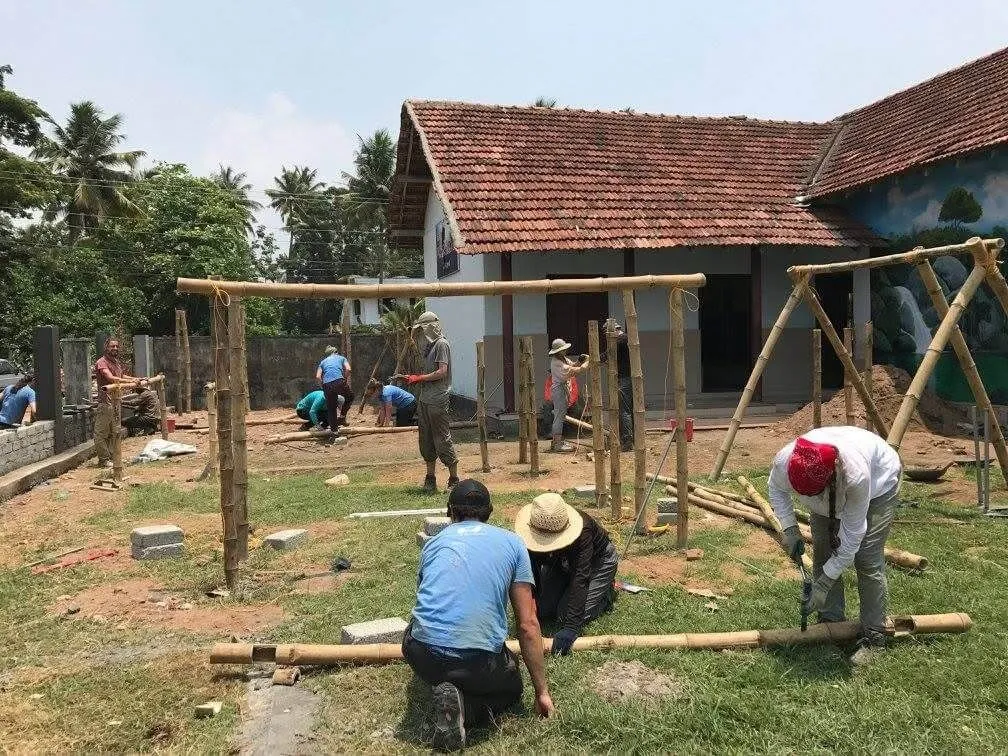
He joined GVI the very next day as a Community Liaison Officer. What began as a small opportunity quickly transformed into a deeper calling. At GVI, George coordinated programmes in education, sports, health, construction, and women’s empowerment across low-income communities in West Kochi. The work brought foreign volunteers into government schools, relief settlements, and old-age homes.
The organisation built toilets in schools that lacked basic sanitation. Volunteers helped children learn English through conversation and activities. George also introduced ideas like vegetable gardens in schools and communities. Over time, his responsibilities grew, and he eventually became Programme Coordinator. But what mattered most to him was not the title. It was the relationships.
The Birth of Olimalar
It was during his years with GVI that George met Aarthi Veerupillai. She first joined as a volunteer and later returned as an Education Coordinator. The two shared similar concerns about children’s emotional wellbeing and education. During the pandemic, as GVI’s operations came to an end, they began discussing what could be done independently.
Aarthi started an online initiative called “LifSkool,” focused on life skills and emotional learning. George continued developing his own programmes and ideas around children’s mental well-being. Eventually, they decided to build something together. This decision became Olimalar.
The organisation, founded roughly a year ago, works mainly with government schools and children from low-income communities. Instead of focusing only on academics, Olimalar teaches emotional awareness, communication, empathy, and mental health from an early age.
George believes emotional education should begin in childhood, not after crises appear during teenage years. Their philosophy has already drawn attention. Olimalar was invited to participate in discussions with the All India Mental Health Alliance in Delhi, where many were surprised that the organisation works with children as young as the fifth standard. Most organisations at the conference worked with teenagers or college-going students.
But for George, the reasoning is deeply personal. “If children know how to express emotions early,” he says, “many wounds can be prevented later.”
Keeping the Vision Alive
Funding remains Olimalar’s biggest challenge. Government schools often cannot financially support such programmes, and private schools are less interested in emotional education initiatives.
But George’s vision keeps expanding. He wants Olimalar to reach more low-income schools, tribal communities, parents, and teachers. He dreams of creating emotional support systems that reduce loneliness, trauma, and even suicide attempts among young people. His motivation comes not from theory, but experience.
“You can only truly spread what you have lived through,” he says.
The trauma of his childhood still exists within him. But instead of allowing it to harden him, George transformed it into empathy, music, and service.
And so, whether he is driving through Kochi’s crowded streets, singing in a long queue to calm strangers, or sitting inside a noisy government classroom teaching children how to talk about feelings, George continues doing the same thing he has done all his life: finding ways to make people feel less alone.
How can you help?
You can use the contact form below to reach out to the fellows directly. They would love to hear from you. A few words can go a long way. In fact, it's the only thing that holds us all together.

Proudly Not For Profit
Asking for donations is always difficult, especially if you are in India where asking for help is always seen as a sign of weakness. But, we believe that access to all the services aikyam provides should be forever free to amazing individuals like George. We are registered as a Not for Profit Company and do not charge any fee to anyone.
If you are somebody who feels that aikyam's work is important, please consider joining our Giving Circle and supporting our work with a monthly subscription. You can stop it anytime from your donation dashboard, no questions asked.
A large number of people like you giving small amounts of money over a long period of time is the way thousands of non profits like ours can continue working on difficult problems. In fact, it's the only way.
Thank you.


One more story like this one
You just read George P J’s story. Every fellow’s reaches your inbox the same way.
More fellows in Education
- Sentinaro Shiu
A Heart that Listens
Sometimes, the people who change lives are simply the ones who know how to listen.
- Manikandan C
Against All Odds
As the first Paniya MBA, he is now working to ensure that education and opportunity reach every corner of his…