Sometimes, the people who change lives are simply the ones who know how to listen. The same quiet compassion has become the heart of Sentinaro's work, guiding young people through some of life's most uncertain moments.
What happens when you walk away from a secure career to follow your calling? Rahul Thomas' journey reveals how theatre became far more than an art form: it became a path to being fully human.
She was told the Chenda wasn't for girls. From challenging tradition to inspiring women across generations, her journey proves that talent knows no gender.
Mini’s journey began outside the walls of conventional education. Today, in Wayanad, she is creating spaces where tribal children can discover their voices, preserve their heritage, and believe in new possibilities.
For Mini, education is much more than textbooks, exams, or certificates. It is a way of becoming a better human. A way of preserving disappearing cultures. A way of helping children discover confidence, dignity, and possibility. Most importantly, it is a quiet form of resistance.
In the hills of Wayanad, where many tribal children continue to face educational exclusion and economic hardship, Mini is nurturing a dream she has named Katturava :a learning space where children can read, create, listen, question, and imagine different futures for themselves.
The dream is still taking shape, delayed by funding challenges and practical realities. But if there is one thing that defines Mini, it is persistence. Her own life is proof that alternative paths can open up exciting possibilities.
Life at Kanavu
Mini’s educational journey did not follow a conventional route. She attended a mainstream school until the fourth standard before dropping out. For many children from marginalised communities, such a story could have marked the end of formal learning. Instead, it became the beginning of something transformative.
She joined Kanavu, an alternative school and commune in Wayanad, founded by writer and filmmaker K J Baby, which would profoundly shape her understanding of education and life.
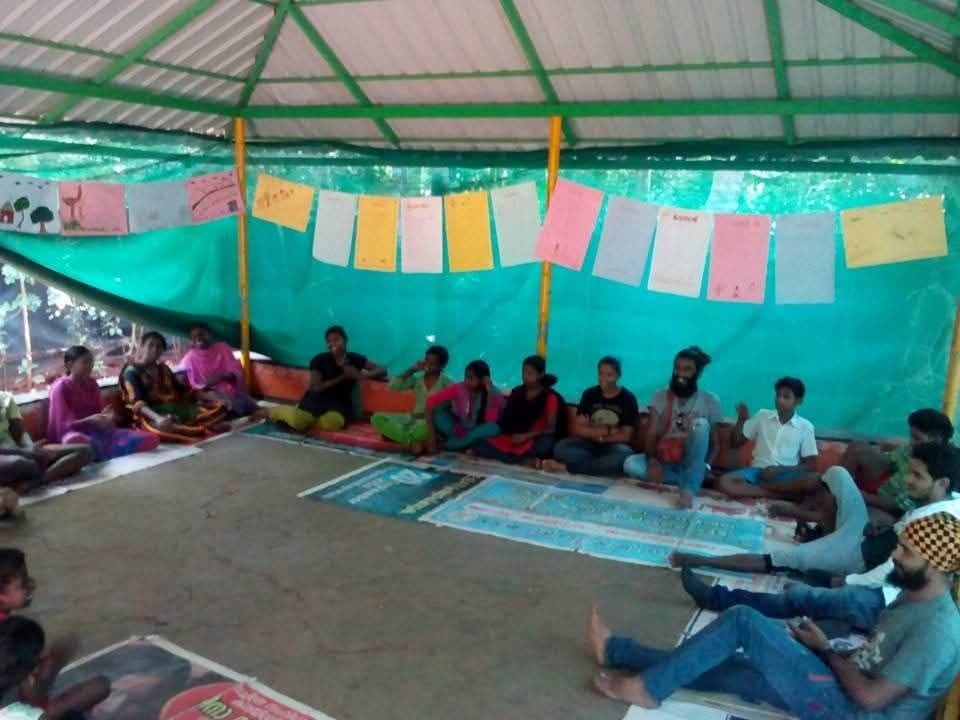
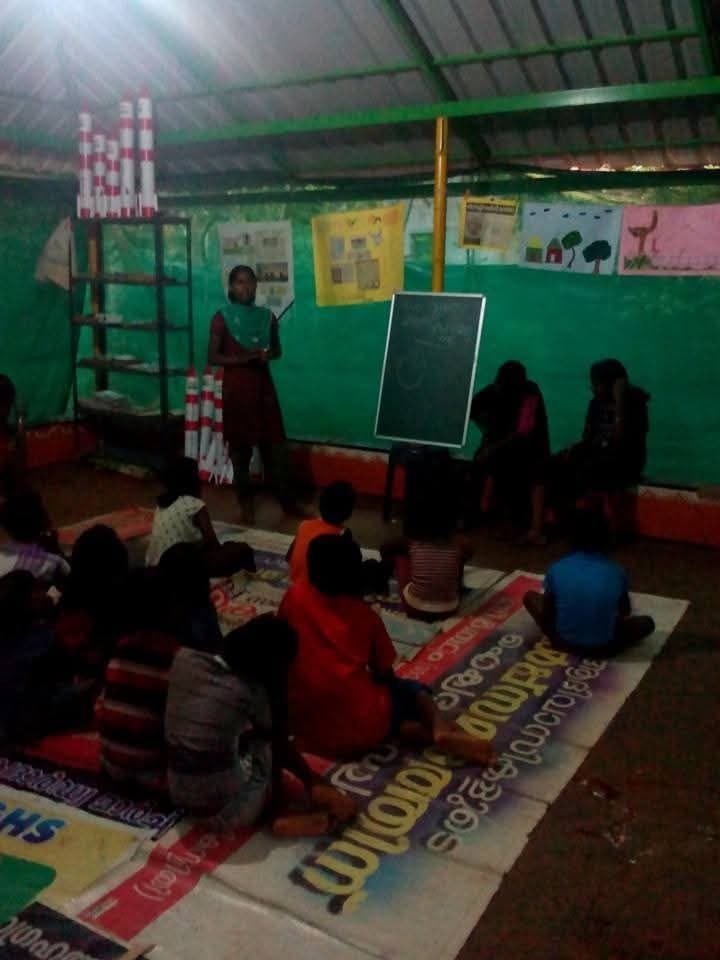
At Kanavu, learning extended beyond classrooms. Children learn through experience, conversation, creativity, and community. The school brought together tribal children and visitors from different backgrounds, creating a unique environment where learning was connected to everyday life.
For Mini, the experience opened new possibilities. “It was a place where we learned through life,” she reflects.
The lessons she absorbed there continue to guide her work today. Education, she believes, should not merely prepare children to pass examinations. It should help them become thoughtful, resilient human beings.
After spending several years working with children and communities, Mini became increasingly aware of a painful reality. Many tribal children still struggle to remain in school. Some complete secondary education without acquiring basic literacy skills. Others pass examinations with assistance but lack confidence in reading, writing, or navigating the wider world.
The challenges do not end after school. Young people often reach Plus Two and then find themselves stranded without guidance. They return to the only work they know: daily wage labour. Men frequently migrate to places such as Kodagu for plantation work, where exploitation, accidents, and even deaths are not uncommon. Women often take up domestic work in unfamiliar and sometimes unsafe environments.
Even those with higher educational qualifications often struggle to find opportunities. “There are people with degrees, MPhils, and PhDs who are still unemployed,” Mini observes. For her, these realities reveal a gap that conventional education has failed to address.
Dreaming of Katturava
More than a tuition centre, Mini envisions it as a community learning space where children and young adults can access opportunities unavailable to them elsewhere. The idea emerged from years of observation and reflection.
Many children have no access to extra academic support. There are almost no libraries. Reading habits are limited. Exposure to art, crafts, agriculture, or alternative careers is rare. Katturava seeks to change that.
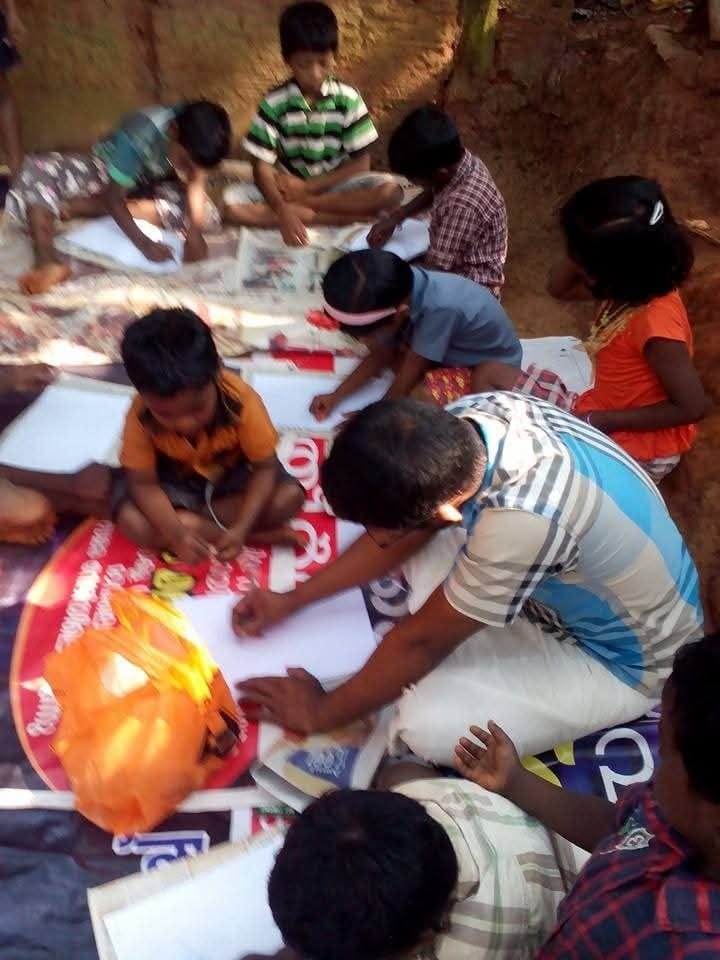
Mini imagines a place where children can improve their language skills, explore creativity, learn practical life skills, and develop confidence. Agricultural awareness sessions, art workshops, storytelling, crafts, and community discussions would all be part of the learning process.
Along with her husband, she plans to begin by teaching many of these classes herself. Using locally available materials such as bamboo and coconut shells, children could learn traditional crafts while developing creative skills. Over time, she hopes to bring in trainers with specialised expertise to expand the programme.
At its heart, however, Katturava is not about infrastructure or curriculum. It is about creating a space where children feel seen, heard, and valued.
One of Mini’s most striking ideas is also one of the simplest. She believes that meaningful change can begin with something as basic as spending time with children. In an age dominated by mobile phones and digital distractions, she worries that genuine human connection is disappearing. Sometimes, she says, children simply need someone to sit with them, tell stories, listen to their thoughts, and understand what is happening in their lives.
“It is quality time,” she explains. “Even that itself will be beneficial.”
Her vision reflects a philosophy that prioritises relationships over results and presence over performance.
Beyond the Textbook
For Mini, education must prepare children for life, not just examinations. She often points to practical skills that many young people in her community have never been taught.
How do you speak confidently to a government official? How do you file a complaint? How do you seek help from institutions? How do you navigate systems that often seem intimidating and inaccessible? These are the questions she wants education to answer.
At the same time, she believes learning should cultivate resilience and mental strength. Academic achievement alone is not enough. She often challenges society’s assumptions about education. “The most educated people are sometimes responsible for the greatest violence,” she says. Without values and character formation, education risks becoming hollow. Her goal is not simply to produce successful students but compassionate and responsible human beings.
Preserving a Disappearing Heritage
Mini’s work is also deeply connected to cultural preservation. Growing up, she spoke her tribal language fluently. At school, however, children were sometimes mocked for speaking a language without a written script. Despite this, they continued speaking it among themselves.
Today, she sees a different challenge. Many younger children are fluent in Malayalam but know little of their ancestral language, stories, songs, and traditions.
The loss worries her. As elders pass away, generations of oral knowledge risk disappearing with them. Through Katturava, Mini hopes to create a living archive of tribal memory. Children will be encouraged to speak with grandparents and elders, collecting stories, riddles, songs, histories, and beliefs.
These conversations would then be documented and preserved for future generations. For Mini, cultural preservation is not an act of nostalgia. It is an act of survival.
Education as Protest
Many social movements rely on rallies, demonstrations, and public campaigns. Mini respects these forms of activism. She speaks admiringly of tribal leaders who have fought for rights through direct political action. But her own approach is different. She sees education itself as a form of protest.
By creating opportunities where none exist, preserving endangered knowledge, and helping children develop confidence and agency, she is challenging systems that have historically marginalised her community. Her protest happens in classrooms, story circles, libraries, and conversations. It happens when a child learns to read. It happens when a young person gains the confidence to pursue higher education. It happens when a community begins to believe in its own potential.
Stories, Songs, and the Future
Mini’s dreams extend beyond Katturava. She writes children’s stories and is preparing to publish one of her own. She also performs with her music group, Cheththam, using art and music as tools for communication and change.
Whether through writing, singing, teaching, or organising, she remains committed to the same core belief: that education can transform lives. Not overnight. Not through grand announcements. But slowly, through relationships, stories, and opportunities.
In a region where many conversations focus on what communities lack, Mini prefers to focus on what can be built. These may seem like small things. Yet for Mini, they are the foundations of a different future.
A future where education is not merely a pathway out of poverty, but a way of understanding oneself, preserving one’s culture, and imagining new possibilities. And that, she believes, is where real change begins.
Sometimes, the people who change lives are simply the ones who know how to listen. The same quiet compassion has become the heart of Sentinaro's work, guiding young people through some of life's most uncertain moments.
What happens when you walk away from a secure career to follow your calling? Rahul Thomas' journey reveals how theatre became far more than an art form: it became a path to being fully human.
She was told the Chenda wasn't for girls. From challenging tradition to inspiring women across generations, her journey proves that talent knows no gender.
He first knew Chavittu Nadakam as the sound of home. What began with songs drifting through the evenings became a lifelong calling. Anson Kurumbathuruth's story is one of carrying a living tradition into the future.