
Aparna N SDancing towards Discovery
The greatest quality as a teacher lies in their readiness to view students as dancers stumbling through the hurdles as they once did.
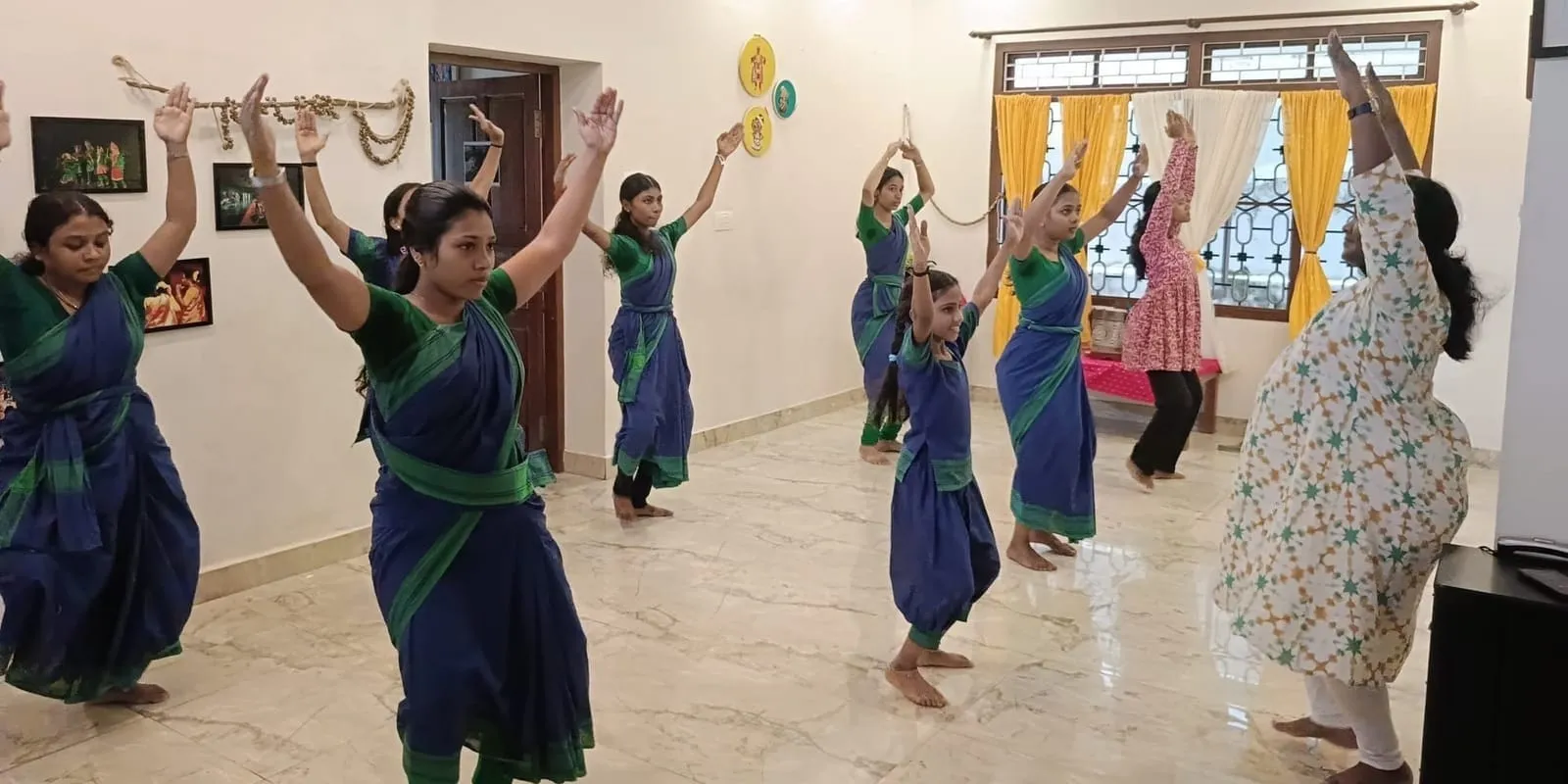
The courtyard of an old ancestral home, almost twenty summers ago. Cousins gathered in a circle, performing Thiruvathira, laughing, swaying. Four-year-old Aparna hopped towards her older sisters and started imitating them. And that was where it all began. Surprised at her effortless mastery, her family enrolled her for Bharatnatyam classes. Soon, Aparna began juggling academics and after-school dance classes: a practice that continued till the very end of her school life and saw numerous tussles and negotiations.
She says, “Initially, I loved attending dance classes, but at some point, I felt disillusioned and took a break only to end up in the dance room again. And again. Who was I kidding? Each little break only cemented how much I wanted to dance.”
Every time she returned to the dance floor, she inched closer to the art and understood it not as movements parroted and practised within the four walls of a classroom but as a living, breathing soul. What began as imitation slowly carved the space for exploration, reflecting her own growth and offering the soft-spoken young girl an appetite for staunch self-expression.
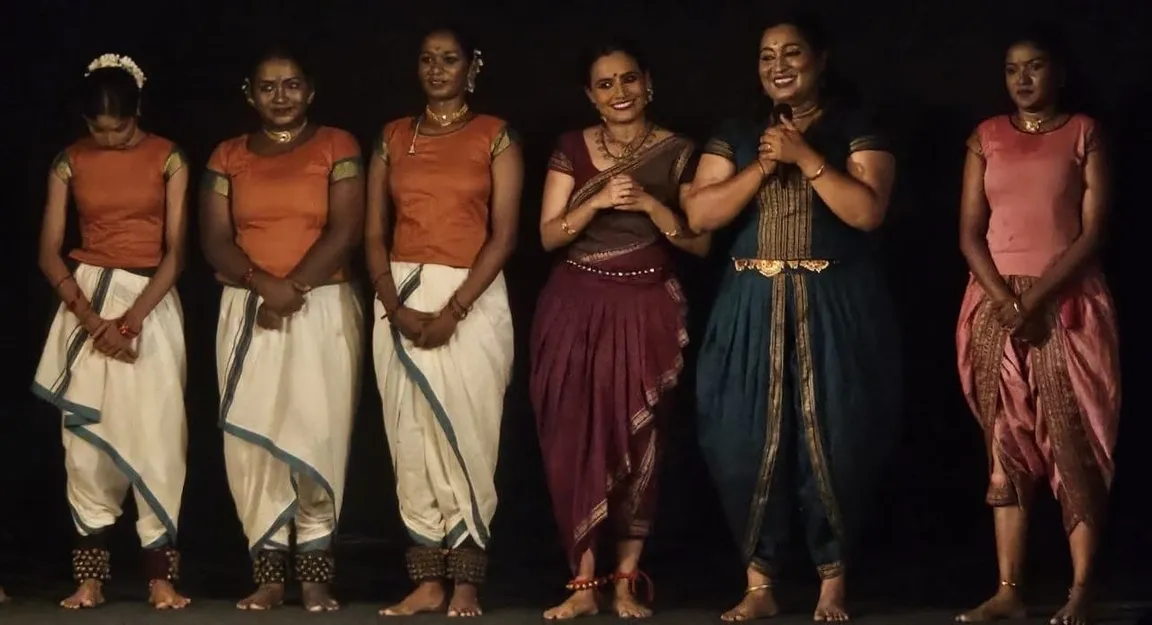
After school, when she voiced her decision to pursue an undergrad in Mohiniyattam, it was this assertiveness that trumped the questions that arose.
“A profession in dance had been my dream for a long time, and as I had always found traditional modes of textbook learning quite difficult and uninteresting, it was an easy decision for me. But it was quite a shock for many around me. Nevertheless, I stood my ground thanks to my close family’s support and, in hindsight, an ability to express myself that dance had taught me,” Aparna describes her journey.
Towards the end of her degree, Aparna started working with Thudippu Dance Foundation, an alternative dance space based in Kochi. She was involved in the production of Otta by Thudippu and played the character of Ghatotkaja. Aparna shares, her eyes lighting up,
“Otta is a production I love dearly and never get tired of, no matter how many times I perform it. It's what you call an exploratory performance, one that pushes us to discover ourselves and our connection with the art form. Also, I had always been the one to slay Ghatotkaja until Otta happened. I have a particular interest in playing boisterous and villainous characters, and Ghatotkaja was the one for me.”
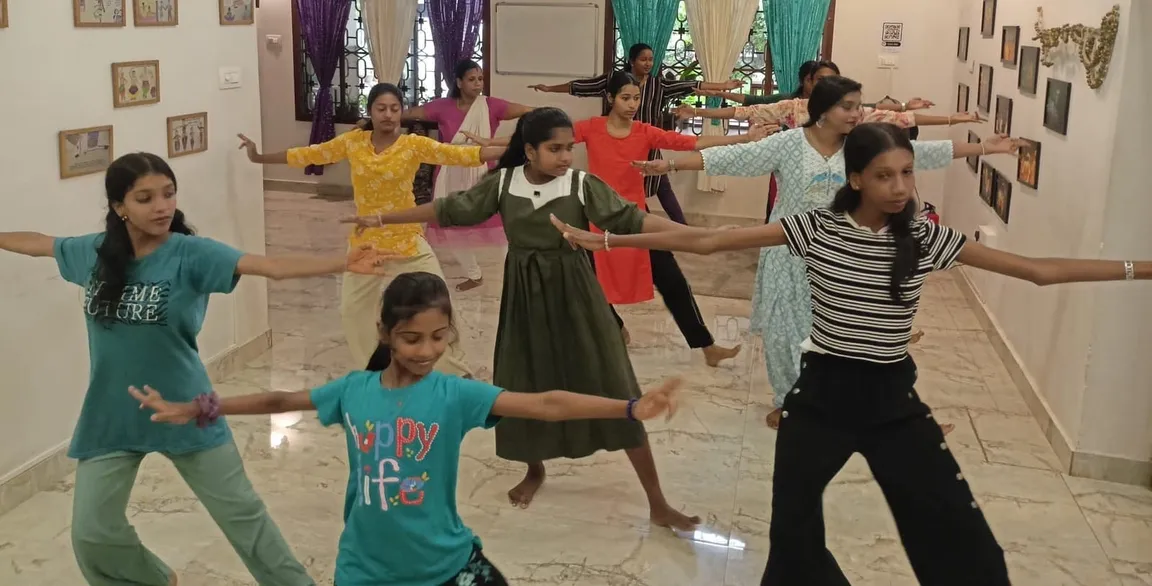
What took Aparna by surprise and seized her adoration the most at Thudippu was how they approached teaching. They encouraged a sense of freedom in not just how she performed her art form but also how she conducted herself as a student.
She makes no secret of her affection while talking about the team: “Anjali chechi and Ponnu chechi accommodate every student’s unique understanding of dance. At Thudippu, one does not learn dance as something ready-made and passed on. They care about who we are as people, and we are encouraged to explore and make each movement our own. That is how I began to recognise my own transforming relationship with dance.”
Aparna’s involvement with Thudippu soon extended beyond the stage, raising the curtain on an entirely new avenue of learning: teaching! She began taking a few classes at Thudippu and joined two schools as a dance teacher in a part-time capacity. For a year following her graduation, she taught in schools, students’ houses, and Thudippu. The young teacher consistently strived to create a classroom that she, as a student, would thrive in. She pushed them to go beyond practice and towards experiencing the abhinaya, from imitation to discovery.
After a year of learning through teaching, she joined a Master’s course in Mohiniyattam at RLV College, Tirupinithura. It was at this time that she was introduced to aikyam space through Anjali, who suggested that she teach dance as part of a collaborative endeavour of aikyam and Thudippu at Mattancherry.
Aparna’s greatest quality as a teacher lies in her readiness to view her students as dancers stumbling through the hurdles that she herself contended with: “When I began learning dance, I often had trouble with how certain movements were taught; I required more detailed or slightly different instructions, which I did not always receive. The dejection that used to follow stayed with me for years. Now, when I am in the classroom as a teacher, I take care to accommodate different learning styles and repeat instructions as many times as they want me to. I try to understand their preferences and spend additional time with each student. And whenever they seem bored, I let them hop around and play a little. At no point should they feel it's a chore.” Every weekend, more than thirty-five students pour into aikyam space to learn dance from Aparna.
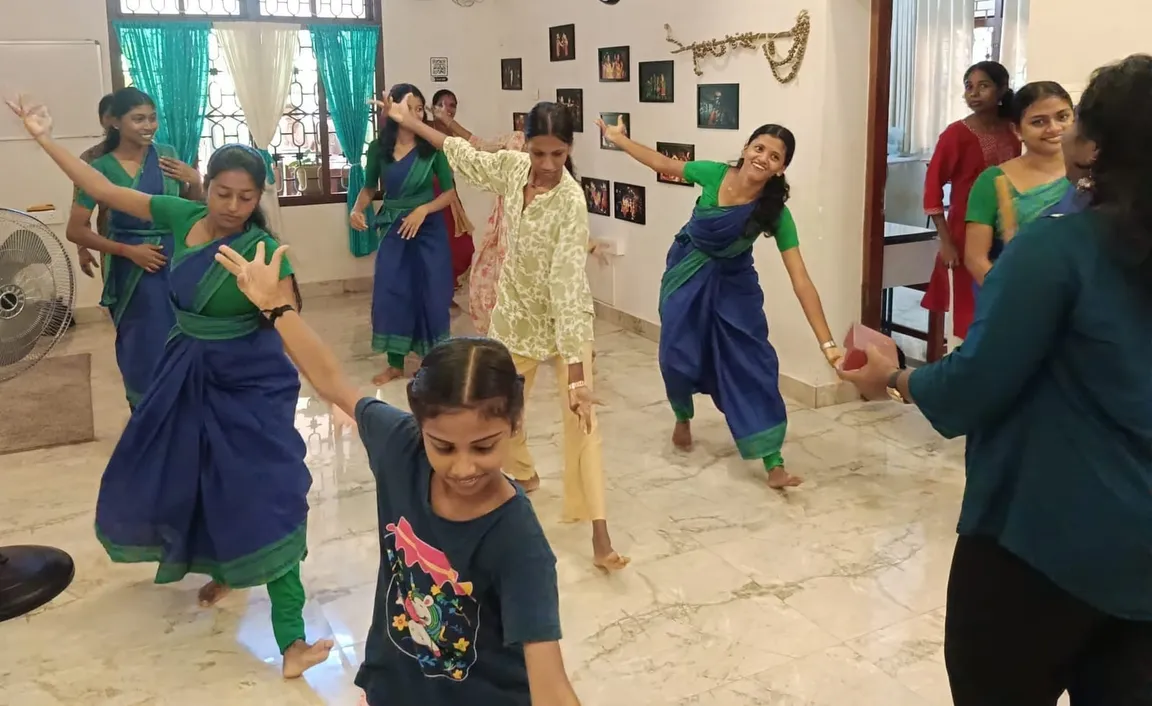
“As your experience with the art form shifted from imitation to discovery, how have you come to understand or establish your self-expression while dancing?” I ask. Her poise alters, and she thinks for a while, eyes wide and chin tilted, before replying, “I welcome the abhinaya into every character I play, and over time, I have come to recognise the movements and characters that excite me. Romantic themes or shringara do not engulf me as much as the movements of villainous characters do, but I try to understand the character as best as I can. Apart from that, my dance and self-expression have melted into each other, I feel. When I sit, my legs form a swastika for no reason. I walk like a dancer, talk like a dancer. Doesn’t it show?” she laughs, gesturing animatedly.
She talks with affection about her students, their quirks, and the nuances of teaching something so close to oneself. However, what thrills her the most is learning more and experimenting with productions.
“It was Thudippu that introduced me to productions that are not based entirely on mythology. And mythology or not, every piece offers a certain element of social awareness to the audience. I would love to work on more productions and create some on my own. I want to learn more and someday contribute to dance.”
And of course, who does one expect it from if not Aparna, who seizes learning with an uncommon zeal? Aparna, who, upon being denied by the neighbourhood kids to be taught the magic of making paper earrings, sneaked stubborn glances until she could make them on her own! Aparna, who, amidst university classes, cooking and cleaning at home, and dance tutoring, is also learning tailoring. “Last Sunday, Aunty taught me to pedal. Perhaps today I will get to stitch,” she says while signing off from our conversation, eager to get to class.
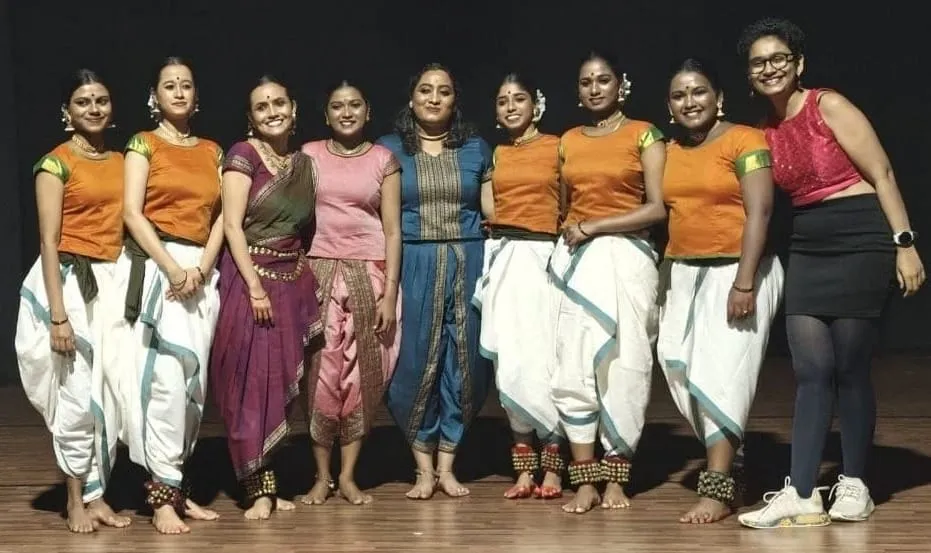
The inherently modest person that she is might not recognise her own feats, but to anyone who has the honour of listening to her story served with wide-eyed and lively gesturing, she comes across as the most joyful and skilled learner.
How can you help?
You can use the contact form below to reach out to the fellows directly. They would love to hear from you. A few words can go a long way. In fact, it's the only thing that holds us all together.

Proudly Not For Profit
Asking for donations is always difficult, especially if you are in India where asking for help is always seen as a sign of weakness. But, we believe that access to all the services aikyam provides should be forever free to amazing individuals like Aparna. We are registered as a Not for Profit Company and do not charge any fee to anyone.
If you are somebody who feels that aikyam's work is important, please consider joining our Giving Circle and supporting our work with a monthly subscription. You can stop it anytime from your donation dashboard, no questions asked.
A large number of people like you giving small amounts of money over a long period of time is the way thousands of non profits like ours can continue working on difficult problems. In fact, it's the only way.
Thank you.


One more story like this one
You just read Aparna N S’s story. Every fellow’s reaches your inbox the same way.
More fellows in Art & Culture
- Rahul Thomas
Theatre Saved Me
What happens when you walk away from a secure career to follow your calling?