
Maya P SKeeping Fugdo Alive
For years, Fugdo Dance survived quietly inside courtyards and community gatherings.
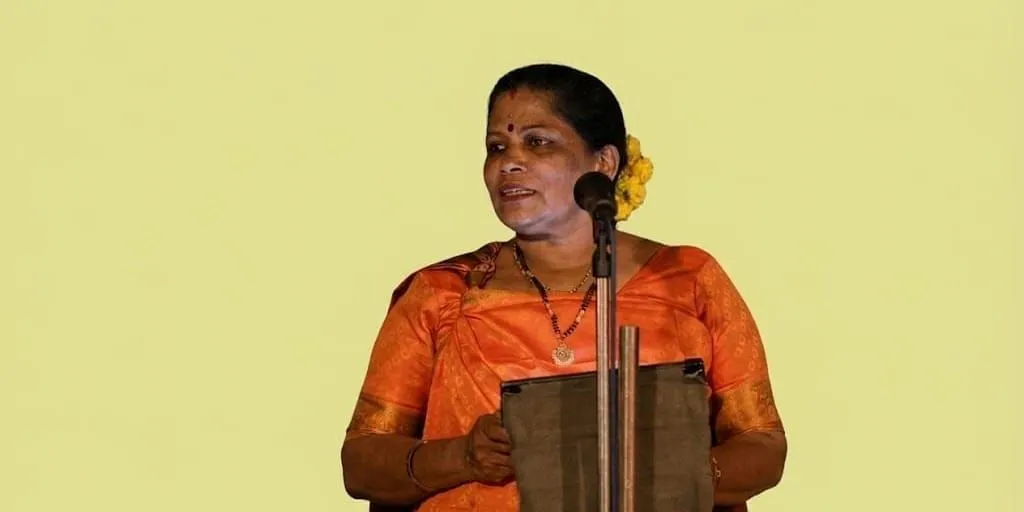
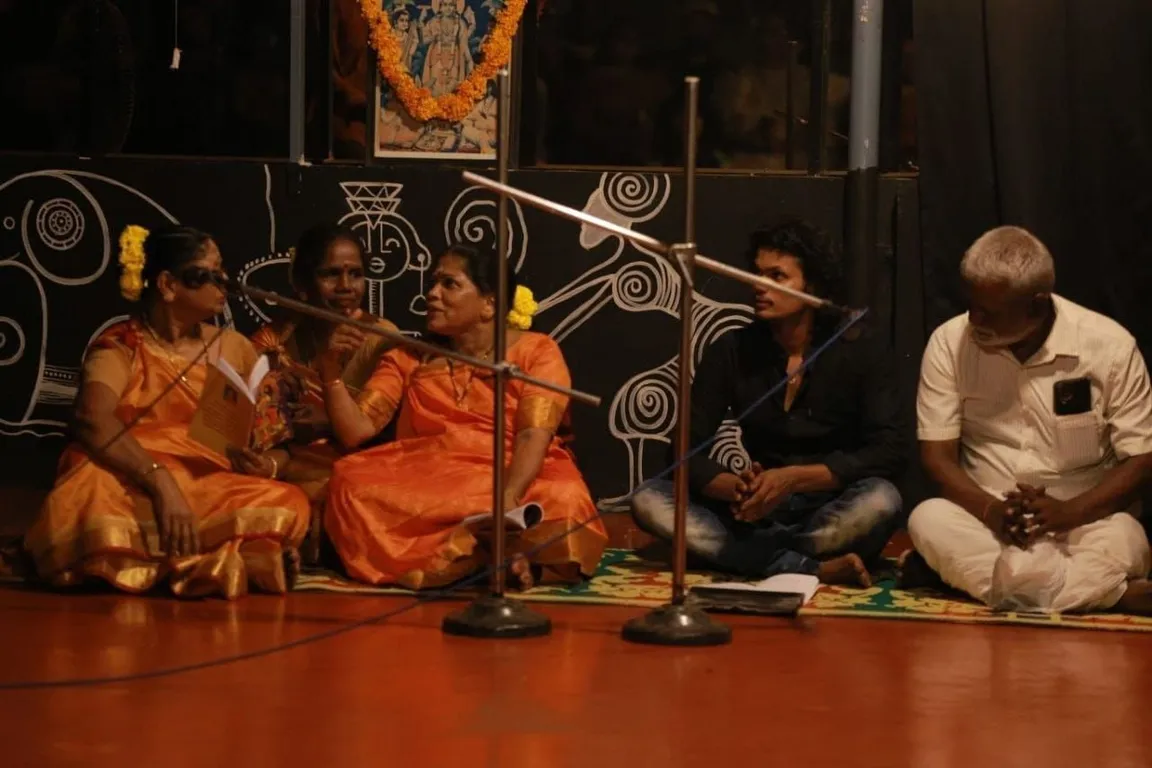
On some evenings in a homely neighbourhood in Kochi, after a long day spent washing vessels, sweeping floors, cooking in other people’s kitchens, or caring for families not their own, a group of women gathers in a courtyard. They tighten their sarees, stamp their feet against the earth, and begin to sing in a language many of their own children no longer understand. The rhythm rises. Bodies move in circles. Excitement surges with every step. Amongst them, dancing unrestrainedly is Maya P S , author, organiser, archivist, activist, and now one of the strongest public voices of the Kudumbi community’s ancient ritual dance form, Fugdo. For Maya, this journey did not begin on a stage.
Maya grew up in Ernakulam town, in the middle of a multicultural urban world where communities blended into each other and co-existed without much strife. Konkani, the community’s ancestral language, was not used a lot in public. Fugdo existed only as something distant, something she had “heard about.”
“I knew it was a ritual tradition,” she recalls, “but I had never actually seen it.”
The Kudumbi community, descendants of migrants who fled Goa centuries ago during Portuguese religious persecution, had long occupied a complicated social position in Kerala. Many worked as agricultural labourers, domestic workers, or in physically demanding jobs. Their traditions survived quietly, inside homes and courtyards, rarely entering mainstream cultural conversations.
When Maya moved to Kochi after getting married, she found herself immersed in a denser Kudumbi neighbourhood where the old rhythms of community life still survived. Suddenly, Fugdo was no longer a story from the past. It lived in conversations, festivals, songs, and rituals. As the ever-smiling Maya, who laughs at her own jokes, recalls her initial encounters with the art form, her eyes twinkle.
Her mother-in-law spoke often about the dance. Her father-in-law, she says, was a “treasure house” of traditional songs. He carried entire oral histories in memory: songs for childbirth, songs for a baby’s first steps, songs for teething, harvest songs, songs of grief and romance. It astonished Maya how much cultural knowledge existed without documentation.
“Nothing was written down,” she says. “People carried it in memory.”
Her husband added another layer to her understanding. As a child, he had been discouraged from watching Fugdo performances because many songs contained double meanings and erotic metaphors. The older generation considered some lyrics too explicit for children. What Maya discovered was not a polished folk performance designed for tourism. Fugdo was raw, physical, intimate, spiritual, and deeply tied to the lives of labourers. And it was fast disappearing.
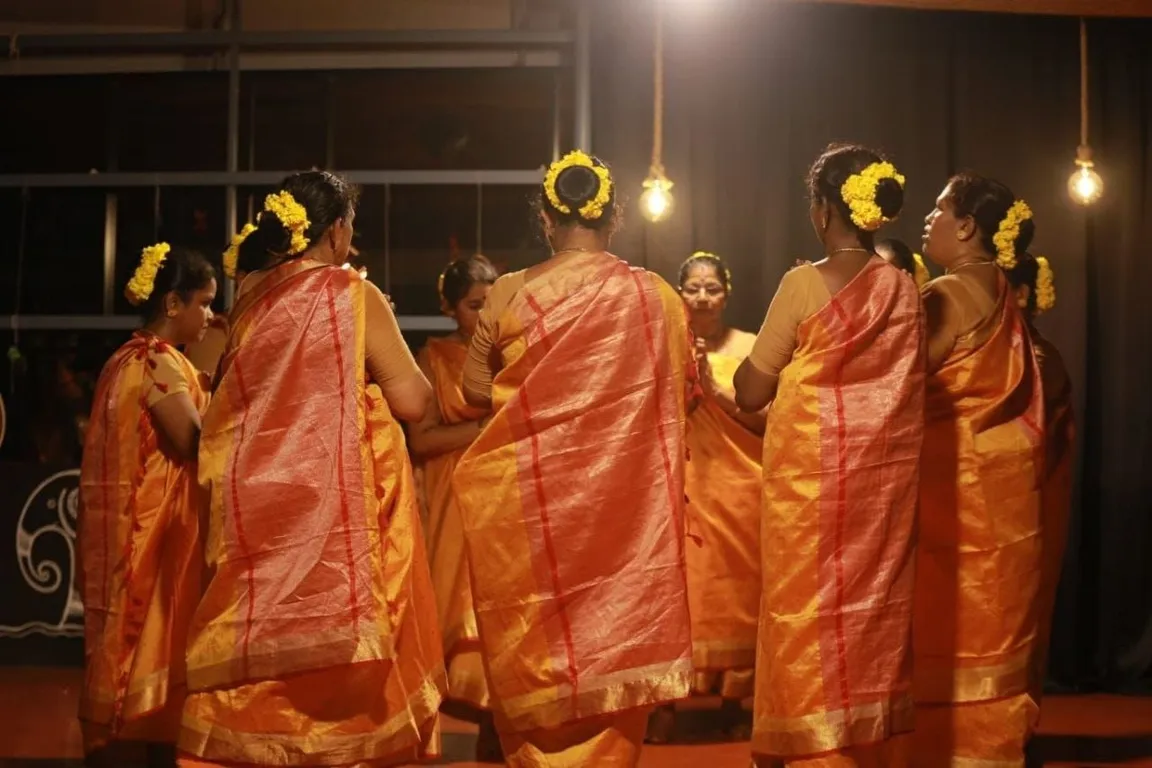
The first challenge that Maya faced was not recognition from outsiders. It was bringing the performers themselves together. Many of the women who knew Fugdo worked as domestic workers in wealthier homes. Some cleaned houses from dawn to dusk. Others cooked or cared for children. Few had experience performing publicly. Most had spent their lives practising the art only during temple gatherings or private community celebrations. Convincing them to rehearse regularly was difficult.
“There was hesitation,” Maya remembers. “Many felt shy. Some wondered why anybody would want to watch our dance.”
The older women were especially reluctant about recording traditional songs because of their suggestive lyrics. They would sing them aloud, but resisted writing them down. There was embarrassment, caution, and also fear that outsiders might mock or appropriate what they did not understand. Still, Maya persisted. She began gathering women informally, encouraging them to rehearse together. Slowly, a collective formed. Their aim was simple but significant: preserve Fugdo in its original form before memory disappeared with the elders.
From Courtyards to Cultural Stages
Ironically, Fugdo’s journey into public visibility began because filmmakers came searching for the details. A film team approached the group wanting to feature the dance. The request pushed the women into more structured rehearsals. Soon after, they began performing at small local temple functions.
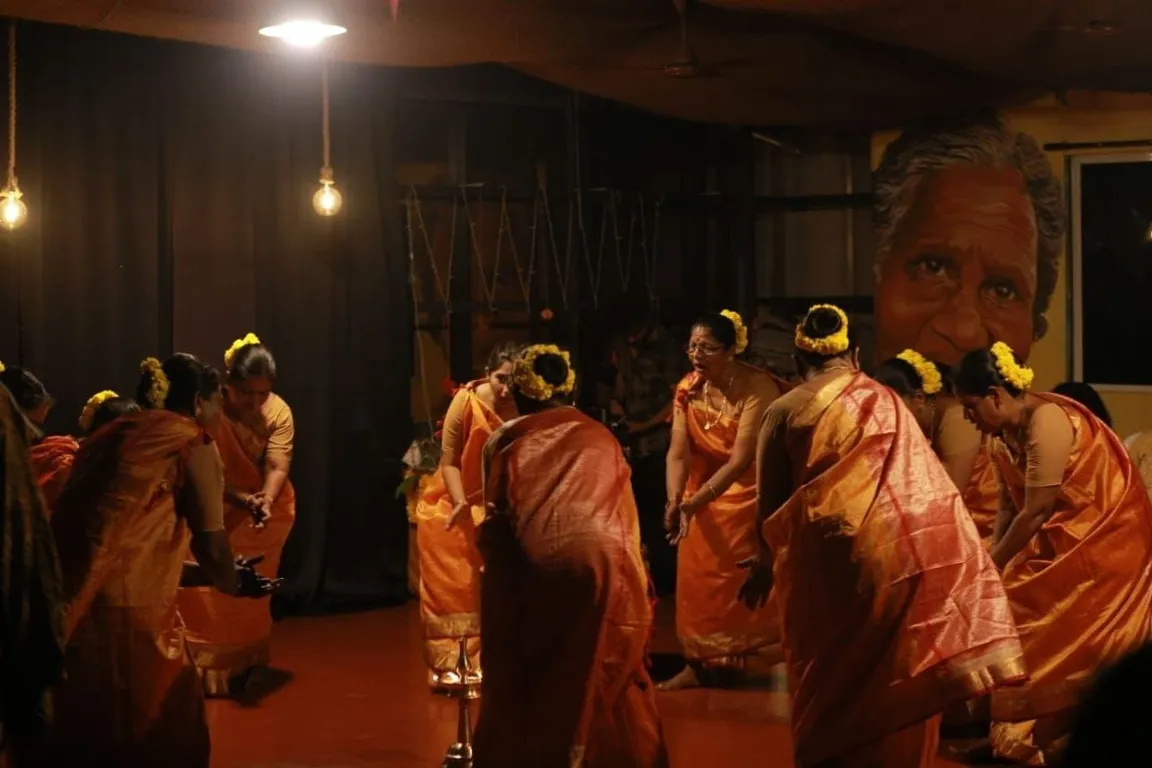
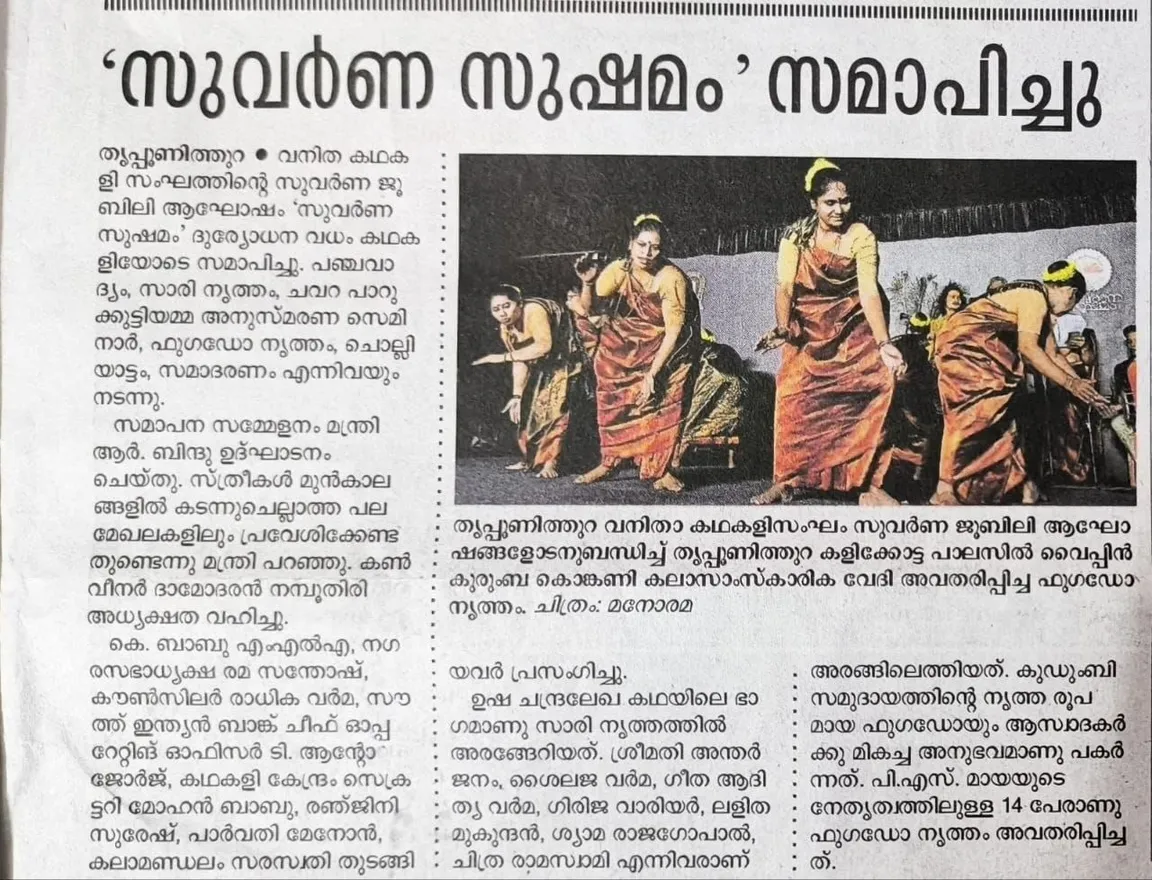
Then came a breakthrough. The Kerala Government’s Heritage Museum invited them for a Folklore Day performance. During the event, someone associated with the Kochi-Muziris Biennale recorded the performance and uploaded clips online. Suddenly, the dance began travelling far beyond the community.
People who had never heard of the Kudumbis were watching Fugdo videos online. Cultural organisations such as Thudippu offered stages for them. Invitations arrived from festivals and public events. The women who once danced only in courtyards found themselves on formal stages under theatre lights.For Maya, the visibility was transformative, but also complicated. As Fugdo gained attention, another battle emerged: ownership.
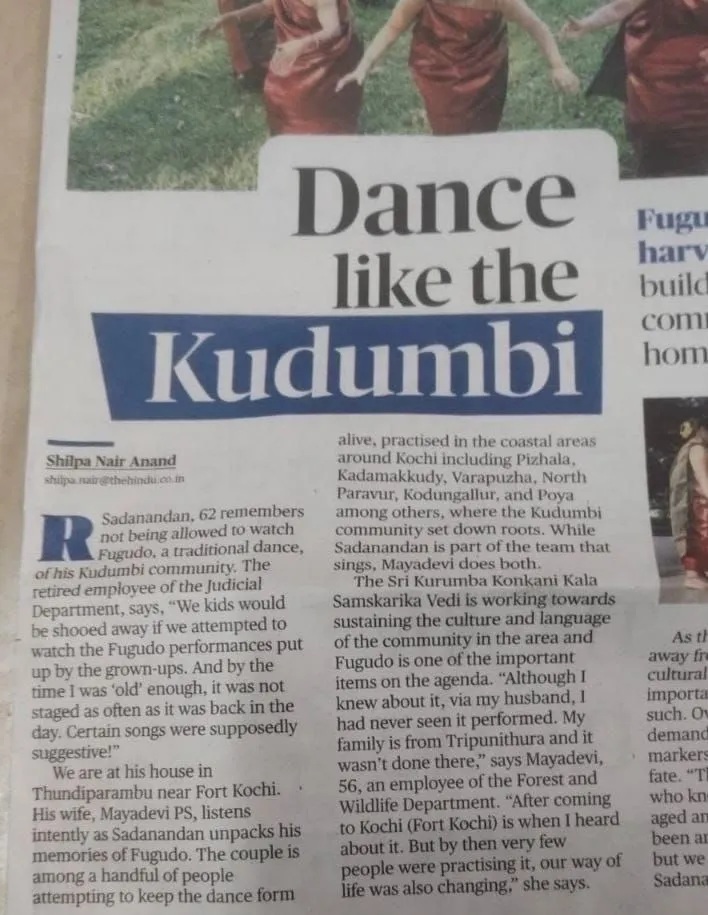
Some groups began presenting Fugdo merely as a “Konkani dance,” erasing its specific Kudumbi roots. Maya recalls incidents where members of socially dominant Konkani-speaking communities attempted to claim the art form as a shared cultural property. To her, this was not harmless mislabelling. It repeated a long history in which marginalised communities created traditions while more privileged groups received recognition.
This is why media documentation became crucial. Articles in publications like The Hindu and Mathrubhumi explicitly identified Fugdo as the dance of the Konkani Kudumbi community. Maya carefully preserved these clippings.
“If it is not written down,” she says, “someone else can take it.”
Return to Goa
Perhaps the most emotional chapter came when the troupe travelled to Goa, the ancestral homeland their forefathers had fled nearly 400 years ago. For Maya, the performance felt like completing a historical circle.
In Goa, audiences were stunned to hear ancient Konkani lyrics preserved almost unchanged across centuries. Elderly listeners recognised words from childhood memories. Journalists marvelled that a community in Kerala had safeguarded songs and styles forgotten even in parts of Goa itself. The performance transformed the dancers’ own self-perception.Women who once considered themselves invisible domestic workers were now cultural custodians carrying centuries of memory.
Today, Fugdo occupies a strange and beautiful threshold between survival and revival. Younger members of the community are beginning to show interest. Social media has helped create visibility. Invitations to festivals have increased. What once existed only inside labouring communities now appears in cultural discussions about heritage and identity.
But Maya remains cautious. She worries about dilution. About sanitising the songs. About removing the ritual intensity to make performances more “acceptable.” About losing the old language entirely. For her, preservation is not about museum culture. It is about continuity.
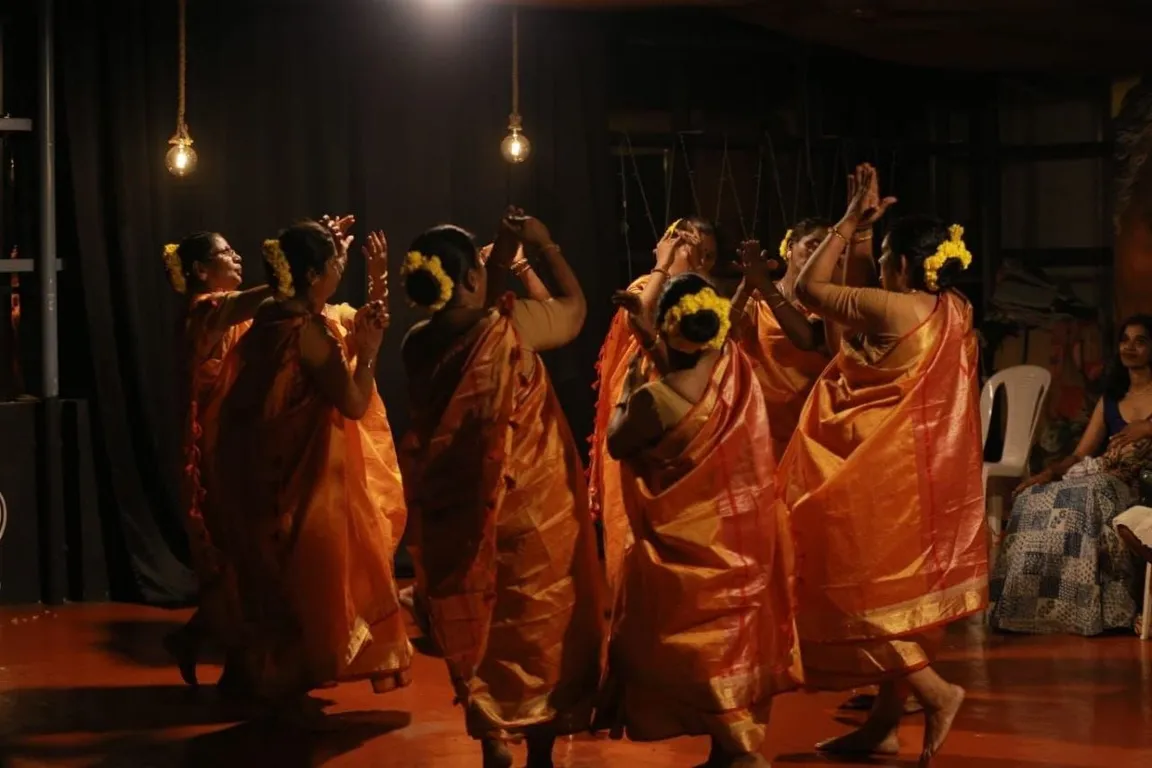
The women still rehearse after work. They still sing ancient words whose meanings are half remembered. They still stamp the ground with the force of generations who survived migration, caste marginalisation, agricultural hardship, and invisibility. And every time Maya watches them dance, she knows Fugdo is no longer hidden. It has stepped into the light.
How can you help?
You can use the contact form below to reach out to the fellows directly. They would love to hear from you. A few words can go a long way. In fact, it's the only thing that holds us all together.

Proudly Not For Profit
Asking for donations is always difficult, especially if you are in India where asking for help is always seen as a sign of weakness. But, we believe that access to all the services aikyam provides should be forever free to amazing individuals like Maya. We are registered as a Not for Profit Company and do not charge any fee to anyone.
If you are somebody who feels that aikyam's work is important, please consider joining our Giving Circle and supporting our work with a monthly subscription. You can stop it anytime from your donation dashboard, no questions asked.
A large number of people like you giving small amounts of money over a long period of time is the way thousands of non profits like ours can continue working on difficult problems. In fact, it's the only way.
Thank you.


One more story like this one
You just read Maya P S’s story. Every fellow’s reaches your inbox the same way.
More fellows in Art & Culture
- Rahul Thomas
Theatre Saved Me
What happens when you walk away from a secure career to follow your calling?