

“People engage in art seeking happiness. So, does everyone not deserve an ounce of that happiness?” This was the simple question that led Anjali to co-found Thudippu Dance Foundation in 2019. The tale of this dedicated teacher, founder, and above all, Mohiniyattam artist is best begun a few years prior to the birth of Thudippu.
It was a regular day for everyone at Anjali’s family residence in Vadakara, except Anjali herself who was busy packing her bags. The 23-year-old had always harboured an inclination for dance, but professionally pursuing anything remotely artistic was out of the question. After completing a degree in Commerce and working for a while, she finally took the big step—packed her bags and left for Mumbai in search of a Mohiniyattam classroom.
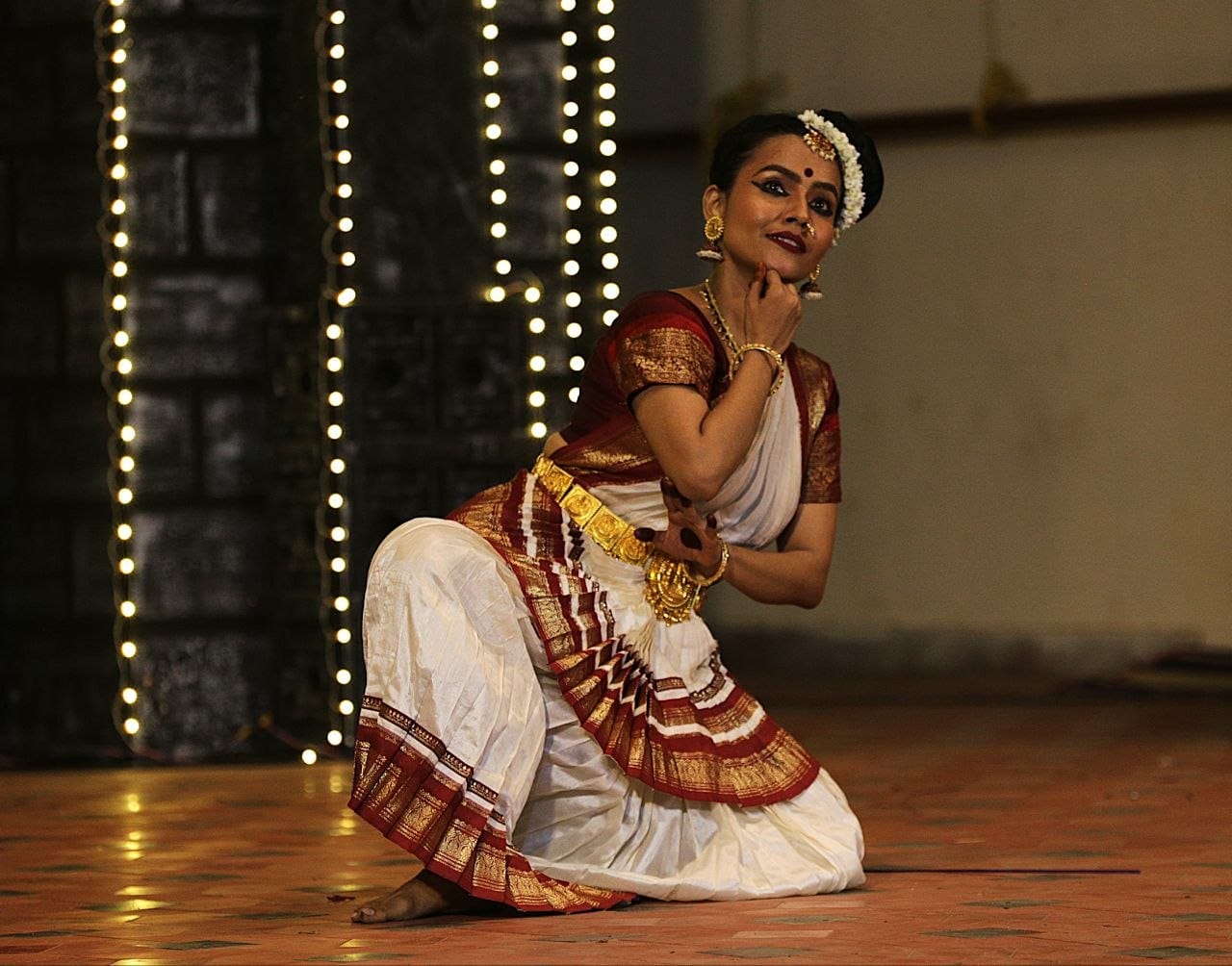
Albeit new to the city, the art, and performance spaces, Anjali strapped on her chilanka and boldly treaded the scary waters. She started training under the renowned artist Kanak Rele at the Nalanda Dance Research Centre. Here, she befriended Ponnu Sanjeev, and the duo discovered that their perspectives and visions aligned significantly. Together, they conceived a plan to build an inclusive and welcoming space in Kochi for classical dance forms. “Initially, we did not have a building or a classroom. We taught in schools and held online classes during the pandemic,” Anjali says, beaming. They had neither backups nor other dancers to collaborate with; what they did have was a dream grounded on a nuanced understanding of dance. Having obtained a degree in Performing Arts, Anjali also went on to do a postgraduation in Folklore and Cultural Studies.
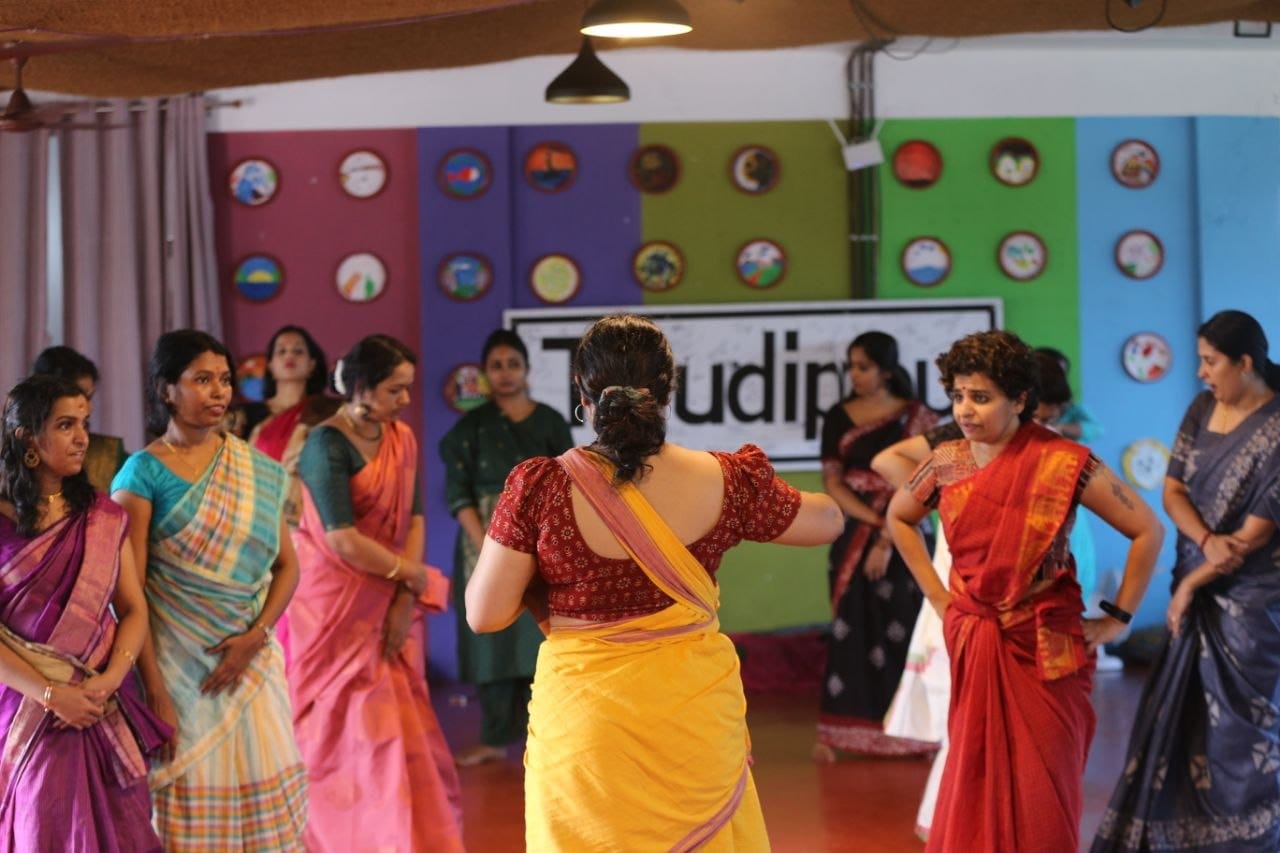
Navigating the Classroom and the Stage
As a teacher, Anjali creates a space for students to let the form “flow through the body,” rather than prod them to mimic a movement that is not their own. In a class of ten students, there are ten distinct connections with the artform being woven, even while the technique remains the same.
“Each body has its own story to tell. I attempt to set the stage for each student to arrive at their own dialogue with the technique.” — Anjali
Thudippu refuses to follow syllabi that might fail to co-operate with how different bodies move. A dislocated knee or an aching back should not keep the artist off the stage; in the classrooms of Thudippu, the syllabus is restitched to decenter rigid practice and bring both the body and the technique in a co-operative conversation.
The broadest grin spreads across Anjali’s face as she articulates her own negotiation with dance. Anjali lets all parts of her body drench in the performance, delving into the emotional journey of her character and “expressing the internal immersion externally,” as she puts it. This expressive and delightful communication is what strikes one while watching Gossip, the latest all-female production by Thudippu that premiered at the Kochi-Muziris Biennale of 2025.
“Gossip is about female friendships and solidarity, told using the body. It is a physical theatre of real-life events that we have lived, witnessed, or heard at some point,” Anjali says, her face glowing. While the scenes in Gossip were perfected through discussions among the team, those in Otta meticulously followed a tightly-plotted script. Rooted in the Mahabharata, Otta is the tale of Ghatotkaja, his relationship with his mother Hidumbi, and a journey of bold resilience against oppression. Eyes glinting and gesturing animatedly, she says, “Otta began when the visual of Ghatotkaja’s birth popped into my mind and got hold of me.” She continues, “There is a deliberate intention that underlines our productions—we seek to convey the story to every member of the audience, irrespective of their understanding of classical artforms.”
Building Impact: Opportunities at Thudippu
Beyond their scripts, the Thudippu team’s commitment to accessibility and inclusion is demonstrated in their application procedures and community outreach programs.
Anjali explains, “There aren’t enough opportunities for the ordinary dance school graduate or aspiring performer who has no backups. At Thudippu, we attempt to hire and admit teachers and students from underserved sections. We also offer scholarships to students facing socio-economic challenges. It is not a big promise, we simply want everyone who wishes to dance to be able to do so.” With the aid of grassroots-level NGOs, Thudippu organises summer dance camps in different parts of Kerala.
The politics Anjali puts forth through the organisation as well as her performance is far from reactionary; it is an exploration of possibilities, a relearning rather than an undoing. To Anjali, every movement is political and bears implications, whether or not by intention. Refusing to compromise on safety, Thudippu has strict community guidelines, PoSH policies, and child protection systems. “We consistently work towards ensuring the safety that we promise in not just our classrooms but also the intimate stage space that we offer new artists. On most weekends, we host budding performers at our space, bringing together viewers and artists,” she shares. Thudippu’s interest in creating performance-oriented collectives is further testified by Friends of Thudippu, an initiative that identifies artforms practiced by marginalised groups and offers them a space to perform.
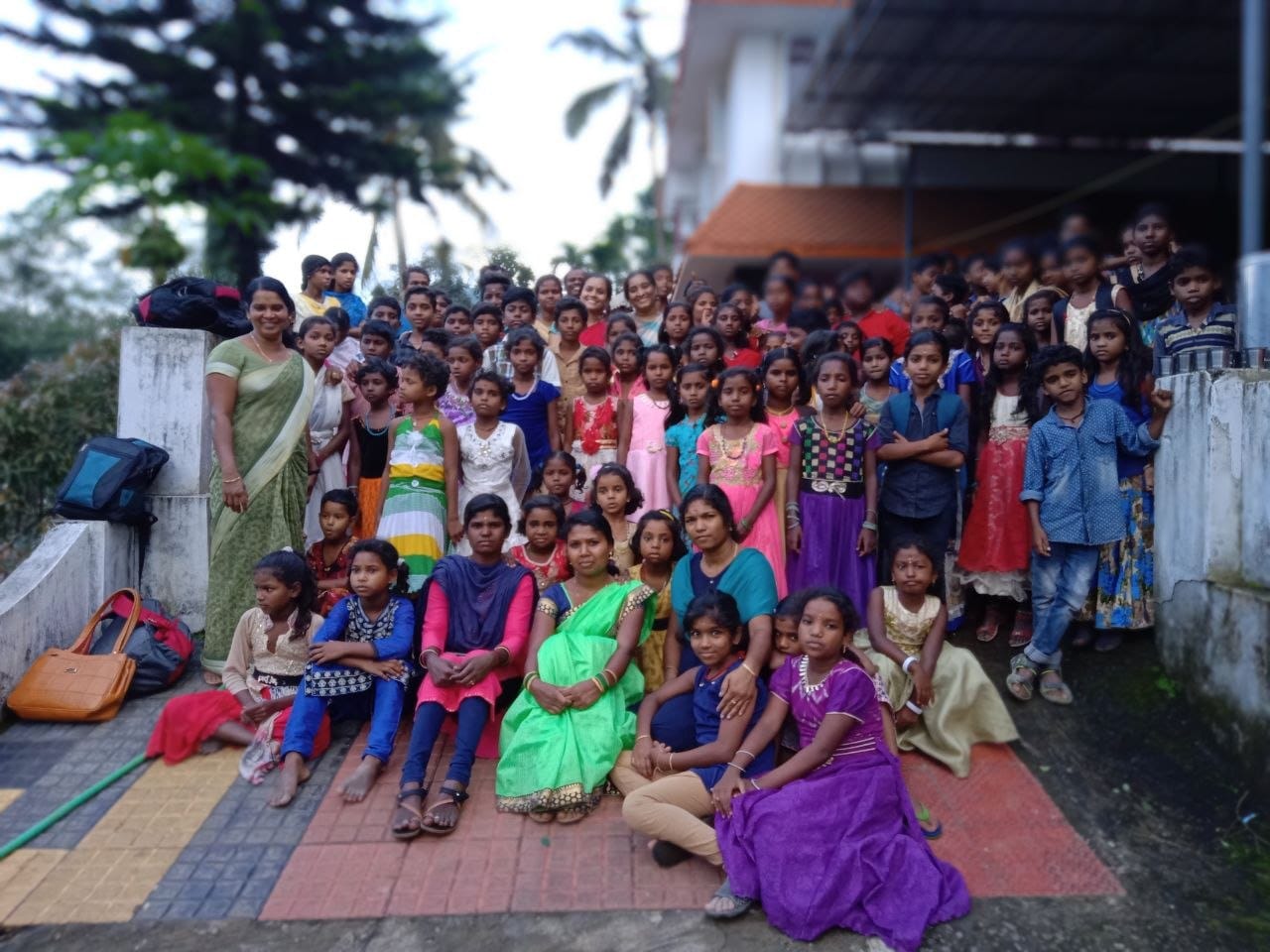
Anjali states that she owes both her own and Thudippu’s endurance to the friendships and connections around her: “The very fact that Thudippu, run by two women, keeps standing is deeply heartening." Today, the Thudippu Dance Foundation has 200 students, whose ages range from three to sixty-five, and they express themselves in two hundred unique ways. Effortlessly herself and acutely aware, Anjali credits camaraderie and community, but I hope she also remembers that Thudippu is, above all, a promising turn that she was brave enough to carve for younger artists.


