
Megha JibhakateOur Dreams Matter Too
In the beginning, I found it difficult to speak in English. Where I come from, even English classes are taught in Marathi.
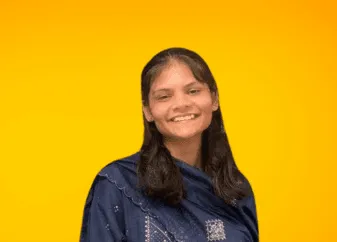
aikyam fellow '23
Even as a little girl running around the sugarcane and rice fields in Maharashtra’s Lobhi village, Megha lived in her own world and was often considered different from her sisters. Teenage brought with it the desire to be a policewoman, and Megha decided to begin training soon after completing her schooling. This meant that she had to leave her village behind and travel all the way to Nashik.
Determined, she packed her bags and began intense physical and academic training at a residential institute in Nashik. Unknown to her, the pandemic lurked around the corner. A couple of months later, she had to return to her village with no inkling about when she could resume training. Once back home, she joined a Bachelor of Arts course. But her sister soon understood that her heart wasn't in it and introduced her to Sajhe Sapne.
A New Path with Sajhe Sapne
Sajhe Sapne is a not-for-profit organisation that offers nine-month-long courses to girls from rural areas to aid them in pursuing careers in management, maths education, and front-end development. “In my village, girls either choose nursing or beautician courses, and even after completing their course, they mostly do not work. I did not want to pursue either of those options, but initially, I was not excited to join Sajhe Sapne either,” says Megha, who chose to study front-end development. Nevertheless, upon receiving an acceptance letter, she decided to leave Lobhi again, this time for Himachal Pradesh. The first few months rattled the 21-year-old; everything from the language to the landscape daunted her.
“In the beginning, I found it difficult to speak in English. Where I come from, even English classes are taught in Marathi. Whenever people visited Sapnewaliyan – that is what we at Sajhe Sapne were called – I took a backseat for fear of having to communicate. Even Hindi was difficult for me as I grew up speaking a local dialect of Marathi. Being new to technology, I struggled with the course requirements too. Front-end development was not something I had the slightest idea about,” says Megha.
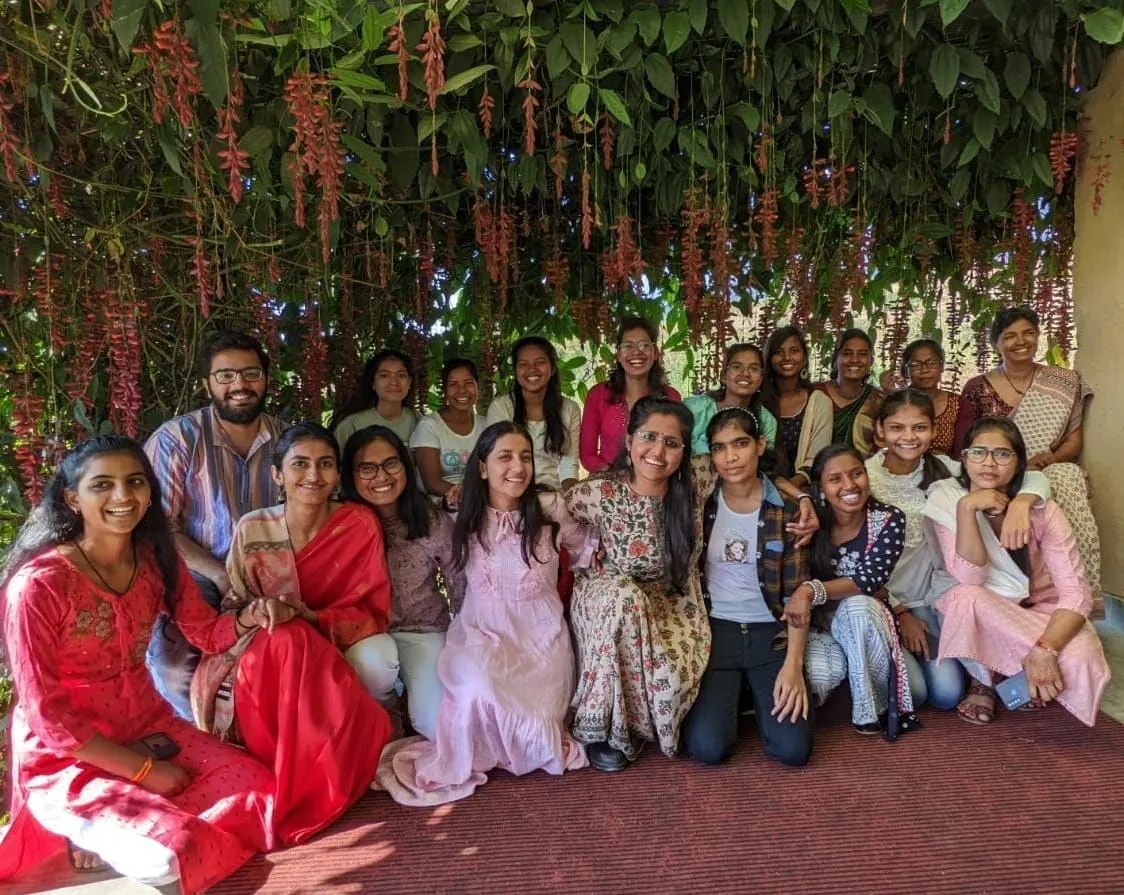
In a few months, though, she had learned Hindi, English, and front-end development – feats she refuses to give herself due credit for. The hills warmed up to her, and Megha found in Himachal’s valleys a solace she holds close to this day. “I befriended all the girls in my batch. We learned, laughed, and celebrated birthdays together. Looking back, joining Sajhe Sapne is the best decision I have taken in my life so far,” she says.
After her course, Megha bagged an internship at AirCampus. In keeping with Sajhe Sapne's philosophy of paying it forward, she began funding the education of another girl, something that she has been doing till date. This was when Megha stumbled upon a job opportunity with Tech4Good, as aikyam space was called then. “I was the only one applying for remote jobs. But ironically, the organisation that picked me required me to stay in Kerala,” she laughs. In January 2023, Megha began this new chapter of her life.
https://www.youtube.com/watch?v=DmQSOuh9RnA
Megha talks about her journey at aikyam
Of Art, Dreams and Forging New Worlds
The tropical state at the far end of India was as unfamiliar to her as it could be. So was the concept of “technology for good”. At aikyam, she discovered with wonder the ways in which one could direct technology to achieve impactful ends.
“Social impact was not something I had heard of while growing up. But now, I have come to enjoy working with NGOs and helping them navigate technical hurdles. I had considered dropping out in the beginning due to the enormity of the changes around me, but I wanted to prove to myself that I could adapt and handle challenges. Now, I am glad I stayed,” says Megha.
Her favourite project involved creating a website for Aline Partners, a non-profit consulting firm working towards social impact. Liaising and collaborating with the professionals at Aline, Megha learned the ropes of professional communication. “Working at aikyam has significantly boosted my confidence in navigating changes and challenges,” says Megha. “The mentorship I receive from Shemeer, Sumi, and Jinso has helped me fit into my new surroundings with considerable ease.”
Although she still struggles with the language and food habits that are starkly different from her own, Megha has found a space for herself. The wall beside her bed at aikyam space flaunts her vibrant drawings and sketches.
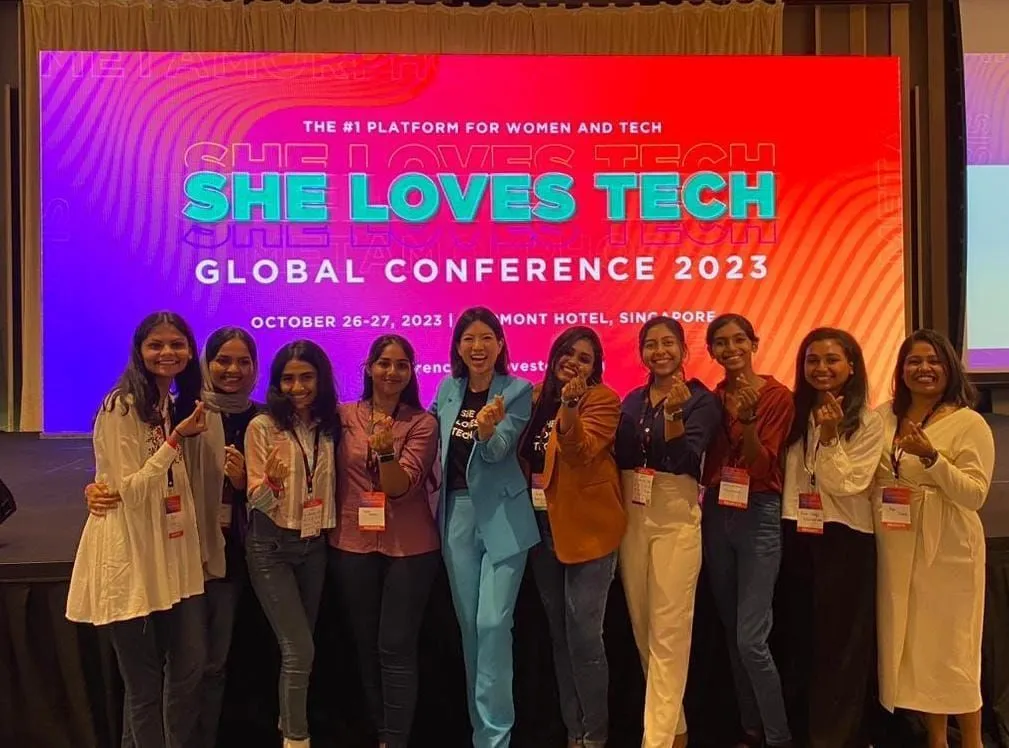
The young girl from Lobhi, who did not know what dreams she was entitled to, has now learned to navigate a world far beyond what once seemed possible. She travels to new places on her own, no longer flinching in the face of unfamiliarity. Recently, she went all the way to Delhi to attend an event. She was also part of a group of girls from aikyam and TinkerHub who were chosen to attend a She Loves Tech event in Singapore.
“If you could change one thing in this world, what would it be?” I ask.
Slightly furrowing her eyebrows, she replied, “Over the years, I have noticed that many organisations prefer not to hire candidates from rural areas. We are not deemed efficient enough. If I could change one thing, I would want those from villages to be given a fair chance. Our dreams matter too.”
Megha Jibhakate is an aikyam fellow and community builder. She works with not-for-profit organisations, studies their website and data-related concerns, and curates specialised solutions.
How can you help?
You can use the contact form below to reach out to the fellows directly. They would love to hear from you. A few words can go a long way. In fact, it's the only thing that holds us all together.

Proudly Not For Profit
Asking for donations is always difficult, especially if you are in India where asking for help is always seen as a sign of weakness. But, we believe that access to all the services aikyam provides should be forever free to amazing individuals like Megha. We are registered as a Not for Profit Company and do not charge any fee to anyone.
If you are somebody who feels that aikyam's work is important, please consider joining our Giving Circle and supporting our work with a monthly subscription. You can stop it anytime from your donation dashboard, no questions asked.
A large number of people like you giving small amounts of money over a long period of time is the way thousands of non profits like ours can continue working on difficult problems. In fact, it's the only way.
Thank you.


One more story like this one
You just read Megha Jibhakate’s story. Every fellow’s reaches your inbox the same way.
More fellows in Technology
- Mohamed Jasim C M
Finding His Space
What if your greatest strength isn't what you study, but the people you connect with?
- Jinso Raj
Making Technology Accessible
Benefits of technology often exclude social impact organisations. Jinso's work makes it more accessible.